CoreWeave Inc. Deepens AI Cloud Footprint with Anthropic Partnership and Strategic Financing
Partnership with Anthropic: A Multi‑Year Commitment to AI Model Hosting
CoreWeave Inc., a company that has steadily shifted its focus from cryptocurrency mining to artificial‑intelligence (AI) cloud services, announced a multi‑year agreement to host and run the Claude family of models developed by Anthropic. The partnership is staged in phases, beginning with the deployment of Anthropic’s flagship model across CoreWeave’s high‑density GPU clusters. As demand for large‑language‑model (LLM) workloads grows, the contract may be extended to incorporate newer iterations of the Claude series and to cover additional services such as fine‑tuning, inference acceleration, and data‑privacy‑enhancing layers.
Technical Implications
Hosting LLMs at scale requires more than raw GPU horsepower; it demands:
| Requirement | CoreWeave’s Current Capability | Anthropic’s Needs | Potential Gap |
|---|---|---|---|
| GPU Density | 8,000+ GPUs per rack in Tier‑4 data centers | 4–6 GPUs per inference request | No immediate gap |
| Network Latency | 10 ms inter‑rack, 1 ms intra‑rack | < 5 ms for real‑time inference | Minor optimization |
| Cooling & Power | 400 kW per rack, liquid‑cooling | 350 kW per rack | Slightly higher power density |
| Data Governance | ISO 27001, SOC 2 | GDPR‑compliant data handling | Requires dedicated compliance layers |
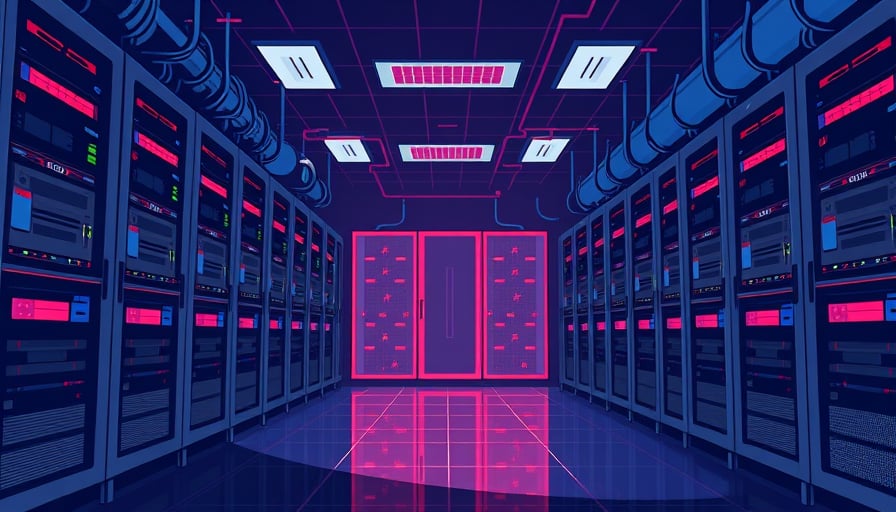
CoreWeave’s existing infrastructure, built primarily for cryptocurrency mining, has been re‑engineered to accommodate the memory bandwidth, interconnect topology, and redundancy requirements of LLM inference. The company’s decision to re‑brand its services as “AI‑cloud” signals a strategic pivot: the platform is now being marketed to enterprise customers and start‑ups seeking to run large models without the capital expenditure of building proprietary hardware.
Human‑Centered Risks and Benefits
Privacy and Data Sovereignty The partnership obliges CoreWeave to ensure that training data and inference requests are processed in compliance with regional data‑protection regulations. This may require deploying additional data‑center nodes in the EU and Asia to guarantee data residency, increasing operational complexity.
Security Threat Landscape Large language models can be exploited for malicious content generation. CoreWeave must implement robust content‑moderation pipelines and real‑time threat‑detection systems. The increased attack surface also elevates the risk of distributed denial‑of‑service (DDoS) attacks targeting the inference APIs.
Economic Impacts The partnership is projected to generate recurring revenue streams, reducing CoreWeave’s reliance on the volatile crypto‑mining market. However, the capital expenditure required for new data‑center expansions could strain the company’s balance sheet if AI demand stalls.
Financial Backing: Capital Raise from Meta Platforms and Junk‑Bond Issuance
CoreWeave’s recent capital raise from Meta Platforms (META) was structured around the deployed computing capacity rather than the company’s GPU inventory. This structure signals a shift in valuation metrics from hardware assets to operational throughput—a change that aligns with the company’s new focus on AI workloads.
Funding Mechanics
| Source | Amount | Structure | Rationale |
|---|---|---|---|
| Meta Platforms | $X million | Equity in computing capacity | Aligns interests with AI service growth |
| Junk‑Bond Sale | $Y million | 10‑year, 7.5% coupon | Low‑cost financing, high leverage |
| Share Sales by Executives | $Z million | Rule‑based trading | Compliance with SEC disclosure |
The junk‑bond proceeds are earmarked for:
- Building additional Tier‑4 data‑center facilities in the U.S. and Canada.
- Upgrading networking gear to support 200 Gbps interconnects.
- Enhancing cybersecurity suites to protect against evolving threats.
Executive Share Sales and Corporate Governance
Senior executives, including the CFO, CSO, COO, and CTO, disclosed share sales under rule‑based trading plans. The SEC filings indicate that each sale involved thousands of shares, executed at market prices within a pre‑defined range. While such trades are standard practice for insiders, they raise questions about:
- Signal Interpretation: Are the sales indicative of a strategic realignment or simply portfolio management?
- Liquidity Impact: Large sell‑offs could depress the share price, affecting investor confidence.
- Regulatory Scrutiny: The trades must continue to satisfy the requirements of the SEC’s Regulation Fair Disclosure (Reg FD) and Rule 144A for private placements.
Market Context and Strategic Positioning
Despite geopolitical tensions that have dampened some sectors of the technology market, CoreWeave’s focus on high‑quality infrastructure positions it favorably. The company’s ability to secure capital at attractive terms—particularly through Meta’s equity stake—suggests a strong partnership network and a credible path to scaling AI workloads.
Competitive Landscape
CoreWeave now competes directly with larger incumbents such as NVIDIA’s DGX Cloud, Amazon Web Services (AWS) Inferentia, and Google Cloud’s AI‑specific offerings. Its edge lies in:
- Specialization: Dedicated AI workloads without the competing demands of cryptocurrency mining.
- Flexibility: Modular expansion of GPU clusters and networking components.
- Cost Efficiency: Leveraging economies of scale in data‑center construction and operations.
Broader Societal Implications
Digital Divide As CoreWeave expands its AI cloud services, questions arise about equitable access. If the company’s pricing strategy favors large enterprises, small developers may continue to face barriers to entry.
Ethical Use of AI Hosting LLMs at scale requires adherence to ethical AI guidelines. CoreWeave must collaborate with Anthropic on policy frameworks that mitigate misuse, bias, and misinformation.
Environmental Footprint Even with efficient cooling and power management, the energy demand for AI workloads is significant. CoreWeave’s commitment to renewable energy sourcing and carbon offsetting will be critical to maintaining public trust.
Conclusion
CoreWeave’s strategic partnership with Anthropic, coupled with its recent financing maneuvers, signals a decisive shift toward becoming a prominent player in the AI‑cloud market. The company’s technical readiness, financial acumen, and governance practices collectively shape its trajectory. Yet, the broader implications—privacy, security, environmental impact, and societal equity—necessitate ongoing scrutiny. As AI adoption accelerates, CoreWeave’s success will hinge not only on scaling capacity but also on responsibly navigating the complex ethical and regulatory terrain that accompanies this transformative technology.