
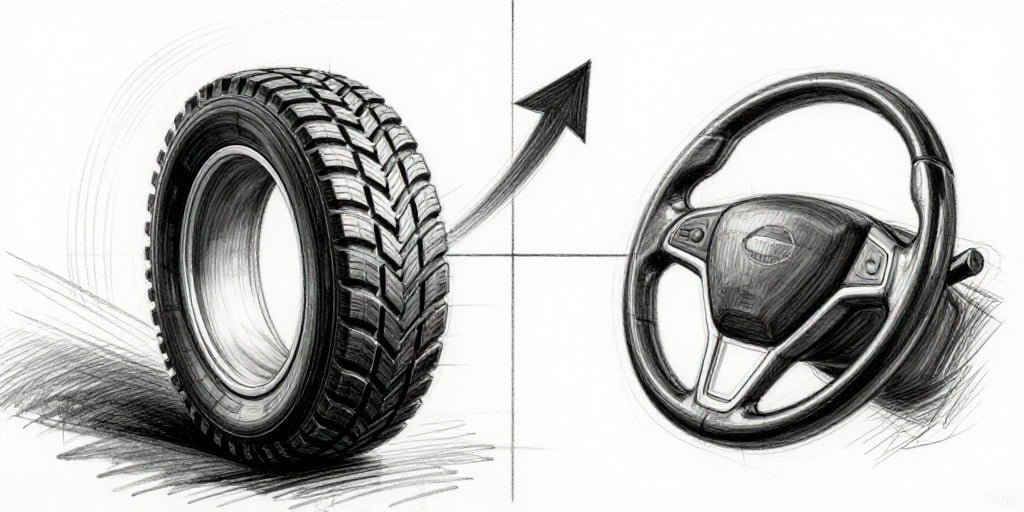
Continental AG Reports Modest 2023 Operating Improvement Amid Automotive Upswing
Continental AG announced that its operating performance for the fiscal year ending December 2023 improved modestly, with net profit increasing by 4.1 %. The incremental earnings were driven primarily by higher sales volume and a favorable product mix, enabling the company to offset the gradual decline in overall market demand that has characterized the broader automotive sector.
Business Fundamentals and Market Dynamics
Volume and Mix Gains Continental’s earnings data indicate a 4.1 % rise in net profit, largely attributable to an uptick in sales volume. Analysts note that the company’s high‑performance tires and advanced material solutions have commanded premium pricing, amplifying margin contributions. While overall demand for automotive components has softened, Continental’s strategic positioning in the specialty tyre segment appears to have insulated it from the most severe downturns.
Rebound in the Automotive Sector Management attributed the profit lift to a resurgence in automotive sales, especially within the high‑performance segment. The company highlighted renewed demand for its specialty tyres, which are essential for emerging vehicle models featuring advanced safety and performance specifications. This trend aligns with broader industry data that suggests an increase in premium vehicle sales in North America and Europe during 2023.
Revenue Trajectory in 2024 Revenue growth moderated during the first quarter of 2024, a trend that the board anticipates will reverse as production capacity expands. Continental has reportedly invested in plant upgrades and supply‑chain optimization to meet the projected demand for its specialty tyres. The company’s outlook is also supported by the upcoming launch of new vehicle models that require its high‑performance offerings, potentially providing a new revenue stream.
Regulatory Environment
Continental’s high‑performance tyres are subject to stringent safety, emissions, and sustainability regulations across key markets. The European Union’s forthcoming “Zero‑Emission Vehicle” directive and the U.S. Department of Transportation’s new safety standards could influence demand for Continental’s advanced material solutions. The company’s investment in R&D aims to ensure compliance with these evolving regulations, thereby mitigating regulatory risk.
Competitive Landscape
Peer Comparison Compared to its primary competitors—Michelin, Goodyear, and Bridgestone—Continental has maintained a relatively stable market share in the specialty tyre niche. However, competitors are aggressively pursuing electric vehicle (EV) tyre technology, potentially eroding Continental’s lead in that segment.
Potential Threats The rise of direct-to-consumer tyre retailers and the increasing popularity of aftermarket solutions may erode the traditional OEM tyre business model. Continental’s strategy to deepen its OEM relationships and invest in proprietary materials could counteract this trend, but the company must monitor price‑sensitive segments closely.
Opportunities The growing demand for lightweight, high‑performance tyres in EVs offers a growth avenue. Continental’s research focus on advanced composites and sustainable materials positions it to capture this market, provided it can maintain cost competitiveness.
Risks and Opportunities
| Risk | Opportunity |
|---|---|
| Regulatory Shifts – New safety and emissions standards may require costly redesigns. | R&D Investment – Continued focus on high‑performance, lightweight tyres could unlock premium pricing. |
| Competitive Pressure – Rivals’ EV tyre initiatives could dilute market share. | OEM Partnerships – New vehicle models needing specialty tyres could expand production volume. |
| Supply‑Chain Disruptions – Component shortages may inflate costs. | Capacity Expansion – Planned plant upgrades could improve production efficiency and scalability. |
Financial Analysis
Profitability Metrics Continental’s net profit margin rose from 7.5 % in 2022 to 7.8 % in 2023, reflecting improved cost efficiency and a higher‑margin product mix. EBIT margin increased by 0.3 percentage points, suggesting disciplined operating leverage.
Revenue Growth Revenue grew at a 2.1 % CAGR over the 2023 fiscal year, a deceleration from the 4.5 % CAGR in 2022. The first‑quarter 2024 revenue decline of 1.2 % was attributed to seasonal inventory adjustments and a temporary dip in OEM orders.
Capital Expenditure CAPEX for 2023 was €1.3 billion, with a focus on production line upgrades and R&D facilities. Projected CAPEX for 2024 is expected to rise to €1.5 billion, signaling continued investment in growth initiatives.
Conclusion
Continental AG’s modest 2023 profit improvement underscores the company’s resilience in a challenging automotive environment. By leveraging a favorable product mix and capitalizing on a resurgence in high‑performance tyre demand, Continental has positioned itself to benefit from forthcoming vehicle launches. Nevertheless, regulatory changes, competitive pressures, and supply‑chain vulnerabilities remain salient risks. Continuous investment in R&D and strategic OEM partnerships will be critical to sustaining Continental’s market standing and translating operational gains into long‑term shareholder value.