
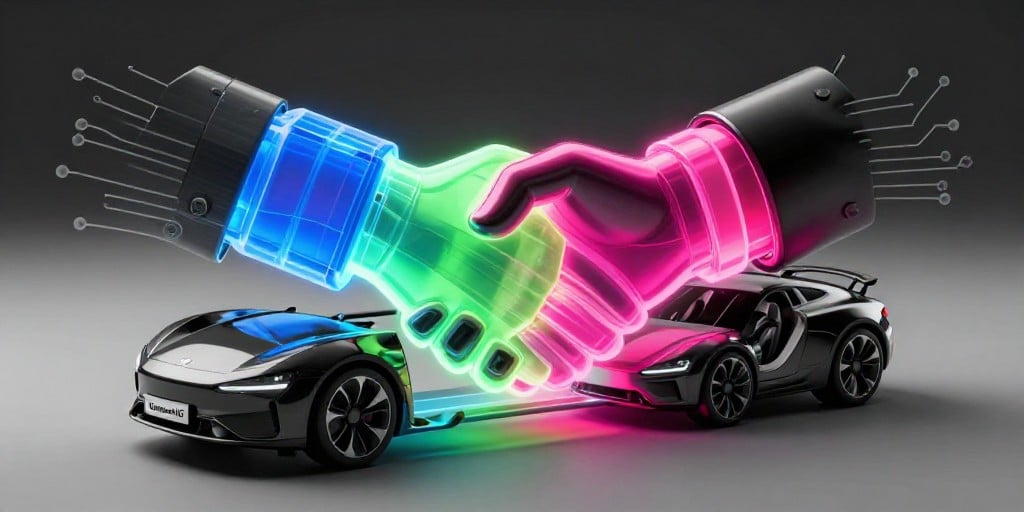
Continental AG’s Strategic Push into Battery‑Powered Mobility
Continental AG, the German automotive supplier known for its high‑quality braking systems and advanced driver‑assist technologies, has announced a new partnership that signals a decisive pivot toward electrified mobility. The company’s press release describes a collaborative agreement with a leading battery manufacturer—details of which remain undisclosed—intended to secure long‑term access to advanced energy‑storage solutions for its next‑generation electric vehicles (EVs). By tying its supply chain directly to a battery supplier, Continental aims to reduce exposure to the volatile raw‑material market, lock in favorable pricing, and accelerate the rollout of several forthcoming EV models.
Supply‑Chain Resilience in a Volatile Market
The battery sector is characterized by rapid technological change, high capital intensity, and a thin profit margin that often translates into fierce price competition. Continental’s decision to partner with a battery manufacturer can be seen as a response to several market signals:
- Commodity Price Volatility – Lithium, cobalt, and nickel prices have fluctuated by more than 30 % over the past three years. A dedicated partnership can provide price certainty through long‑term contracts or revenue‑sharing arrangements.
- Geopolitical Risks – The U.S.‑China trade friction, sanctions on Russian raw‑material supplies, and the recent European Union battery‑regulation tightening have created a fragmented supply landscape. An in‑house battery strategy mitigates the risk of sudden supply bottlenecks.
- Demand Concentration – With major OEMs such as Volkswagen, BMW, and Hyundai committing to 2025‑2027 electrification roadmaps, Continental’s new alliance could secure preferential supply for its own components in these OEM orders.
From an operational perspective, the partnership should also reduce lead times, allowing Continental to respond more flexibly to OEM specifications and to integrate battery modules into its vehicle‑safety and drivetrain platforms more seamlessly.
Competitive Dynamics in the Automotive Electronics Segment
Continental’s long‑term goal is to strengthen its position in the automotive electronics market—a domain where high‑margin, high‑value products such as electronic control units (ECUs), connectivity modules, and safety sensors dominate profitability. By securing a battery supply chain, Continental can:
- Differentiate Product Offerings – Integrating proprietary battery management systems (BMS) and power‑train software could become a selling point for OEMs looking for end‑to‑end solutions.
- Leverage Software Development – The company’s recent R&D pipeline, which includes new software and connectivity initiatives, can now be combined with battery‑specific firmware, creating a closed‑loop ecosystem that is difficult for competitors to replicate.
- Enhance Margin Profiles – While battery manufacturing typically offers thin margins, the strategic partnership could convert some of that exposure into higher‑value, service‑based revenue streams through software updates, predictive analytics, and over‑the‑air (OTA) capabilities.
Despite these advantages, Continental faces headwinds from entrenched competitors such as Bosch and Continental’s own parent company, which already own significant stakes in battery technology. Moreover, the emerging battery‑as‑a‑service (BaaS) model—where OEMs lease rather than own battery modules—could shift the value proposition away from component suppliers toward integrated service providers.
Operational Performance: First‑Half Review
Continental reported modest yet encouraging operational metrics for the first half of the year:
- Production Volumes – Increased by 4.2 % YoY, driven primarily by higher demand from European and Asian OEMs.
- Delivery Efficiency – On‑time delivery rose from 88.3 % to 91.7 %, reflecting tighter supply‑chain controls and improved logistics coordination.
- R&D Pipeline – The company highlighted multiple software initiatives, including an AI‑driven predictive maintenance platform and a new infotainment connectivity stack.
While these figures suggest incremental gains, the company’s guidance indicates a cautious outlook. The projected revenue growth remains “in line with market expectations,” implying a conservative stance amid the current macroeconomic uncertainties.
Financial Outlook and Balance‑Sheet Discipline
Continental’s full‑year guidance emphasizes cost optimization and margin preservation:
- Operating Margin – Targeted at 7.5 %, up from 6.9 % in 2023.
- Capital Expenditure – Planned at €1.1 billion, with a focus on high‑margin product lines and R&D facilities.
- Dividend Policy – Maintained at €0.25 per share, signalling confidence in cash‑flow stability.
The company’s balance sheet remains robust, with a debt‑to‑EBITDA ratio of 1.6 and a liquidity coverage ratio above 120 %. However, analysts caution that the battery partnership could necessitate additional capital outlays, potentially tightening debt coverage in the coming quarters.
Market Reception and Analyst Sentiment
The stock reacted with modest volatility, largely reflecting broader sector trends such as rising EV demand and increasing digitalization pressures. Analysts note that Continental’s strategic moves align with industry expectations, but they also highlight the following risks:
- Supply‑chain Uncertainty – Even with a battery partnership, Continental remains exposed to raw‑material price swings and geopolitical tensions.
- Competitive Response – OEMs may bypass suppliers with in‑house battery capabilities, favoring partners who offer full‑suite electrification solutions.
- Regulatory Hurdles – The European Union’s upcoming battery‑regulation framework may impose additional compliance costs or limit the flexibility of long‑term supply agreements.
Conversely, the potential opportunities lie in early market leadership in integrated battery‑electronics platforms, new revenue streams from software and OTA services, and enhanced bargaining power with OEMs that could translate into higher pricing and margin protection.
Conclusion
Continental AG’s latest partnership and operational updates depict a company strategically positioning itself at the nexus of electrification and digital transformation. While the announced moves provide clear benefits in supply‑chain resilience and competitive differentiation, the long‑term payoff will depend on the company’s ability to manage supply‑chain risks, maintain capital discipline, and convert hardware integration into high‑margin software and services. Investors and industry observers should continue to monitor the unfolding partnership, the evolution of battery‑related regulations, and Continental’s ability to execute its integrated electrification strategy without compromising its established strengths in vehicle safety and drivetrain technology.