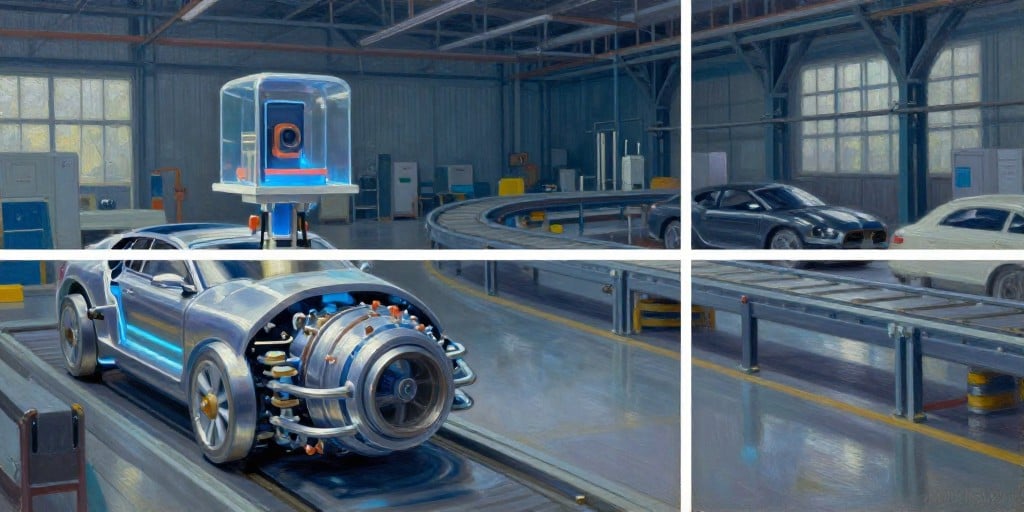
Continental AG Sustains Growth Amid Global Automotive Transition
Continental AG, the German automotive supplier, reaffirmed its strategic focus on the automotive sector while navigating a highly competitive global market. In its most recent quarterly report, the company disclosed a steady performance, underscoring its resilience and adaptability in the face of rapid industry transformation.
Revenue Drivers and Margins
The company’s revenue growth was predominantly fueled by its automotive component segment. This segment continued to deliver a healthy contribution margin, reflecting Continental’s ability to mix high‑value components with a disciplined approach to cost efficiency. Key drivers included:
- High‑value powertrain parts tailored for electrified vehicles, which command premium pricing due to their advanced engineering and performance characteristics.
- Operational efficiencies across manufacturing plants, enabled by the adoption of digital production tools and lean management practices.
- Supply‑chain robustness that mitigated disruptions and ensured timely delivery to a geographically diverse customer base.
These factors collectively supported the company’s margin resilience, a critical metric in a sector where thin margins can erode profitability.
Strategic Alignment with Electric Mobility
Continental’s strategic emphasis on electrification aligns closely with the broader industry shift toward electric mobility. The company has positioned itself to capture market share in several complementary areas:
- High‑performance powertrain parts – The development of lightweight, high‑efficiency components that reduce vehicle weight and improve battery utilization.
- Advanced driver assistance systems (ADAS) – Investments in sensor fusion, machine learning, and real‑time data processing enhance safety and enable semi‑autonomous driving capabilities.
- Lightweight materials research – Innovations in composite materials and aluminum alloys contribute to overall vehicle weight reduction, extending range and improving energy efficiency.
Continental’s R&D pipeline reflects a balanced portfolio of short‑term and long‑term initiatives, ensuring that the company can respond to immediate market demands while sustaining its competitive advantage over time.
Supply‑Chain and Logistics Capabilities
Continental’s supply‑chain framework remains robust, with a logistics network strategically distributed across key automotive hubs. This network facilitates rapid response to evolving customer demands, especially as automakers accelerate the adoption of modular vehicle architectures. The company’s component manufacturing facilities are increasingly flexible, allowing for swift retooling to accommodate new electrification standards or safety regulations.
Economic and Competitive Context
The automotive industry is undergoing a profound shift driven by regulatory pressures, consumer preference changes, and technological disruption. Continental’s focus on high‑value, technologically advanced components positions it favorably against competitors that may still rely on legacy technologies. Moreover, the company’s emphasis on cost efficiencies and supply‑chain resilience provides a competitive edge in an environment where raw material price volatility and geopolitical tensions can impact operational costs.
Key economic factors influencing the sector include:
- Commodity price fluctuations, particularly in rare earth elements and lithium, which affect battery costs.
- Currency volatility, impacting the cost structure of global manufacturing and sales operations.
- Regulatory incentives for electric vehicles, which create market opportunities but also increase compliance costs.
By maintaining a diversified product mix and investing in next‑generation technologies, Continental is poised to navigate these economic variables effectively.
Conclusion
Continental AG’s recent quarterly performance illustrates its continued commitment to its core automotive competencies while proactively adapting to the electrification wave sweeping the industry. Through disciplined cost management, robust supply‑chain operations, and sustained investment in R&D, the company demonstrates the ability to maintain resilient margins and secure its position in a rapidly evolving market.