
Corporate Update – Contact Energy Ltd
Capital Injection and Strategic Investor Move
On 19 February 2026 Contact Energy Ltd, a New Zealand‑based electric and gas utility, announced a capital‑raising exercise that saw the company issue 51.2 million ordinary shares in a placement at a cash price of NZ $8.75 per share. The new shares represent approximately 5 % of the outstanding share class and are intended to strengthen the firm’s balance sheet for continued operations and prospective expansion projects.
In a parallel development, Milford Asset Management Ltd disclosed that it had taken a substantial stake in Contact Energy. The investment, valued at about 5 % of the company’s ordinary shares, was recorded on 19 February and formally reported on 20 February via a notice to the New Zealand Stock Exchange. The holdings are spread across several of Milford’s diversified funds, underscoring the firm’s broad exposure to the utility sector.
Technical and Regulatory Context
Grid Stability in a Renewable‑Heavy Landscape
Contact Energy’s core service area relies on a hybrid generation mix that includes coal‑fired plants, gas turbines, hydroelectric facilities, and a growing portfolio of wind and solar farms. The integration of variable renewable energy (VRE) sources introduces intermittency challenges that can compromise voltage regulation, frequency stability, and fault‑ride‑through capabilities.
From an engineering standpoint, the utility must deploy advanced power‑electronics devices—such as static synchronous compensators (STATCOMs), flexible AC transmission system (FACTS) controllers, and high‑capacity energy‑storage batteries—to provide dynamic reactive power support and smoothing of active power fluctuations. The capital increase will facilitate the procurement of such equipment, enabling the grid to maintain 100 % compliance with the New Zealand Electricity Authority’s (NEA) frequency and voltage standards.
Renewable Integration and System Dynamics
The power system’s transfer capability is bounded not only by thermal limits of conductors but also by dynamic stability margins. Increasing wind penetration reduces the system’s inertia, thereby shortening the time window for corrective actions against disturbances. Contact Energy is exploring synthetic inertia solutions, such as inverter‑based resources that emulate synchronous machine behavior, to restore a resilient response profile.
The utility’s planning horizon includes the integration of up to 30 % renewable capacity by 2035, in line with the Ministry for Business, Innovation and Employment’s (MBIE) national targets. To support this, the company must upgrade substations, reinforce transmission corridors, and expand the capacity of the distribution network to mitigate congestion and minimize voltage dips in rural regions.
Regulatory Framework and Rate Implications
Rate‑Setting Regulator Oversight
Contact Energy operates under the NEA’s “utility‑rate‑setting” regime, where the regulator evaluates the economic efficiency of proposed rate changes against a cost‑of‑service model. The recent capital infusion will trigger a review of the company’s investment case, as higher capital costs can lead to increased user charges.
The NEA’s “rate‑based investment appraisal” (RBAA) framework mandates that any expansion or major upgrade must demonstrate a cost‑recovery ratio that aligns with the net present value of projected cash flows. Consequently, the utility’s planned grid‑reinforcement projects must be priced to avoid over‑capitalization while preserving financial viability.
Renewable‑Integration‑Specific Tariffs
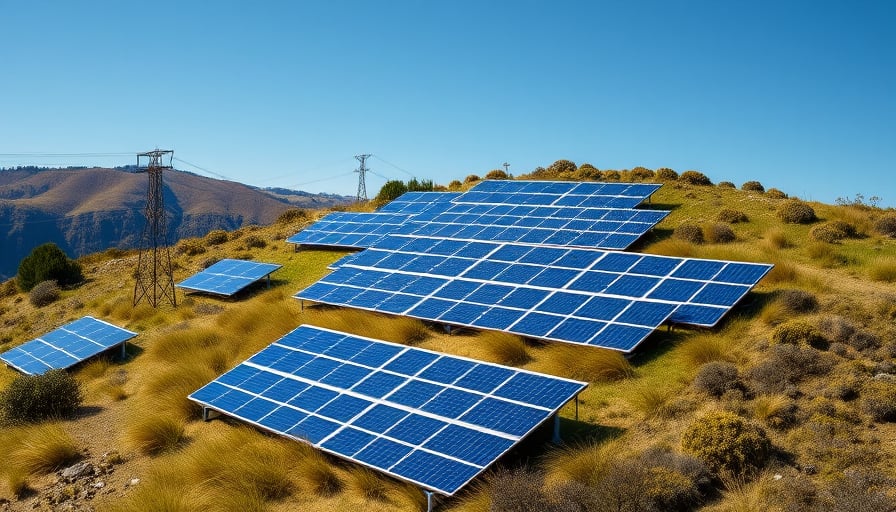
The government has introduced a “renewable‑generation incentive tariff” that rewards utilities for incorporating VRE into their mix. Contact Energy’s expansion plans—including the acquisition of new wind farms and the deployment of battery storage—qualify for this incentive, potentially offsetting a portion of capital expenditures. The interaction between incentive tariffs and standard retail rates creates a complex economic landscape that the regulator will assess for equity and affordability.
Infrastructure Investment Requirements
Transmission and Substation Upgrades
Current assessments indicate that the main transmission corridor between the Wellington and Hawke’s Bay regions operates at 95 % of its thermal limit during peak demand. To accommodate projected VRE additions, the utility must upgrade conductor ratings and install advanced monitoring systems. The capital increase will fund the procurement of high‑temperature, low‑weight aluminum conductors and the installation of phasor measurement units (PMUs) to facilitate real‑time situational awareness.
Distribution Modernization
Rural distribution networks face aging transformer assets and inadequate automation, limiting their ability to support bi‑directional power flows from distributed generation sources. Contact Energy plans to implement smart‑metering infrastructure, automated feeder switches, and micro‑grids equipped with distributed energy‑resource (DER) management systems. These upgrades aim to reduce voltage variability, improve outage response times, and enable the integration of community‑scale solar and battery storage projects.
Economic Impact and Consumer Cost Dynamics
Cost‑of‑Service Analysis
The utility’s cost‑of‑service model projects that the capital‑intensive upgrades will increase operating costs by approximately 2–3 % over a 10‑year horizon. The NEA will evaluate whether these cost increases translate into higher retail electricity prices or if they can be partially mitigated through the renewable‑incentive tariff and potential reductions in transmission losses.
Affordability Considerations
While the investment enhances reliability and supports national decarbonisation targets, the potential upward pressure on consumer bills must be addressed. Contact Energy’s proposed rate restructuring includes a tiered charging scheme that incentivises off‑peak usage, thereby aligning consumption patterns with renewable generation profiles. The regulator will assess the fairness of such schemes, particularly for low‑income households.
Forward Outlook
The capital increase and Milford’s entry as a significant shareholder signal a period of robust investment for Contact Energy. The company’s technical roadmap—centered on grid stability, renewable integration, and infrastructure modernization—aligns with New Zealand’s national energy transition objectives. The interplay between engineering solutions, regulatory oversight, and economic impacts will shape the utility’s trajectory in the coming decade, balancing reliability, affordability, and sustainability.