Corporate Update: Consumers Energy’s Underground Power‑Line Expansion
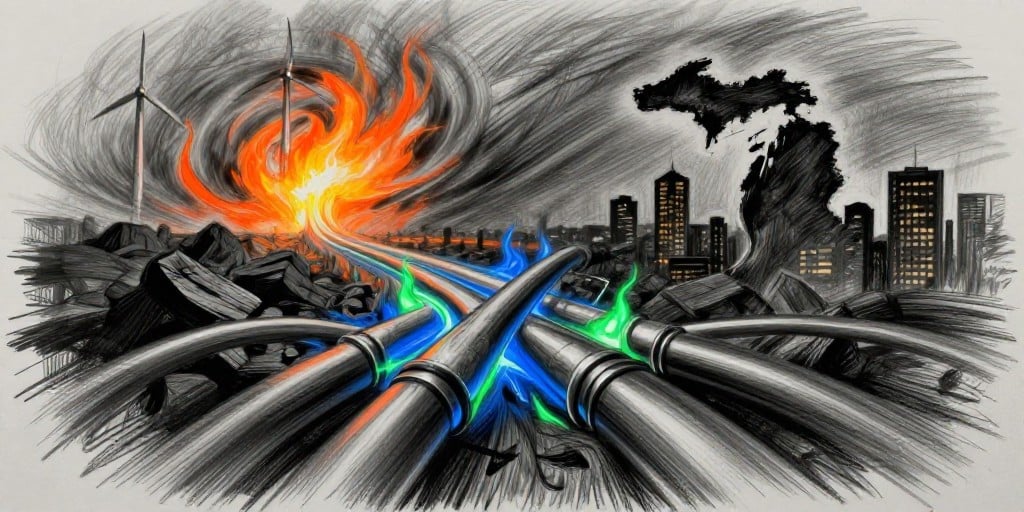
Consumers Energy, Michigan’s largest electric utility, has announced a substantial augmentation of its underground power‑line program. The company will add 67 miles of underground conductors in 2027, building upon 11 miles installed in 2026 and 10 miles added in 2024. This incremental rollout targets the portion of the distribution network that currently accounts for the majority of power‑loss events, thereby reducing outages caused by storm‑induced tree strikes and other weather‑related hazards.
Technical Rationale and Grid‑Stability Implications
Undergrounding is a well‑documented mitigation strategy for enhancing grid resilience. By relocating conductors below ground, the system becomes immune to many surface weather phenomena that plague overhead lines. Engineers have demonstrated that underground lines exhibit lower fault probability and reduced fault‑clearing times, as the physical separation from trees and other obstructions eliminates common fault initiation points. In high‑density urban and suburban corridors—precisely where Consumers Energy’s focus lies—this translates into higher service continuity during severe weather events.
From a power‑system dynamics perspective, underground conductors exhibit different impedance characteristics compared to overhead lines. The reduced inductive reactance can improve voltage regulation and damp transient oscillations, contributing to overall grid stability. Additionally, the decreased mechanical stress on conductors enhances long‑term reliability, a key metric in contemporary reliability‑by‑design frameworks.
Renewable Energy Integration and Infrastructure Investment
Michigan’s aggressive renewable portfolio standards, coupled with the proliferation of distributed photovoltaics (PV) and battery storage, impose new operational constraints on distribution feeders. Underground lines can facilitate higher power‑flow densities and smoother integration of distributed generation, mitigating issues such as voltage rise and feeder overloading. The planned expansion, therefore, aligns with the state’s broader objective to accommodate a growing share of variable renewable resources while maintaining quality of service.
The capital outlay for undergrounding is significant; however, Consumers Energy’s management indicates that the cost parity with reconstructing overhead lines is a critical factor. The company projects that savings in repair, maintenance, and outage response will offset the upfront investment. Moreover, the expected reduction in outage costs—both in terms of lost revenue and customer goodwill—provides a compelling case for accelerated deployment.
Regulatory Framework and Rate Structure Considerations
The expansion is contingent on regulatory approval, and the utility has articulated a target of 400 miles of underground conversion per year by 2028. To achieve this pace, Consumers Energy has earmarked capital for the following two years, illustrating a proactive capital planning strategy.
Regulators will likely scrutinize the rate‑structure implications of the investment. Traditional cost‑of‑service models may be challenged by the need to recover long‑term infrastructure costs while ensuring affordability for residential and commercial consumers. Potential avenues include investment‑rate adjustments, capital‑cost recovery mechanisms, or the introduction of performance‑based rate incentives tied to reliability metrics. The utility’s emphasis on safety and service continuity could also position it favorably within the evolving regulatory landscape that rewards grid modernization efforts.
Economic Impacts and Consumer Cost Dynamics
From an economic standpoint, the undergrounding initiative is expected to produce a net present value (NPV) benefit when factoring in reduced outage costs and lower maintenance expenditures. The utility’s projection that repair and maintenance savings will offset initial costs suggests a positive payback horizon, likely within 10–15 years, depending on the precise cost structure.
Consumer costs, however, may experience short‑term adjustments as the utility seeks to recover capital expenditures through rate increases or changes. Transparent communication regarding the long‑term benefits—such as fewer outages, safer operations, and smoother renewable integration—will be crucial to mitigate potential public resistance. Moreover, the reduction in outage frequency can indirectly lower consumer losses, especially for critical facilities such as hospitals and data centers, providing a broader societal benefit that justifies the investment.
Conclusion
Consumers Energy’s planned underground power‑line expansion represents a strategically aligned investment that addresses immediate reliability concerns while positioning the utility to accommodate Michigan’s renewable energy trajectory. By marrying engineering insights with a clear regulatory and economic framework, the company is poised to enhance grid stability, reduce outage costs, and support the broader energy transition for Michigan’s residents and businesses.