
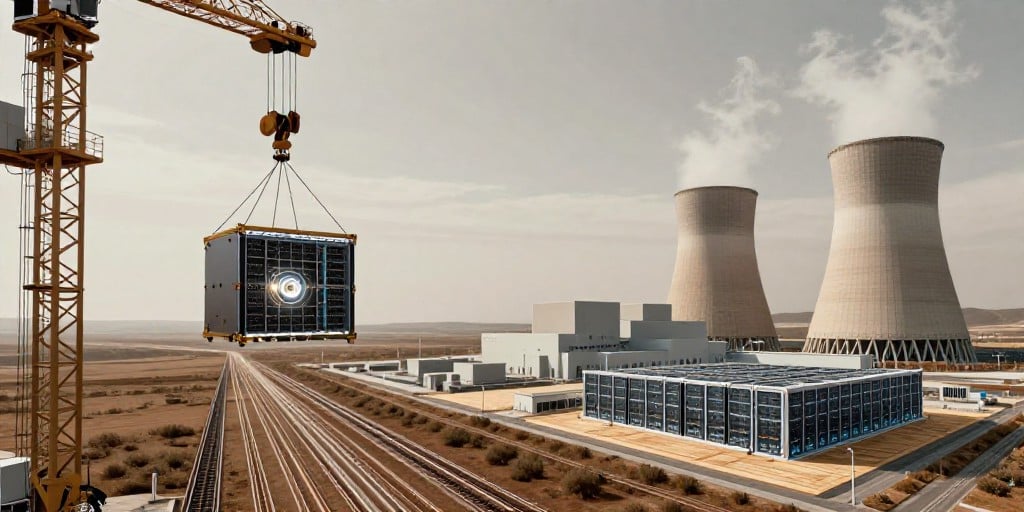
Constellation Energy Positions Itself at the Nexus of AI‑Driven Power Demand
Constellation Energy Corp. (CEG), the operator of the United States’ largest nuclear fleet, is increasingly viewed as a strategic partner for the burgeoning artificial‑intelligence (AI) sector. Former investment banker Felix Prehn, in a recent commentary, identified CEG as one of a handful of utilities poised to reap benefits from the growing demand for reliable, low‑carbon electricity that powers AI workloads.
Long‑Term Contracts Anchored in Nuclear Capacity
Prehn highlighted that leading technology firms are actively securing long‑term agreements to guarantee access to nuclear and other generation resources. While these companies pour capital into semiconductor fabs and data‑center construction, the underlying power requirements—particularly the need for steady, clean output—are becoming a critical factor in procurement strategies.
Constellation has capitalized on this trend by signing a series of multi‑year nuclear power purchase agreements (PPAs) in the second quarter of 2026. These contracts amount to 920 MW and have an average term of 18½ years, underscoring the company’s focus on long‑duration, stable revenue streams. A high‑profile deal with Walmart exemplifies this strategy, providing the retailer with a dedicated supply of nuclear power to support its data‑center initiatives.
Strategic Implications for AI Infrastructure
AI workloads are notoriously power‑hungry, often requiring vast, uninterrupted electricity supplies. The shift toward nuclear and other low‑carbon generation aligns with the environmental, social, and governance (ESG) criteria that many AI firms now prioritize. By directly tying its supply contracts to the needs of large AI infrastructure users, Constellation is positioning itself to capture a share of a sector expected to grow at a compound annual rate well above the broader utilities market.
Management’s Confidence and Updated Guidance
In response to the expanding pipeline of agreements, Constellation’s management has recently elevated its adjusted operating earnings guidance. The revision reflects confidence in the newly signed contracts’ robustness and the broader demand for dependable, clean electricity to fuel AI applications. Analysts note that such guidance adjustments are typically conservative; thus, the upgrade may signal a more aggressive outlook for the company’s future profitability.
Broader Economic Context
The alignment between utility contracts and AI demand illustrates a convergence of traditionally disparate sectors. On the one hand, nuclear utilities are grappling with aging infrastructure and regulatory challenges; on the other, the tech industry’s capital allocation decisions are increasingly driven by operational sustainability and resilience. Constellation’s ability to bridge these dynamics positions it as a key player in a macro trend where clean energy and high‑technology manufacturing co‑evolve.
Conclusion
Constellation Energy’s recent contractual achievements and revised earnings outlook underscore a strategic pivot toward serving the power needs of AI infrastructure. As the technology sector continues to scale its data‑center footprint, the demand for clean, reliable electricity will remain a core driver of value for utilities that can secure long‑term, stable agreements. Constellation’s role in this ecosystem exemplifies how traditional energy companies can adapt analytically and strategically to capitalize on emerging cross‑industry opportunities.