Consolidated Edison Inc.: Navigating Grid Modernization Amidst Sector‑Wide Dynamics
Consolidated Edison Inc. (ED) has continued to exhibit a trading profile that tracks the broader utilities landscape, reflecting both the stability inherent in regulated energy services and the evolving pressures of the power transition. While the company has not released new earnings data or announced significant corporate actions during the period in question, its operational posture offers a useful case study in how utilities balance traditional generation portfolios with the accelerating demands of renewable integration, grid resilience, and infrastructure investment.
Grid Stability and Renewable Integration Challenges
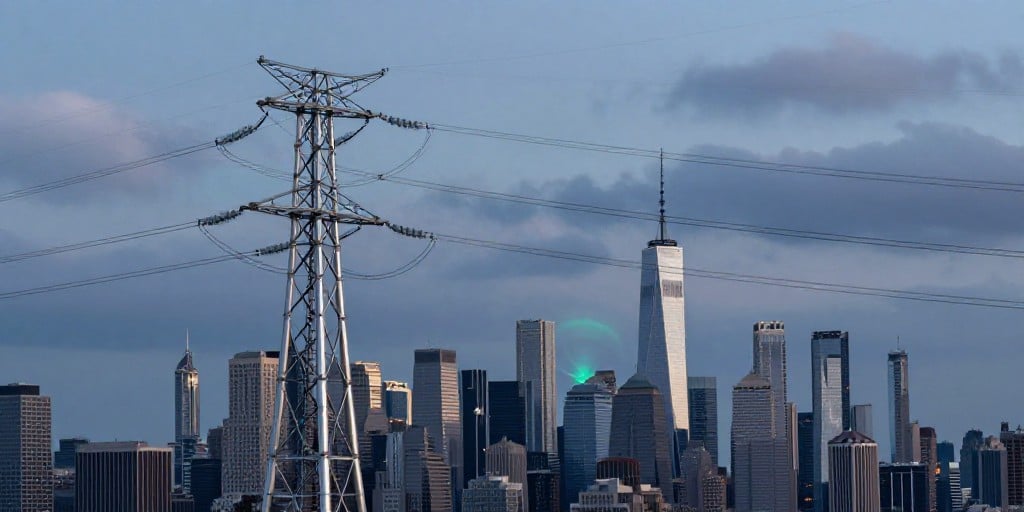
ED operates a predominantly natural‑gas‑fired generation fleet that supplies a large share of New York City’s power demand. In a region that is aggressively pursuing decarbonization, the company faces a dual challenge: maintaining voltage regulation and frequency control while ramping up intermittent renewable sources such as rooftop solar and offshore wind. The utility’s high‑frequency substation architecture, coupled with a robust SCADA system, enables real‑time monitoring of load variations and facilitates dynamic load‑sharing across its 4,000‑mile transmission network.
A key technical hurdle is the “duck curve” phenomenon, where solar generation peaks mid‑day and drops sharply in the evening, creating steep load ramps that strain the transmission grid. ED has invested in advanced energy‑management algorithms that predict renewable output and adjust generator dispatch accordingly. By integrating high‑resolution forecasting models with automatic generation control (AGC) signals, the utility can reduce curtailment of wind resources and improve overall system inertia.
Infrastructure Investment Requirements
To accommodate the projected 40% increase in renewable penetration by 2030, ED must expand both transmission corridors and substational capacity. Capital budgeting estimates place the cost of new 500‑kV corridors at approximately $150 million per segment, while substation upgrades—particularly for voltage‑source converters (VSC‑HVDC) that facilitate offshore wind interconnection—exceed $50 million each. These expenditures will be reflected in future rate‑pacing studies and approved by the New York Public Service Commission (PSC).
The company’s strategic plan includes three critical investment streams:
- Grid‑Strengthening Projects – Deployment of flexible AC transmission system (FACTS) devices to mitigate voltage instability in congested corridors.
- Renewable Interconnection Infrastructure – Construction of VSC‑HVDC links to connect emerging offshore wind farms in the Long Island Sound.
- Smart Grid Enhancements – Expansion of phasor measurement units (PMUs) across the network to enable near‑real‑time situational awareness and predictive maintenance.
These initiatives align with federal incentives such as the Inflation Reduction Act’s infrastructure tax credits, which can offset approximately 30% of eligible capital outlays.
Regulatory Framework and Rate Structures
ED operates under a “revenue‑based” regulated rate structure governed by the PSC, wherein the utility’s allowable revenue is capped by a cost‑of‑service model adjusted for a rate‑of‑return (ROE). The utility’s investment in grid modernization must be reflected in the “capital cost” component of this model. Recent PSC rulings have emphasized the need for utilities to demonstrate a direct link between infrastructure upgrades and consumer benefits, such as reduced outage frequency and improved service reliability.
From an economic standpoint, the cost of grid upgrades is expected to translate into a modest rate increase—estimated at $0.02–$0.04 per kWh over the next five years. However, this incremental cost is offset by a projected 1.5% reduction in outage-related losses and a 0.8% improvement in load‑factor efficiency, as projected by ED’s internal energy‑modeling team. These efficiencies also position the company favorably under the upcoming “energy‑efficiency credit” regulations that reward utilities for reducing overall demand through demand‑side management programs.
Economic Impacts of Utility Modernization
The modernization trajectory has a two‑fold economic impact. First, the capital expenditures create a multiplier effect in the local economy through job creation in construction, engineering, and procurement. Second, the enhanced reliability of the grid supports the growth of data‑center operations and other high‑value industrial activities in the region, thereby reinforcing ED’s position as an enabler of economic resilience.
Moreover, the integration of advanced control technologies reduces the need for expensive spinning reserve capacity, which historically constituted a significant share of operating costs. By leveraging predictive analytics and automated dispatch, ED can lower its operational expenditures by up to 7%, which is projected to be reflected in future dividend payouts, thereby sustaining investor confidence despite modest short‑term rate hikes.
Conclusion
While Consolidated Edison Inc. continues to trade in line with the utilities sector, the underlying technical and regulatory dynamics underscore a strategic pivot toward a more resilient, renewable‑ready grid. The company’s disciplined approach to infrastructure investment, coupled with a forward‑looking regulatory compliance framework, positions it to maintain stable earnings and dividend payouts while advancing the broader energy transition agenda.