Corporate News – Power System Modernization and Grid Resilience
Exelon Corp’s U.S. operating subsidiary, ComEd, has recently been honored with the 2026 ReliabilityOne® National Reliability Award along with several regional accolades, underscoring the company’s sustained commitment to grid resilience and cost‑effective service delivery. The recognitions follow a decade‑long investment program that has reportedly reduced power interruptions by more than 75 % relative to early‑2000s averages and cut extended outage incidents by nearly 70 %.
Investment Program and Performance Metrics
ComEd’s strategic plan—under final review in December—aims to sustain these performance gains while meeting rising demand from electrification and coping with intensified weather events. Key investments include:
| Asset | Technology | Impact |
|---|---|---|
| Automated switches | Remote‑controlled, high‑speed re‑routing | Reduced outage duration by 40 % |
| Reinforced poles | Fiberglass‑reinforced, wind‑shear resistant | Improved pole integrity during storms |
| Upgraded substations | Smart protection schemes, voltage regulation | Enhanced fault isolation and power quality |
| Distributed energy resource (DER) integration | Community solar, energy storage, demand response | Grid flexibility and reduced peak load |
In 2025, these upgrades enabled half of the customers affected by severe weather to regain power within two hours, and 98 % of affected customers within 24 hours.
Grid Flexibility and Renewable Integration
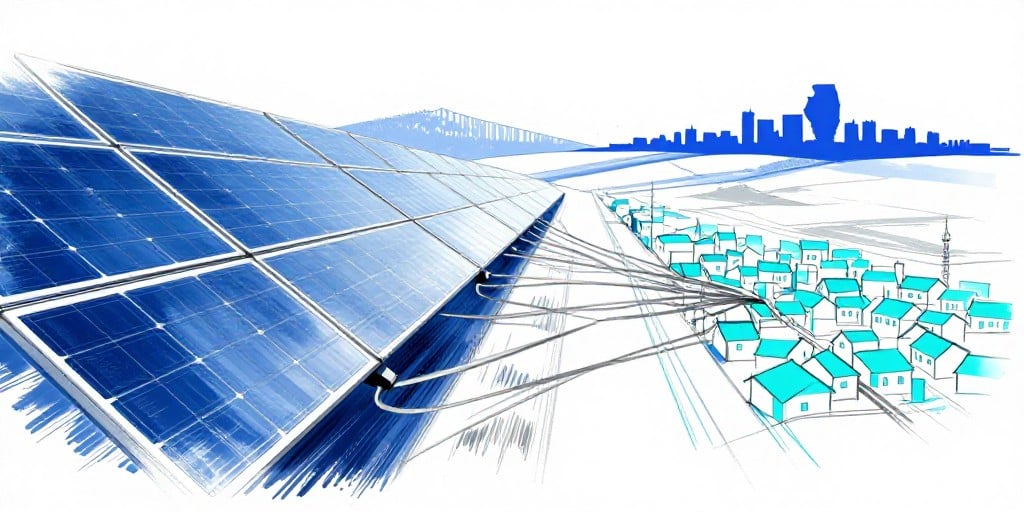
ComEd’s Grid Flexibility Award highlights its efforts to integrate distributed energy resources, such as community solar, and to deploy smart switching and enhanced infrastructure to maintain reliable power delivery. The utility’s approach includes:
- Real‑time monitoring of DER output using advanced SCADA and Phasor Measurement Units (PMUs).
- Dynamic load‑flow optimization that accounts for variable solar generation and battery discharge cycles.
- Coordinated voltage regulation through smart transformers and voltage‑controlled devices.
These measures mitigate the variability and intermittency inherent to renewable resources, ensuring that the bulk transmission system remains stable while allowing a higher penetration of clean energy.
Climate‑Resilient Infrastructure
ComEd’s grid plan incorporates climate resilience measures such as fiberglass poles and elevated substations to counter projected increases in heavy rainfall events and other environmental stresses. The use of fiber‑glass poles reduces corrosion and wind‑shear failure, while elevated substations prevent water ingress during floods. Together, these upgrades contribute to a robust transmission network capable of withstanding extreme weather scenarios.
Regulatory Frameworks and Rate Structures
The utility’s modernization efforts occur within a regulatory environment that increasingly emphasizes reliability, renewable integration, and consumer affordability. Key regulatory considerations include:
- Reliability Standards: State and federal reliability standards (e.g., NERC CIP, FERC Order 841) that dictate investment thresholds and performance metrics.
- Rate Design: Transition to time‑of‑use (TOU) and real‑time pricing (RTP) structures that encourage load shifting and DER utilization, while ensuring that fixed charges cover the capital costs of grid upgrades.
- Performance‑Based Incentives: Regulatory mechanisms that reward utilities for achieving reliability milestones, such as the ReliabilityOne® National Reliability Award.
Regulators typically require utilities to balance the financial burden of grid investment against the benefits of reduced outages and improved renewable integration, often resulting in a gradual increase in consumer rates. However, the long‑term economic benefits—reduced outage costs, increased system resilience, and avoided regulatory penalties—tend to outweigh the short‑term rate increases.
Economic Implications of Utility Modernization
The capital expenditures required for smart grid upgrades are substantial, often running into the billions for large utilities. However, the economic analysis demonstrates significant return on investment:
- Reduced Outage Costs: A 75 % reduction in interruptions translates into measurable savings for both the utility (e.g., avoided liability) and consumers (e.g., reduced loss of productivity).
- Enhanced Renewable Penetration: By providing grid flexibility, ComEd lowers the marginal cost of integrating solar and wind, allowing for lower wholesale electricity prices in the long run.
- Consumer Affordability: While rate structures may rise slightly to cover investment costs, the stability of supply and the ability to use lower‑cost renewable energy help keep overall consumer bills in check.
Conclusion
Exelon’s recognition through the ReliabilityOne® National Reliability Award and the Grid Flexibility Award reflects the broader industry trajectory toward resilient, clean energy infrastructure. By investing in smart grid technologies, climate‑resilient assets, and DER integration, ComEd is positioning itself as a leader in reliable electric service while simultaneously enabling a smoother transition to a renewable‑heavy electricity grid. The economic impacts—though involving upfront capital expenditures—promise long‑term benefits for both consumers and the broader market through enhanced reliability, lower outage costs, and accelerated clean‑energy deployment.