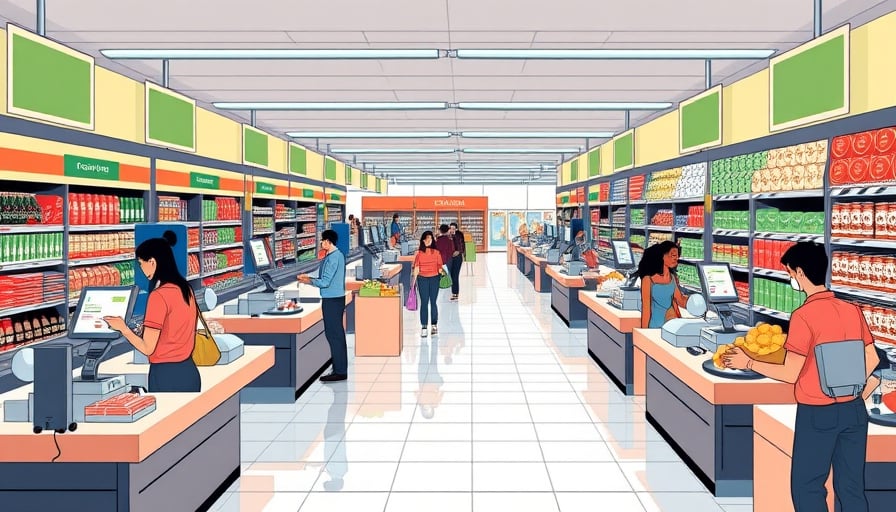
Coles Group Ltd. Navigates a Complex Landscape of Digital Growth and Brick‑and‑Mortar Resilience
The Australian retailer’s latest financial disclosures and the recent upgrade by JPMorgan underscore how Coles Group Ltd. is positioned at the nexus of shifting consumer behaviors, evolving retail models, and broader market dynamics. By examining the interplay between demographic trends, digital transformation, and physical retail, this article outlines the business opportunities that emerge for companies across the consumer sector.
1. Market Context: A Retailer in Transition
1.1 Valuation Gap and Competitive Positioning
JPMorgan’s elevation of Coles from a neutral to an overweight rating is predicated on a perceived valuation gap relative to its chief rival, Woolworths. Analysts suggest that the discount to earnings is primarily driven by market perception rather than fundamental weakness. This undervaluation offers a buying window for investors who recognize that the company’s earnings forecasts indicate a modest pricing advantage.
1.2 First‑Half Fiscal 2026 Results
Coles reported a rise in sales revenues across its grocery and general merchandise segments, yet net profit contracted. Adjusted earnings‑before‑interest and taxes (EBIT) continued to improve, reflecting operational efficiencies and cost discipline. The EBITDA expansion further highlights the company’s ability to generate cash flow amid margin pressures. However, the dip in net profit translated into a modest share‑price decline during the reporting period.
2. Demographic Shifts and Consumer Spending Patterns
2.1 The Rise of the “Millennial‑Plus” Shopper
Australia’s aging yet affluent demographic is reshaping spending patterns. Millennials, now a majority of the adult population, prioritize convenience, sustainability, and experiential shopping. This cohort is less price‑sensitive than older generations and is willing to pay a premium for curated product assortments and omnichannel experiences.
2.2 Generation Z’s Digital Natives
Generation Z represents the fastest-growing segment of the retail customer base. Their preference for digital-first interactions—such as mobile ordering, curb‑side pickup, and social‑media‑driven brand engagement—demands that physical retailers innovate in real time. Retailers that can seamlessly integrate online and offline touchpoints stand to capture this high‑value segment.
2.3 Post‑Pandemic Lifestyle Reorientation
The pandemic accelerated the adoption of home‑centric lifestyles, prompting consumers to seek healthier, locally sourced, and sustainably packaged products. Retailers that align with these preferences can differentiate themselves while capitalizing on the “shop local” movement that has gained cultural traction across Australia.
3. Digital Transformation Meets Physical Retail
3.1 Omnichannel Integration
Coles has invested heavily in digital infrastructure, notably through its Coles Now app and the expansion of click‑and‑collect services. The firm’s strategy to blend digital convenience with the tactile experience of its 3,000+ stores is emblematic of a broader industry shift. Successful integration is measured by “first‑click, second‑drop” metrics—customers who first engage online and finish the transaction in-store.
3.2 Data‑Driven Personalization
Advanced analytics allow Coles to tailor product recommendations, personalized coupons, and dynamic pricing based on shopper behavior. This not only drives incremental sales but also enhances loyalty in a crowded marketplace. Retailers that harness data to deliver micro‑personalized experiences can deepen customer lifetime value.
3.3 Experiential Retailing
The physical store is evolving into an experiential hub: in‑store events, local food tastings, and community‑centric initiatives. These experiences foster brand affinity and provide a buffer against e‑commerce’s price‑driven competition. The trend indicates that brick‑and‑mortar remains indispensable for building emotional connections with consumers.
4. Forward‑Looking Opportunities
| Opportunity | How It Translates to Market Opportunity | Key Metrics |
|---|---|---|
| Sustainability‑Focused Product Lines | Growing consumer demand for eco‑friendly goods offers margin premium. | Sales growth in green categories, ESG score improvements |
| Hyper‑Personalized Loyalty Programs | Higher engagement drives repeat purchase rates and reduces acquisition costs. | Redemption rates, average basket size |
| Community‑Engaged Store Formats | Positioning stores as local hubs can attract younger shoppers. | Foot‑traffic, community event participation |
| AI‑Enabled Supply Chain Optimization | Reduces stock‑out rates and inventory carrying costs. | Inventory turnover, shrinkage reduction |
| Digital‑First Marketing Campaigns | Leverages Gen Z’s media consumption patterns for viral reach. | Social media engagement, influencer ROI |
5. Conclusion
Coles Group Ltd.’s recent performance illustrates the complex balance between revenue growth and profitability in an environment where consumers demand both digital convenience and tangible, experiential shopping. JPMorgan’s valuation assessment, coupled with the company’s first‑half fiscal 2026 results, signals a market that still perceives untapped value. For investors and industry stakeholders, the takeaway is clear: the intersection of digital innovation, physical retail resilience, and demographic-driven consumer preferences presents a rich tapestry of opportunities for companies willing to adapt their strategies and embrace an omnichannel, data‑driven future.