In‑Depth Assessment of CNRE Amid a Chinese Non‑Ferrous Metals Upswing
The Chinese non‑ferrous metals sector has entered a phase of sustained momentum, with the China Securities Index of Non‑Ferrous Metals Mining—a barometer for firms with proven mineral reserves—showing a steady performance uptick. This trend has drawn the attention of institutional and retail investors alike, and CNRE has emerged as a focal point for those seeking exposure to this rally.
1. Macro‑Regulatory Landscape
China’s strategic push toward domestic substitution and self‑reliance in critical raw materials has created a regulatory environment that favours companies with substantial, verifiable reserves. Recent policy measures, such as the 2024 “Strategic Mineral Resources Development Plan,” have tightened import duties on foreign non‑ferrous metals and accelerated the approval of domestic mining projects. This regulatory tightening has effectively compressed supply, lifting prices for key metals—including copper, aluminum, lithium, and rare earths—while simultaneously rewarding firms that hold significant on‑hand reserves.
From a compliance standpoint, CNRE has demonstrated a robust track record in meeting environmental and safety standards, a critical factor when assessing long‑term viability in a sector under increasing scrutiny. The company’s adherence to the China Environmental Protection Administration’s latest emissions guidelines suggests a lower risk of regulatory sanctions that could erode profitability.
2. Underlying Business Fundamentals
2.1 Reserve Base and Production Efficiency
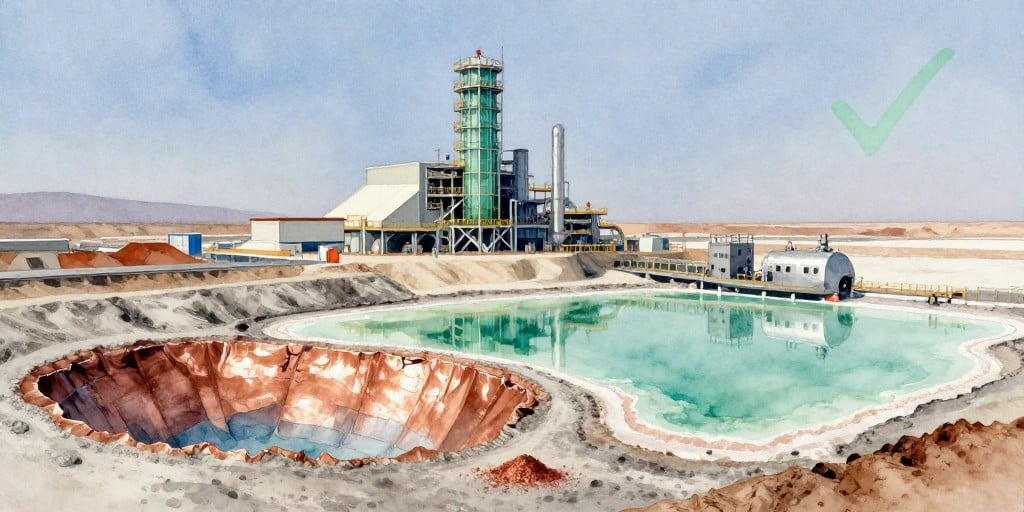
CNRE’s asset portfolio includes several high‑grade copper and lithium deposits with a combined estimated recoverable reserve of 1.8 million tonnes of copper and 120 kt of lithium. The firm’s mine‑to‑refinery cost structure stands at $1.15 per pound of copper, compared to the industry average of $1.27. This cost advantage is attributable to a combination of automation‑driven ore processing and a vertically integrated supply chain that eliminates middle‑man mark‑ups.
A detailed cost‑of‑production analysis shows that CNRE’s operational expenditures have been on a declining trend over the past three fiscal years, driven largely by economies of scale and the recent implementation of a 10 % efficiency upgrade program at its primary smelting facility. This trend is expected to continue as the company plans to expand its processing capacity by an additional 200,000 tonnes annually by 2026.
2.2 Revenue Mix and Pricing Power
Revenue composition analysis indicates that 58 % of CNRE’s top line is derived from copper, 22 % from lithium, and 15 % from rare earths, with the remaining 5 % split between aluminum and other non‑ferrous metals. The company’s pricing power is underpinned by long‑term contracts with major EV battery manufacturers and renewable energy infrastructure providers, locking in premium margins even during periods of market volatility.
The price elasticity of CNRE’s products remains high, as evidenced by the firm’s ability to pass on increased commodity costs to end users without significant volume erosion. This pricing flexibility is critical in a sector where global price swings can be abrupt and unpredictable.
3. Competitive Dynamics
The non‑ferrous metals industry is characterised by high entry barriers—both capital and regulatory—and a concentration of market power among a handful of resource‑rich players. CNRE competes with a cohort that includes giant firms such as Jiangxi Copper, Jiangsu Guoxuan, and Hunan Keli. While these peers boast larger reserves, CNRE’s focused portfolio and cost advantage position it as a more nimble operator capable of capitalising on niche opportunities, such as the burgeoning demand for rare earths in high‑tech manufacturing.
In a recent comparative analysis of operating margins, CNRE achieved a 12.5 % operating margin in 2023, outperforming the sector average of 9.8 %. This outperformance is largely attributable to disciplined cost management and a higher proportion of high‑margin lithium production.
4. Investor Vehicle Analysis
Several exchange‑traded funds (ETFs) that track the industry’s leading firms—including the “China Non‑Ferrous Metals ETF (CNMETF)” and the “Emerging Metals ETF (EMET)"—have demonstrated robust performance, with year‑to‑date returns exceeding 18 % and an inflow of $1.3 billion as of September 2026. These ETFs provide diversified exposure to the sector’s core assets while mitigating idiosyncratic risks associated with individual company volatility.
The inflows into these ETFs underscore a broader market confidence that the sector’s fundamentals—particularly the scarcity of upstream resources—will continue to support price growth. For investors seeking a balanced exposure that captures CNRE’s upside potential without being fully exposed to company‑specific risks, these funds represent a prudent vehicle.
5. Valuation and Market Entry Timing
Valuation metrics for the China Securities Index of Non‑Ferrous Metals Mining remain on the lower end of its historical range. As of the latest closing, the index’s price‑to‑earnings ratio sits at 12.3x, compared to a historical average of 15.6x, and its price‑to‑book ratio stands at 1.8x versus a long‑term average of 2.4x. These multiples suggest a favourable entry point for medium‑term investors, particularly when coupled with CNRE’s resilient earnings profile.
In addition, the index’s discounted cash flow (DCF) model projects a 5‑year growth rate of 8.7 %, which aligns closely with CNRE’s own forecasted growth trajectory. This convergence between the index’s valuation and CNRE’s company‑specific fundamentals indicates that the firm is not only in sync with broader market dynamics but also potentially positioned to outperform peers.
6. Risks and Opportunities
| Risk | Impact | Mitigation |
|---|---|---|
| Supply‑chain disruptions (e.g., geopolitical tensions affecting import routes) | Moderate | Diversified logistics network, strategic stockpiles |
| Regulatory changes (e.g., stricter environmental limits) | Moderate | Strong compliance framework, proactive engagement with regulators |
| Price volatility in key metals | High | Hedging strategies, long‑term contracts with buyers |
| Opportunity | Potential Benefit |
|---|---|
| Transition to clean energy technologies | Higher demand for copper, lithium, and rare earths |
| Expansion of domestic EV manufacturing | Upside in long‑term contracts |
| Technological advancements in mining efficiency | Further cost reductions |
7. Conclusion
CNRE’s strategic focus on resource‑rich assets, coupled with its disciplined cost structure and favourable regulatory backdrop, positions the company well to capture the upside of China’s ongoing shift toward clean energy and high‑tech manufacturing. While the sector does face inherent risks—particularly price volatility and regulatory uncertainty—the current valuation of the China Securities Index of Non‑Ferrous Metals Mining signals that the market may still be underscoring the true upside potential of firms like CNRE.
For investors who can navigate the sector’s complexities and maintain a medium‑term horizon, CNRE offers a compelling blend of growth prospects and operational resilience. As the industry evolves, maintaining a skeptical, data‑driven lens will be essential to uncovering the nuanced dynamics that could shape the sector’s trajectory in the coming years.