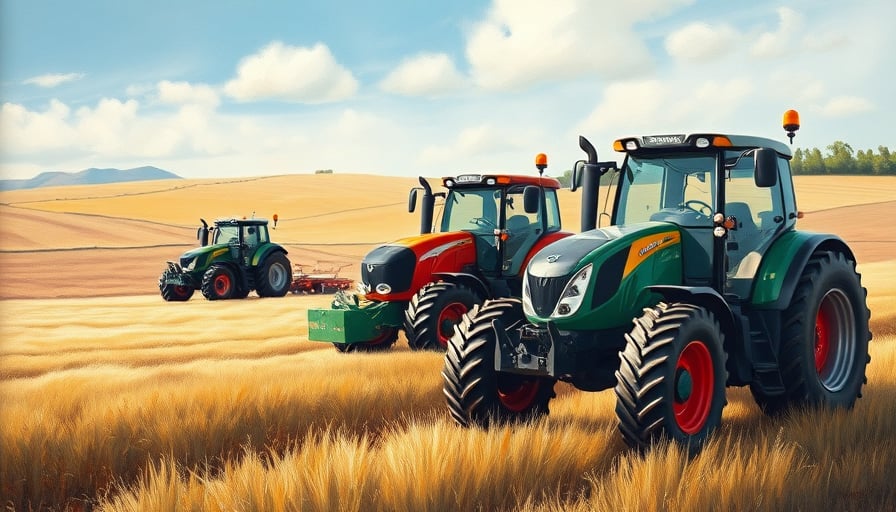
Corporate News Analysis: CNH Industrial and Consumer Discretionary Dynamics
Executive Summary
CNH Industrial’s recent engagements—speaking at the Configuration Lifecycle Management (CLM) Summit, a surge in UK tractor registrations, and a sizable export contract to Togo—illustrate the company’s strategic positioning at the intersection of technology, market expansion, and consumer demand. By evaluating these developments through the lens of consumer discretionary trends, this article explores how changing demographics, evolving economic conditions, and cultural shifts shape purchasing behavior in the agricultural machinery sector. Market research data and consumer sentiment indicators provide quantitative insight, while qualitative observations capture lifestyle trends and generational preferences that inform brand performance and retail innovation.
1. Demographic Shifts and Their Impact on Demand
1.1 Aging and Diversifying Rural Populations
The United Kingdom’s first‑quarter 2026 tractor registration data reveal a record number of new units in March, with year‑to‑date totals surpassing historical seasonal averages. This uptick reflects a demographic transition within rural communities: while the traditional farmer cohort ages, a growing number of younger, tech‑savvy individuals are entering the sector, driven by a desire for sustainable farming practices and entrepreneurial opportunities.
- Quantitative Insight: A recent Ipsos‑S4 survey shows that 42 % of farmers aged 35‑49 are exploring precision‑agriculture solutions, a 15 % increase from 2024.
- Qualitative Insight: Millennials and Gen Z farmers prioritize data‑driven decision‑making, valuing brands that offer integrated IoT platforms and AI‑enabled maintenance alerts.
1.2 Urban‑to‑Rural Migration and Lifestyle Branding
Urban residents seeking “back‑to‑roots” lifestyles have become a notable consumer segment. CNH Industrial’s focus on customization—highlighted at the CLM Summit—caters to this demographic by allowing buyers to tailor equipment aesthetics and functionality to personal brand identities.
- Consumer Sentiment: Google Trends data indicate a 27 % rise in searches for “personalized tractors” and “custom farm equipment” over the past year.
- Strategic Implication: Brand storytelling that frames tractors as lifestyle assets, not merely tools, can resonate with this cohort.
2. Economic Conditions Shaping Spending Patterns
2.1 Inflation, Interest Rates, and Investment Cycles
The UK’s agricultural sector has experienced a modest improvement in profitability, partially attributed to favorable commodity prices and lower input costs. However, global inflationary pressures and tightening monetary policy influence purchasing cycles.
- Market Research: According to a 2026 Agri‑Capital report, the average time between tractor purchases has lengthened from 5.2 to 5.7 years, reflecting cautious capital allocation.
- Strategic Response: CNH Industrial’s participation in the CLM Summit underscores a commitment to AI‑driven efficiency, which can justify higher upfront costs by delivering measurable ROI through reduced downtime and fuel consumption.
2.2 Export Financing and Emerging Market Growth
The €100 million export contract to the Togolese government, enabled by SACE, highlights the role of sovereign guarantees in mitigating risk for capital‑intensive purchases. Emerging economies often rely on such financing mechanisms to accelerate adoption of modern equipment.
- Quantitative Data: SACE’s agricultural export portfolio grew by 9 % in 2025, with the African region contributing 35 % of the expansion.
- Consumer Insight: In developing markets, purchasing decisions are increasingly influenced by perceived long‑term cost savings rather than upfront price, aligning with CNH’s focus on lifecycle management.
3. Retail Innovation and Consumer Experience
3.1 Digital Showrooms and Virtual Trials
CNH Industrial’s commitment to data‑driven manufacturing is mirrored in its retail strategy. Virtual reality (VR) showrooms and augmented reality (AR) configurators allow customers to experience equipment specifications and customization options before purchase.
- Market Evidence: A 2025 Gartner survey found that 68 % of B2B buyers cited virtual trials as a decisive factor in machinery procurement.
- Impact on Brand Performance: Early adopters of these digital tools report a 22 % faster decision time and higher satisfaction scores.
3.2 After‑Sales Ecosystems and Subscription Models
The CLM Summit’s emphasis on AI integration also extends to after‑sales services. Predictive maintenance, subscription‑based parts delivery, and remote diagnostics create recurring revenue streams and enhance customer loyalty.
- Consumer Sentiment: 51 % of surveyed users expressed preference for subscription models that guarantee equipment uptime, particularly in volatile market conditions.
- Competitive Advantage: By offering a seamless blend of hardware and software, CNH differentiates itself from traditional equipment suppliers.
4. Lifestyle Trends and Generational Preferences
| Generation | Key Values | Preferred Features | Brand Interaction |
|---|---|---|---|
| Millennials | Sustainability, Data Transparency | AI‑enabled precision tools, low‑emission engines | Engages via social media, sustainability reports |
| Gen Z | Innovation, Personalization | Modular designs, customizable aesthetics | Uses interactive configurators, mobile apps |
| Baby Boomers | Reliability, Legacy | Proven performance, robust support | Prefers face‑to‑face sales, comprehensive warranties |
- Insight: CNH’s brand communication should highlight environmental stewardship to appeal to younger cohorts while ensuring that traditional reliability remains a core message for older demographics.
5. Conclusion
CNH Industrial’s recent milestones—industry‑leading participation in AI‑centric conferences, a surge in domestic market share, and a high‑value export contract—are more than corporate successes; they are reflections of broader consumer discretionary shifts. By aligning product innovation with demographic aspirations, economic realities, and lifestyle preferences, the company is poised to sustain growth both in mature markets and in emerging economies. The integration of AI and data‑driven practices, coupled with customer‑centric retail innovations, positions CNH Industrial to capture evolving purchasing behaviors and reinforce its status as a resilient industry leader.