Canadian National Railway Company Reports Third‑Quarter 2026 Performance and Leadership Transition
Financial Performance
Canadian National Railway Company (CN) released its third‑quarter 2026 financial results, indicating a modest yet positive trajectory in key performance indicators relative to the same period in 2025. Revenue increased by 1.8 % year‑over‑year, while earnings per share grew by 2.4 %, reflecting the company’s disciplined cost management and operational efficiencies.
Operating income rose by $138 million (an increase of 4.1 %), and adjusted operating measures—such as adjusted earnings before interest, tax, depreciation, amortization, and amortization—showed a further uptick, underscoring the improvement in core profitability. Free cash flow for the quarter climbed to $1.45 billion, providing a stronger liquidity position that can be deployed for capital investment, dividend payments, or share repurchase programs.
Leadership Transition in the Finance Function
The company also announced a planned succession in its finance leadership. Ghislain Houle, who has served as Executive Vice‑President and Chief Financial Officer for over thirty years, will retire on February 1 , 2027. Jamie Lockwood, currently Vice‑President of Investor Relations and Special Projects, has been appointed to succeed Houle as Chief Financial Officer on the same date.
The transition follows a structured succession‑planning process designed to preserve continuity of financial stewardship. Houle will retain his role as Executive Vice‑President and CFO through the end of the fiscal year and will continue to advise the CEO as a strategic advisor until March 31 , 2027, ensuring a smooth handover.
Capital Expenditure and Strategic Investment
CN reiterated its commitment to a disciplined capital investment program. Expenditures for 2026 will focus on:
- Network expansion to enhance freight capacity and service reliability.
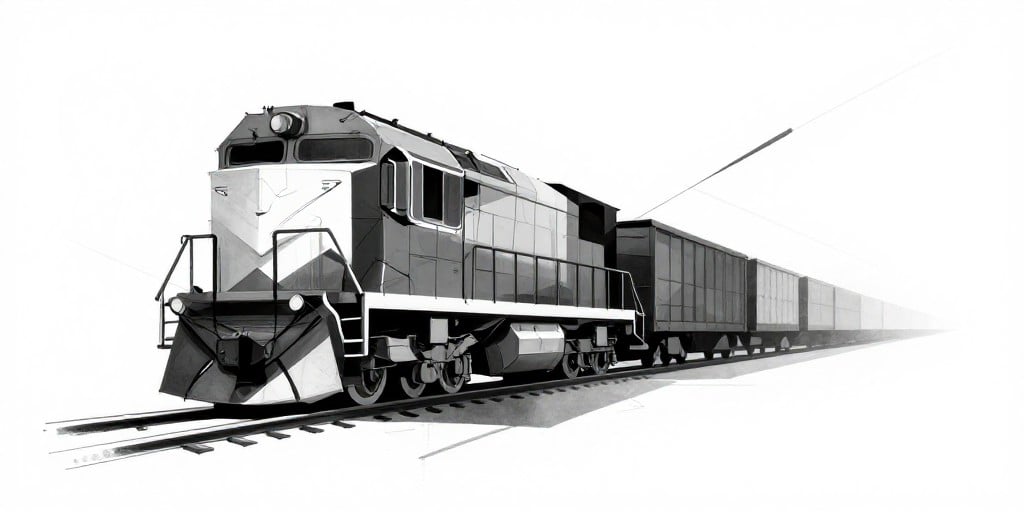
- Fleet upgrades to incorporate modern locomotives and rolling stock, improving fuel efficiency and safety.
- Sustainability initiatives, including electrification projects and carbon‑reduction strategies that align with broader environmental, social, and governance (ESG) objectives.
Management emphasized that these investments will be financed through a combination of internal cash generation and judicious leverage, preserving a robust balance sheet.
Shareholder Value and Corporate Governance
CN’s financial discipline is expected to support consistent shareholder value creation. The company will maintain its policy of returning capital through dividends and share repurchases, contingent upon achieving targeted earnings and cash flow metrics.
The leadership transition and ongoing investment strategy are positioned to strengthen CN’s competitive positioning in the North American freight rail sector, which continues to experience upward pressure from e‑commerce growth, supply‑chain resilience demands, and regulatory emphasis on sustainable transportation. By integrating cost control, operational excellence, and strategic capital allocation, CN aims to deliver durable returns to its stakeholders while adapting to evolving market dynamics.