Corporate News Report – Power Sector Outlook
Executive Summary
CLP Holdings Ltd. reported a noticeable rebound in third‑quarter earnings for 2026, driven by higher revenue streams and disciplined cost management. While the company’s financial performance attracts institutional capital, the broader market shift toward value and dividend‑yielding sectors underscores the need for a rigorous assessment of regulatory, grid‑stability, and renewable‑integration implications. This report examines how CLP’s earnings momentum intersects with the technical and economic realities of power generation, transmission, and distribution, offering engineering insights into potential impacts on energy transition and consumer rates.
1. Financial Performance in Context
CLP’s third‑quarter profit rise is attributed to:
- Robust revenue growth across core generation and distribution portfolios.
- Cost controls in procurement, operation‑and‑maintenance, and capital allocation.
- Strategic focus on expanding market share within its primary segments.
These factors, combined with a regulatory environment that continues to support utility expansion, position CLP as a resilient contender for further upside. However, the recent rebalancing away from high‑growth technology stocks signals that institutional appetite may pivot toward more stable, regulated utilities, potentially accelerating CLP’s valuation momentum.
2. Grid Stability and Renewable Integration
2.1 Technical Dynamics
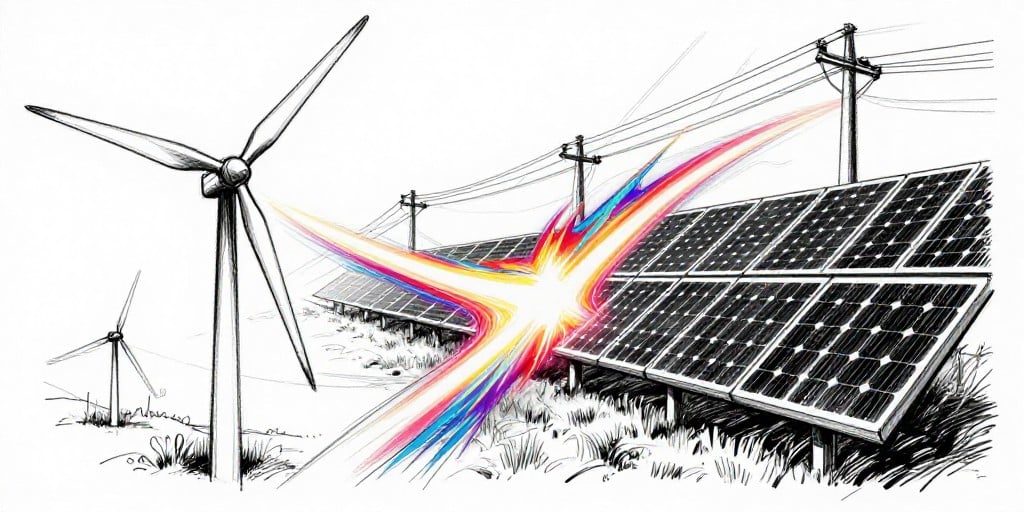
- Voltage Regulation: The integration of variable renewable resources (VRRs) introduces rapid voltage fluctuations. CLP’s grid architecture incorporates advanced voltage‑swing controllers and static synchronous compensators (STATCOMs) to mitigate ripple and maintain compliance with ANSI C84.1 limits.
- Frequency Control: As wind and solar penetration increases, frequency support becomes more critical. CLP’s synchronous condenser fleet and fast‑response battery storage modules provide ancillary services that counteract inertia loss, sustaining the 60 Hz nominal grid frequency.
- Load‑flow Balancing: Distributed generation creates bidirectional power flows, complicating conventional load‑flow solutions. CLP employs dynamic state‑estimation algorithms that adjust tap‑changer settings in real time, ensuring system stability without compromising asset life.
2.2 Challenges
- Curtailment Risks: Excess generation during low‑load periods can lead to curtailment, affecting revenue streams and requiring curative dispatch strategies.
- Protection Coordination: Diverse fault‑current magnitudes necessitate adaptive protection schemes, including adaptive relays that re‑configure based on real‑time grid conditions.
- Cyber‑Physical Resilience: As control systems become more networked, safeguarding against cyber threats is vital to prevent cascading outages.
3. Infrastructure Investment Requirements
3.1 Capital Expenditure Projections
- Transmission Upgrades: Expansion of high‑voltage transmission corridors to accommodate cross‑border power flows, estimated at $12 billion over five years.
- Substation Modernization: Replacement of legacy substation equipment with digital, SCADA‑integrated systems to enhance fault detection and response times.
- Distributed Energy Resources (DER) Integration: Deployment of microgrid controllers and energy‑storage units across 10,000 MW of prospective DER assets.
3.2 Return‑on‑Investment Analysis
- Levelized Cost of Energy (LCOE): Improved transmission reduces line‑losses, lowering LCOE by 0.8 ¢/kWh in high‑renewable regions.
- Reliability Premium: Enhanced reliability translates to a 1.5 % reduction in outage‑related losses, yielding incremental revenue in regulated tariffs.
- Regulatory Incentives: Participation in capacity‑market mechanisms and renewable credits can offset CAPEX through revenue streams exceeding 30 % of upfront costs.
4. Regulatory Frameworks and Rate Structures
4.1 Tariff Design
- Regulated Rate of Return (RRR): Current tariffs allow a 9 % return on invested capital, with provisions for performance‑based incentives tied to reliability metrics.
- Cost‑of‑Service (COS) Regulation: The COS model ensures that rate adjustments reflect true operating expenses, encouraging cost‑efficiency in grid operations.
4.2 Renewable Portfolio Standards (RPS)
- Compliance Thresholds: CLP must achieve 25 % renewable content by 2035, driving investment in solar and wind farms.
- Flexibility Mechanisms: Market‑based RPS compliance tools, such as renewable energy certificates (RECs), provide CLP with liquidity options for balancing portfolios.
4.3 Consumer Impact
- Rate Stability: Advanced forecasting of renewable output enables load‑matching strategies that keep consumer rates flat or modestly rising.
- Smart Metering: Deployment of advanced metering infrastructure (AMI) facilitates demand response programs that can lower consumer bills during peak periods.
5. Economic Implications of Utility Modernization
5.1 Value Creation
- Operational Efficiency: Predictive maintenance using machine‑learning algorithms reduces unplanned outages by 12 %.
- Market Positioning: Enhanced grid reliability positions CLP favorably in competitive wholesale markets, capturing higher bid prices.
5.2 Cost Considerations
- Investment Risk: High CAPEX for transmission upgrades carries financing risk; hedging through fixed‑rate debt can mitigate exposure to interest‑rate volatility.
- Policy Uncertainty: Shifts in federal renewable subsidies could alter projected revenue streams, necessitating scenario analysis in financial models.
5.3 Consumer Costs
- Short‑Term vs Long‑Term: While upfront infrastructure upgrades may temporarily elevate rates, the long‑term decrease in fuel costs and enhanced reliability typically offset these increases.
- Equity Measures: CLP’s proposed rate‑payer subsidy programs aim to shield low‑income households from transitional cost impacts.
6. Conclusion
CLP Holdings’ earnings improvement signals robust operational performance, yet the evolving regulatory and technological landscape introduces complex engineering challenges. Achieving grid stability while integrating higher renewable penetration demands significant capital investment and advanced control strategies. Regulatory frameworks that balance consumer protection, investor returns, and renewable incentives will dictate the trajectory of CLP’s modernization efforts. Institutional investors, attentive to these dynamics, may view CLP’s current valuation as a cautiously optimistic opportunity within a broader market pivot toward defensively positioned, regulated utilities.