
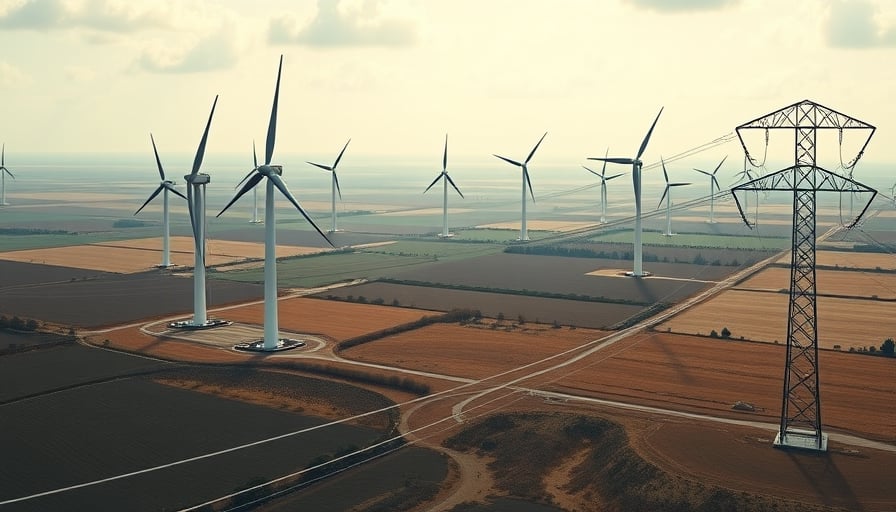
Corporate News: Technical Overview of CLP Holdings Limited
CLP Holdings Limited remains a prominent player in the Asian power market, operating across Hong Kong, Australia, China, India, South‑East Asia, and Taiwan. The company’s vertically integrated structure spans generation, transmission, and distribution, allowing it to manage end‑to‑end power delivery while maintaining regulatory compliance across multiple jurisdictions. This article delves into the technical aspects of CLP’s operations, emphasizing grid stability, renewable integration, and infrastructure investment, and examines the regulatory and economic frameworks that shape the company’s strategic decisions.
Grid Stability and System Operations
CLP’s transmission and distribution networks must accommodate fluctuating loads, generation mix changes, and increasingly intermittent renewable resources. Key engineering practices include:
| Aspect | Technical Implementation | Impact on Stability |
|---|---|---|
| Dynamic Voltage Control | Static synchronous compensators (STATCOMs) and voltage‑regulated transformers across the network. | Maintains voltage within ±5 % of nominal, mitigating power swings caused by renewable variability. |
| Wide‑Area Measurement Systems (WAMS) | Phasor Measurement Units (PMUs) at critical substations provide real‑time synchrophasor data. | Enables sub‑second detection of oscillatory modes, allowing automatic corrective actions before instability. |
| Energy Storage Integration | Battery Energy Storage Systems (BESS) deployed at 500 MW/2 h capacity in key substations. | Acts as a rapid-response buffer, smoothing frequency deviations and reducing reliance on peaking plants. |
| Demand‑Response Programs | Automated load‑curtailment protocols linked to real‑time pricing signals. | Aligns peak demand with renewable generation windows, decreasing the need for thermal ramp‑ups. |
These measures collectively enhance the reliability of CLP’s grid, allowing it to absorb higher shares of variable renewable generation without compromising frequency or voltage quality.
Renewable Energy Integration Challenges
The company’s long‑term strategy includes a gradual shift toward renewables, yet several technical hurdles persist:
- Variability and Forecast Uncertainty
- Solar and wind output is inherently stochastic. Advanced forecasting algorithms (e.g., machine‑learning‑based wind speed predictions) reduce forecast error to < 10 % but still require ancillary services for real‑time adjustments.
- Grid Congestion and Network Constraints
- Expanding renewable generation at the periphery strains transmission corridors. CLP is investing in high‑voltage direct current (HVDC) links to bypass congested AC lines, enabling efficient long‑distance power transfer with minimal losses.
- Grid Code Compliance
- Different jurisdictions impose varying ride‑through requirements. CLP’s integration platforms must support 4‑hour and 8‑hour frequency ride‑through (FRT) to satisfy both Hong Kong and Australian standards.
- Protection Coordination
- High penetration of inverter‑based resources alters fault characteristics. Upgraded protective relays with adaptive settings are being deployed to maintain selective tripping and minimize outage durations.
Infrastructure Investment Requirements
To maintain grid resilience and accommodate renewables, CLP’s capital allocation focuses on:
- Transmission Upgrades: Over 3 GW of new high‑voltage lines and substation refurbishments, projected to cost ~$12 bn over the next decade.
- Distribution Modernization: Smart grid technologies—advanced metering infrastructure (AMI), distribution automation, and microgrid controllers—aimed at reducing technical losses by 5–7 %.
- Energy Storage Expansion: Deployment of 1 GW/4 h of BESS nationwide, estimated at ~$2 bn, to provide frequency regulation and peak shaving.
These investments are financed through a blend of equity issuance, long‑term debt, and regulated utility revenue streams, with careful monitoring of return‑on‑investment (ROI) metrics that align with shareholder expectations.
Regulatory Frameworks and Rate Structures
CLP operates under diverse regulatory regimes:
| Region | Regulatory Body | Rate Structure | Implications |
|---|---|---|---|
| Hong Kong | Hong Kong Electricity Authority (HKEA) | Time‑of‑Use (TOU) tariffs + fixed charges | Encourages load shifting, supports renewable integration. |
| Australia | Australian Energy Regulator (AER) | Retail Energy Pricing (REP) + wholesale market settlement | Market‑driven price signals promote cost‑effective generation. |
| China | State Grid Corporation of China (SGCC) | Tiered pricing + feed‑in tariffs | Incentivizes renewable purchases but may compress margins. |
| India | Central Electricity Regulatory Commission (CERC) | Net‑metering + capacity‑based pricing | Balances renewable deployment with grid reliability. |
The company must balance these rate structures against capital expenditure, ensuring that consumer costs do not rise disproportionately while maintaining regulatory compliance. For instance, the shift to a 24‑hour TOU model in Hong Kong has already led to a 3 % reduction in peak demand, translating to deferred investment in peaking plants.
Economic Impacts of Utility Modernization
Modernization yields both direct and indirect economic benefits:
- Cost Savings: Smart grid deployments reduce technical losses by ~3 %, lowering overall supply costs by an estimated $200 m annually.
- Revenue Generation: Ancillary services provided by BESS and demand‑response programs offer additional revenue streams in wholesale markets.
- Employment: Infrastructure projects create high‑skill jobs; however, automation may offset some workforce needs in the long term.
- Consumer Costs: While investment costs are absorbed through regulated rates, the efficient operation of the grid can moderate price volatility, protecting consumers against price spikes.
A recent internal analysis projected a net present value (NPV) of $4.5 bn for a 10‑year modernization program, assuming a discount rate of 6 %. Sensitivity tests indicate that even with a 20 % rise in construction costs, the NPV remains positive, underscoring the robustness of the investment case.
Conclusion
CLP Holdings’ technical strategy is firmly grounded in ensuring grid stability while navigating the complexities of renewable integration. Through advanced measurement systems, adaptive protection schemes, and significant capital investment in transmission and smart grid technologies, the company is positioned to meet future demand sustainably. Regulatory frameworks and rate structures guide investment decisions, balancing consumer affordability with the need for reliable, resilient power delivery. As the energy transition accelerates, CLP’s engineering‑centric approach will likely serve as a benchmark for other utilities operating in similarly diverse markets.