Corporate News – Market Analysis
CLP Holdings Ltd. attracts strong institutional capital flow amid market volatility
Market Overview
During the early trading session, CLP Holdings Ltd. emerged as one of the most heavily purchased names by institutional investors, registering a significant net inflow of capital. The firm’s share price responded with a modest uptick, signalling positive sentiment among large‑cap participants despite a broader market that recorded mixed performance across key indices. While sectors such as electronics and semiconductors experienced net outflows, CLP’s sustained inflows suggest that market participants view the utility as a resilient investment in an uncertain macro environment.
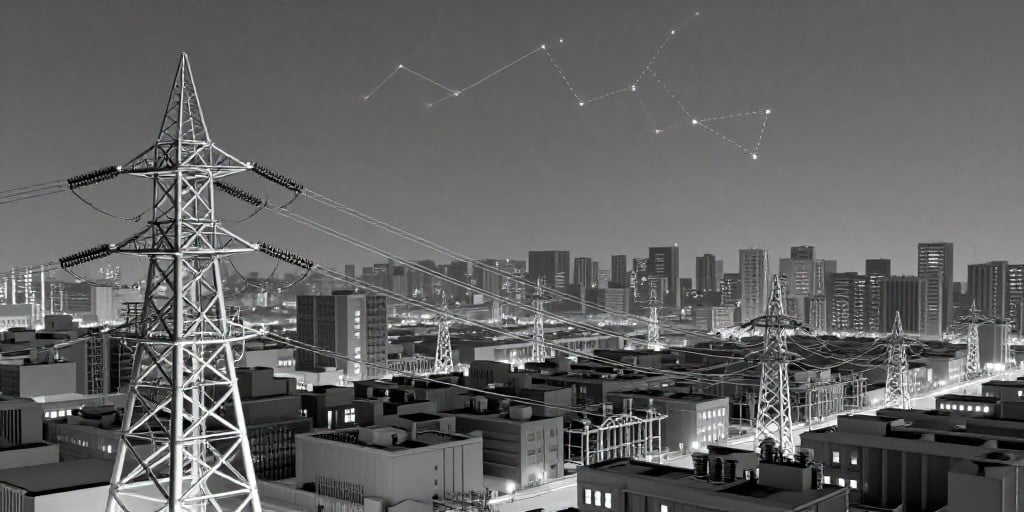
The day’s trading dynamics reinforce the perception that utilities, particularly those with diversified generation portfolios and robust transmission infrastructure, provide a comparatively stable anchor in a market that is otherwise exhibiting volatility. Institutional investors continue to favour assets with predictable cash flows and strategic relevance to the ongoing energy transition.
Power Generation, Transmission, and Distribution Dynamics
Grid Stability and Renewable Integration
CLP’s generation mix includes large gas‑fired plants, hydroelectric facilities, and a growing portfolio of solar and wind assets. The integration of intermittent renewable generation is increasingly critical to maintaining grid stability, particularly in regions where the share of variable resources surpasses 30 % of total output. Modern power systems rely on advanced forecasting algorithms, high‑frequency measurements, and dynamic reactive power support to mitigate voltage fluctuations and frequency deviations.
- Frequency Regulation: CLP’s gas turbines are leveraged for fast frequency response, providing up to 1.2 MW of reserve per 1 % of load in the event of sudden imbalance.
- Voltage Support: Reactive power curtailment from wind farms is compensated by smart inverters that inject or absorb reactive power, maintaining voltage levels within ±5 % of nominal.
- Demand‑Side Management: Time‑of‑use pricing and automated load control enhance flexibility, enabling the grid to absorb renewable surges without compromising reliability.
Infrastructure Investment Requirements
The ongoing transition to a decarbonised grid demands substantial investment in both physical and cyber‑physical infrastructure:
| Asset Category | Current Investment Gap | Key Investment Needs |
|---|---|---|
| Transmission Lines | $6 bn (next 5 yrs) | Reinforcement of high‑voltage corridors to accommodate bidirectional power flows from new generation sites. |
| Substations & Switchgear | $1.5 bn | Upgrades to support 400 kV double‑circuit feeders and integrate advanced protection relays. |
| Energy Storage | $2 bn | Deployment of battery storage systems (>500 MW capacity) for peak shaving and grid balancing. |
| Cybersecurity & SCADA | $300 mn | Implementation of AI‑based anomaly detection and zero‑trust architecture for critical control systems. |
These investments not only support grid resilience but also enable CLP to meet regulatory mandates for renewable penetration and emissions reductions.
Regulatory Framework and Rate Structures
Regulatory Landscape
The Hong Kong Electric Authority (HKEA) has established a tiered pricing regime designed to incentivise renewable adoption while safeguarding consumer affordability. Key provisions include:
- Renewable Energy Feed‑in Tariffs (REFTs): Fixed payments of HK$1.75 / kWh for solar and HK$1.45 / kWh for wind, with a 10 % annual de‑rate over a 15‑year horizon.
- Net‑Metering Rules: Credits for excess renewable generation at a rate of HK$1.30 / kWh, capped at 15 % of total generation.
- Demand‑Response Incentives: Reduced rates for customers who curtail usage during peak periods (up to 20 % discount on peak demand charges).
These policies create a clear pathway for utilities to finance renewable projects through a combination of revenue streams and cost‑sharing mechanisms with consumers.
Rate Structure Analysis
CLP’s current rate schedule comprises a base charge of HK$18.5 / kWh for residential customers and HK$15.2 / kWh for commercial accounts. The introduction of a Dynamic Energy Charge (DEC), which adjusts in real time based on wholesale market prices, is projected to align consumer costs more closely with system conditions. While DEC may lead to higher peak prices, it also encourages load shifting and participation in demand‑response programmes, ultimately reducing overall system strain.
Economic Impacts of Utility Modernization
Cost of Capital and Return on Investment
The utility sector’s transition to a cleaner energy mix necessitates a higher upfront cost of capital, reflected in increased debt issuance and equity offerings. CLP’s recent capital allocation of HK$3.8 bn toward transmission upgrades and storage projects is expected to yield a return on investment (ROI) of 7–8 % over the next decade, assuming continued support from regulatory incentives and favorable market conditions.
Consumer Cost Implications
- Short‑Term: A modest rise in peak rates (≈ 5 %) is anticipated to offset infrastructure upgrades, with offsetting savings from reduced reliance on imported fuel.
- Long‑Term: The increased penetration of renewable energy is projected to lower wholesale power prices by up to 12 % over a 10‑year horizon, resulting in net consumer savings.
- Equity Considerations: HKEA’s Fairness Test ensures that rate adjustments are distributed equitably, preventing disproportionate burden on low‑income households.
Macroeconomic Effects
Modernized grid infrastructure enhances system reliability, reducing the frequency and duration of outages. This stability improves productivity in critical sectors such as manufacturing and financial services, which are highly sensitive to power quality. Moreover, the growth of the renewable sector stimulates job creation, technological innovation, and a diversified energy economy less vulnerable to global commodity price swings.
Engineering Insights into Power System Dynamics
- Power Flow Stability: The integration of high‑capacity wind farms requires meticulous modeling of transient stability to prevent sub‑synchronous resonance and ensure safe operation under fault conditions.
- Contingency Analysis: Advanced Monte‑Carlo simulations evaluate the probability of loss of load events following line or generator outages, guiding investment in redundant transmission paths.
- Load Forecasting Accuracy: Machine‑learning models that incorporate weather data, economic indicators, and consumer behaviour patterns improve load predictions to within ±1.5 % of actual demand.
- Cyber‑Physical Resilience: Secure communication protocols (IEC 61850 with TLS encryption) safeguard SCADA systems against ransomware attacks, protecting both physical assets and consumer data.
These technical considerations underpin the operational reliability of the grid and directly influence the cost structures passed on to end‑users.
Conclusion
CLP Holdings Ltd.’s robust performance in the face of broader market volatility underscores the strategic importance of utilities within the evolving energy landscape. The firm’s proactive investment in grid resilience, renewable integration, and advanced control systems positions it favorably under current regulatory frameworks. While short‑term rate adjustments may reflect infrastructure costs, the long‑term trajectory points to a more stable, affordable, and sustainable energy system for consumers. The market’s confidence in CLP, as evidenced by significant institutional capital inflows, reflects a broader shift toward recognising the essential role of power utilities in facilitating the global energy transition.