Corporate News
CK Hutchison Holdings Ltd. continues to face uncertainty over its global ports portfolio amid stalled negotiations with a buyer consortium that includes BlackRock, China COSCO Shipping and MSC’s Terminal Investment Ltd. The company’s management remains hopeful that an upcoming U.S.–China summit could unlock a political solution that would facilitate the sale. Meanwhile, the company’s share price has been trading in a range that reflects a moderate decline from its recent peak, though it has not fallen to the lowest level seen in the past year. In the broader market context, Asia‑Pacific equities recorded a notable sell‑off, with heightened risk‑off sentiment driven by geopolitical tensions in the Middle East and a cautious outlook on China’s forthcoming policy announcements. The combination of these factors continues to influence investor sentiment toward industrial conglomerates such as CK Hutchison.
Executive Summary
The stalled transaction for CK Hutchison’s port assets has highlighted the complex interplay between capital expenditure (CapEx), geopolitical risk, and evolving regulatory frameworks in heavy industry. The company’s current position illustrates how a single asset class—port infrastructure—can become a lever for broader portfolio valuation, operational efficiency, and long‑term strategic flexibility. This article analyzes the manufacturing and logistics implications of the deal, evaluates the technology upgrades proposed by the buyer consortium, and considers the macro‑economic drivers that shape capital budgeting decisions for large infrastructure operators.
Port Asset Value: A Manufacturing‑Centric Perspective
Asset Composition and Operational Metrics
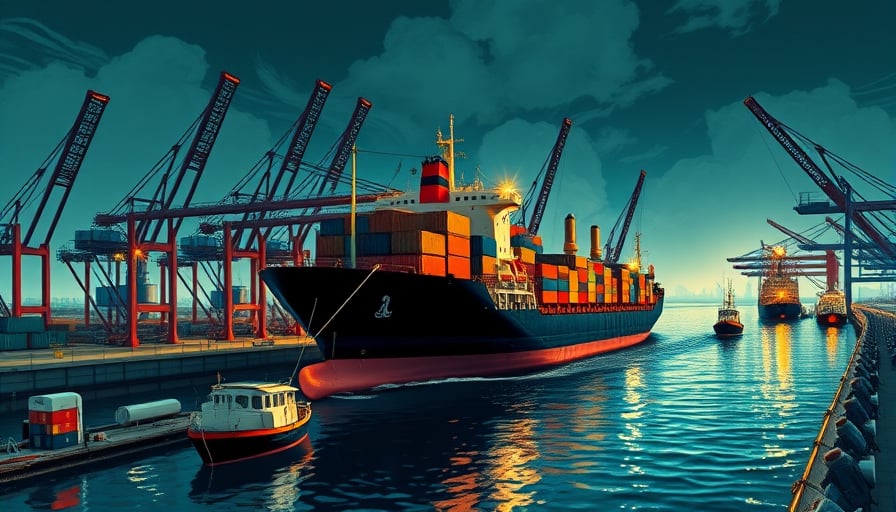
CK Hutchison’s port holdings include container terminals, bulk handling facilities, and intermodal yards across Asia, Europe, and the United States. Operational metrics such as berth capacity, throughput, and dwell time directly influence the efficiency of supply‑chain flows for manufacturers that rely on just‑in‑time logistics. Recent data indicate that CK’s average annual throughput is 1.8 million TEUs, with a projected CAGR of 3.5 % over the next five years, driven by growth in e‑commerce and raw‑material import volumes.
Technological Upgrades
The buyer consortium has outlined a multi‑phase CapEx plan totaling USD 3.2 billion, focusing on:
- Automated yard handling: Implementation of autonomous guided vehicles (AGVs) and robotic stacker cranes to reduce manual labor and increase yard throughput by up to 15 %.
- Digital port‑gateway integration: Deployment of an Industry 4.0‑enabled portal to enable real‑time vessel tracking, predictive maintenance of quay cranes, and dynamic scheduling of truck arrivals.
- Green logistics initiatives: Installation of shore‑power systems and electrification of terminal equipment to meet ISO 14001 and upcoming EU carbon‑pricing regulations.
These upgrades are projected to enhance overall port productivity by an estimated 12 %, thereby reducing the cost of goods sold (COGS) for manufacturers that use these terminals.
Capital Investment Trends in Heavy Industry
Global CapEx Outlook
According to the World Bank’s “Infrastructure Outlook 2026,” global infrastructure investment is projected to reach USD 5.2 trillion by 2028, with a 5 % annual increase in the maritime and logistics sectors. This upward trend reflects:
- Supply chain resilience: Post‑pandemic demand for diversified routing and inventory buffers.
- Regulatory mandates: Stricter environmental standards and safety regulations encouraging modernization.
- Technological convergence: Integration of IoT, AI, and blockchain across the supply chain to lower operational risk.
For conglomerates like CK Hutchison, such trends amplify the strategic importance of ports as enablers of global manufacturing networks.
Economic Drivers and Cost Structures
Capital budgeting in heavy industry often hinges on two primary variables:
- Discount rates: Influenced by the cost of capital, which is in turn affected by interest rates, sovereign risk, and market liquidity.
- Expected returns: Measured via internal rate of return (IRR) and net present value (NPV) calculations that incorporate projected freight revenue, operational savings from automation, and regulatory incentives.
In the current environment, elevated oil prices and tightening credit conditions raise the cost of borrowing, compressing IRR thresholds for new projects. Consequently, firms are increasingly prioritizing projects with high automation and sustainability paybacks.
Supply Chain Impacts of a Port Transaction
Integration Challenges
- Interoperability: The new owner will need to integrate CK’s existing terminal management systems (TMS) with its own proprietary solutions, requiring middleware that supports real‑time data exchange.
- Workforce Transition: Upskilling of existing port staff for AGV operation and digital platform maintenance will be critical to avoid operational disruptions.
- Regulatory Compliance: Harmonizing safety and environmental compliance across jurisdictions (e.g., U.S. OSHA, EU REACH, Chinese Maritime Safety Administration) demands rigorous audit frameworks.
Risk Mitigation
- Scenario Planning: Modelling different geopolitical scenarios (e.g., U.S.–China summit outcomes) to anticipate potential disruptions to trade flows.
- Contingency Funding: Securing lines of credit or contingent bonds to cover unforeseen CapEx overruns.
- Stakeholder Engagement: Early communication with port users, shipping lines, and local governments to align expectations and secure support for modernization initiatives.
Regulatory Landscape and Infrastructure Spending
Geopolitical Influences
- U.S.–China Dynamics: Potential trade policy changes or tariff adjustments could alter cargo volumes and shipping costs, affecting terminal revenue projections.
- Middle Eastern Tensions: Heightened security concerns may lead shippers to divert through alternative routes, impacting throughput at CK’s Mediterranean terminals.
Environmental Regulations
- Carbon Pricing: The EU Emissions Trading System (ETS) and forthcoming carbon taxes in China will incentivize lower‑emission terminal equipment.
- Clean‑Tech Incentives: Government subsidies for electrification projects (e.g., U.S. Department of Energy grants) can offset CapEx and improve project NPV.
Market Implications and Investor Sentiment
The current sell‑off in Asia‑Pacific equities reflects a broader risk‑off environment. Investors are scrutinizing the sensitivity of infrastructure assets to:
- Geopolitical shocks: As seen in the Middle East, where conflict can instantly redirect shipping lanes.
- Policy volatility: China’s uncertain regulatory trajectory in manufacturing and logistics raises uncertainty about future compliance costs.
- Currency fluctuations: Depreciation of the yen and yuan can erode the real value of CapEx in those currencies.
CK Hutchison’s port sale, therefore, serves as a proxy for the health of industrial conglomerates that depend on infrastructure to support manufacturing supply chains. A successful transaction, especially if coupled with a technology upgrade, could reinforce investor confidence by demonstrating resilience and forward‑looking capital allocation.
Conclusion
The stalled negotiations for CK Hutchison’s global ports portfolio underscore the intricate nexus of manufacturing efficiency, capital budgeting, and geopolitical risk in heavy industry. While the impending U.S.–China summit may provide a diplomatic catalyst, the long‑term viability of the asset hinges on technological innovation and regulatory alignment. For investors, the evolving CapEx landscape, coupled with supply‑chain and environmental pressures, offers both challenges and opportunities. Companies that strategically align infrastructure upgrades with global manufacturing demands are likely to emerge as leaders in the next wave of industrial productivity.