CK Hutchison Holdings Ltd. – A Case Study in Capital Expenditure and Market Dynamics
CK Hutchison Holdings Ltd. (CK H) remains a pivotal entity within Hong Kong’s rejuvenated initial‑public‑offering (IPO) landscape, particularly in the context of its beauty‑retail subsidiary, A S Watson Group. The forthcoming listing of A S Watson is poised to serve as a litmus test for the resilience of the region’s capital‑market ecosystem amid a confluence of macro‑economic, regulatory, and geopolitical pressures.
1. Manufacturing and Industrial Capital Allocation in a High‑Stakes Environment
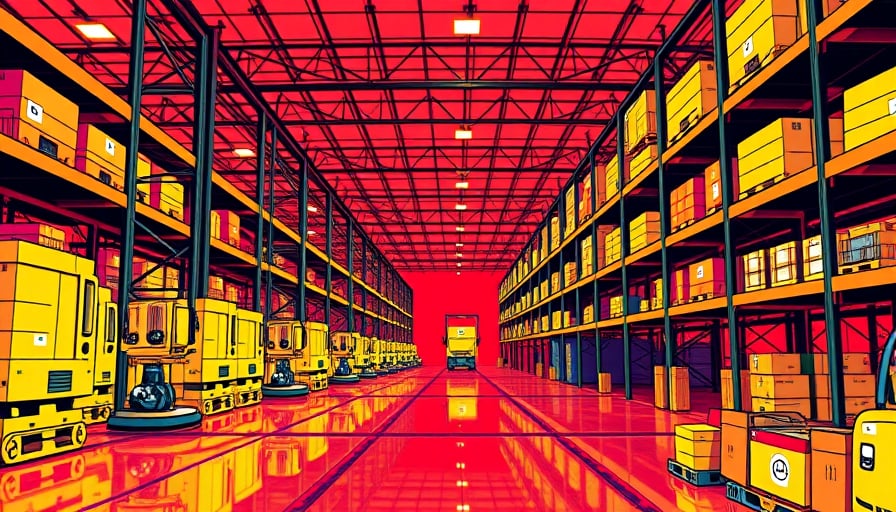
The planned IPO underscores the need for rigorous scrutiny of manufacturing processes and industrial equipment investments. For heavy‑industry players, capital allocation decisions are increasingly driven by productivity metrics such as throughput, cycle time reduction, and overall equipment effectiveness (OEE). A S Watson, while primarily a consumer‑facing retail operator, integrates sophisticated supply‑chain automation, real‑time inventory management systems, and data‑driven demand forecasting models. These technologies represent capital expenditures that yield measurable gains in operational efficiency and margin expansion.
Capital investment trends across Hong Kong’s manufacturing sector reveal a shift toward “Industry 4.0” solutions—robotic process automation, digital twins, and predictive maintenance—each designed to lower the cost of goods sold (COGS) and enhance scalability. Firms that successfully integrate these technologies demonstrate higher return on invested capital (ROIC) and improved earnings quality, making them attractive to institutional investors despite heightened regulatory scrutiny.
2. Regulatory Landscape and Its Impact on Capital Expenditure Decisions
Regulators in Hong Kong have intensified their focus on staff shortages and documentation quality within the IPO framework. Investment banks are now instructed to cap the number of active mandates per lead banker, which constricts advisory capacity and elevates the bar for companies seeking to go public. The net effect is a premium placed on “high‑quality” issuers with robust fundamentals, transparent governance, and sound valuation metrics.
For CK H and its affiliates, this environment mandates a comprehensive audit of internal processes, from human‑resource capacity planning to compliance documentation. Capital expenditures in technology and infrastructure must be demonstrably aligned with strategic growth objectives to satisfy both regulatory bodies and discerning investors. The increased regulatory burden also extends to companies operating in jurisdictions with complex cross‑border regulatory regimes—most notably Beijing’s recent restrictions on firms registered outside China yet operating within its borders. Such constraints can necessitate organizational restructurings that delay or inflate the costs associated with an IPO.
3. Supply‑Chain Implications and Infrastructure Spending
The supply chain in Hong Kong’s industrial ecosystem is experiencing heightened volatility. Geopolitical tensions, such as the conflict in Iran, have strained cash markets and amplified the perceived risk of prolonged lock‑up periods for cornerstone investors. Consequently, investors are more selective about pricing structures, especially for issuances through placements or convertible bonds that occur after blackout periods.
In response, companies are prioritizing resilience in their supply‑chain architecture. This involves diversification of sourcing channels, investment in flexible manufacturing systems, and the adoption of blockchain‑based traceability solutions. These strategies not only mitigate supply‑chain risks but also reduce lead times and improve inventory turnover—key drivers of profitability in a capital‑intensive environment.
Infrastructure spending, particularly in transportation and logistics, remains a critical enabler for industrial productivity. Hong Kong’s government has announced significant investments in rail and port capacity enhancements, which are expected to lower freight costs and improve the throughput of high‑value goods. For CK H, such infrastructure improvements translate into lower operating costs and a broader geographic reach for its retail and distribution networks.
4. Technological Innovation and Market Implications
Technological innovation continues to be the cornerstone of competitive advantage in heavy industry. The integration of artificial intelligence (AI) and machine learning (ML) into manufacturing processes allows firms to anticipate equipment failures, optimize production schedules, and personalize customer experiences. These capabilities not only enhance operational efficiency but also provide compelling narrative points for investors evaluating capital‑expenditure proposals.
Moreover, the adoption of sustainable technologies—such as energy‑efficient motors, renewable energy integration, and carbon‑capture systems—aligns with global ESG (environmental, social, and governance) trends. Investors increasingly reward companies that demonstrate a clear path to decarbonization, which can reduce long‑term operating expenses and qualify firms for green‑bond issuance.
5. Economic Drivers of Capital Expenditure in a Challenging Global Environment
The broader economic backdrop—characterized by rising commodity prices, tightening credit conditions, and geopolitical instability—has amplified the risk profile associated with large capital‑intensive projects. Nonetheless, the continued momentum in Hong Kong’s fundraising, evidenced by block trades and placements, signals sustained investor confidence in the region’s recovery trajectory.
For CK H, the forthcoming listing serves as an early indicator of how high‑quality firms can navigate a complex regulatory landscape while executing disciplined capital allocation strategies. The successful completion of A S Watson’s IPO would validate the prevailing belief that, even amidst geopolitical uncertainties and stringent regulatory oversight, well‑structured industrial enterprises can secure the necessary capital to fuel growth, innovation, and long‑term shareholder value.
In conclusion, the interplay between manufacturing productivity, technological innovation, regulatory compliance, supply‑chain resilience, and infrastructure investment defines the contemporary capital‑expenditure paradigm for heavy‑industry and consumer‑facing firms alike. CK H’s IPO journey will thus remain a critical barometer for stakeholders assessing the viability and robustness of Hong Kong’s capital‑market ecosystem in an increasingly volatile global landscape.