
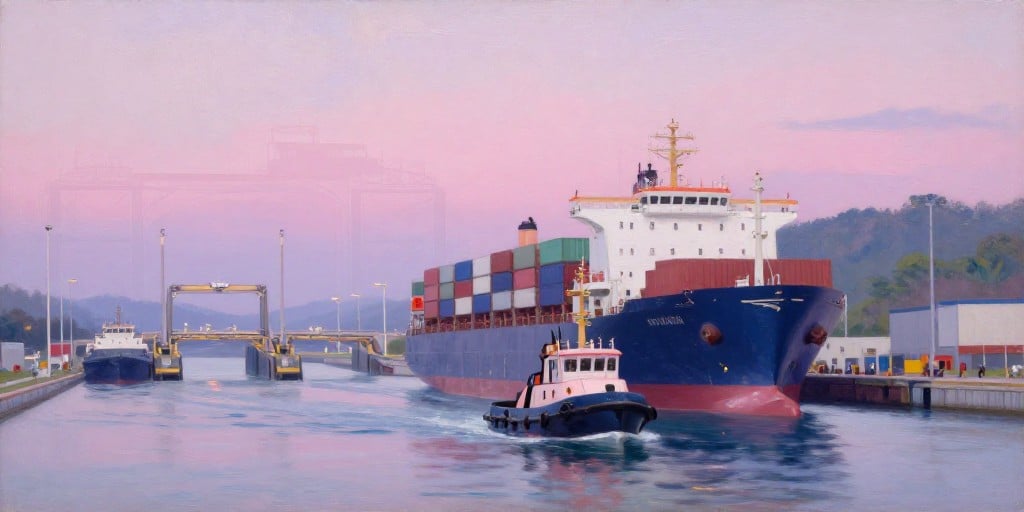
CK Hutchison Holdings Launches International Arbitration Against Panama Over Panama Canal Terminals
CK Hutchison Holdings, a Hong Kong‑based conglomerate that had operated the Balboa and Cristóbal terminals on either side of the Panama Canal for nearly thirty years, has initiated an international arbitration proceeding against the Panamanian government. The company alleges that the state violated the terms of a bilateral investment treaty designed to protect foreign investments when it seized control of the two terminals following a Supreme Court ruling that declared the concession contract unconstitutional.
Legal Grounds and Arbitration Structure
The arbitration, filed under the rules of the International Centre for Settlement of Investment Disputes (ICSID), comprises two distinct claims:
Treaty‑based Claim – CK Hutchison contends that the Panamanian government, by conducting investigations, altering its legal stance, and ultimately taking possession of the terminals’ assets, equipment, and personnel, engaged in a state‑led campaign that nullified its investments. The company maintains that no compensation has been offered to offset the losses incurred.
Concession‑contract Claim – The second claim addresses the contractual relationship between the conglomerate and the Panamanian authorities. It seeks remedies for the termination of the concession contract and the subsequent loss of control over the terminal infrastructure.
In a related legal development, a subsidiary of CK Hutchison has filed a separate arbitration against Maersk, the Danish shipping giant, after Maersk assumed certain port operations in Panama. Maersk has denied any liability, asserting that the responsibilities transferred to it were limited to operational aspects and did not include contractual claims against the Panamanian state.
Geopolitical Context and Economic Implications
The dispute unfolds against a backdrop of heightened geopolitical tensions surrounding the Panama Canal—a critical artery that facilitates the movement of approximately 14 % of global trade. Control over the Canal’s terminal infrastructure directly influences shipping schedules, berth availability, and throughput capacity. Any disruption or uncertainty in the operation of these terminals can ripple through the global supply chain, affecting lead times, inventory turnover, and transportation costs for a wide array of industries ranging from automotive to consumer electronics.
From a capital investment standpoint, the case underscores the vulnerability of foreign investors in key maritime infrastructure projects where national sovereignty and strategic interests intersect. The arbitration proceedings will likely influence future investment treaties, particularly those concerning concessions for critical infrastructure, by clarifying the scope and enforceability of protections afforded to investors.
Impact on Manufacturing Processes and Industrial Equipment
The Balboa and Cristóbal terminals are equipped with advanced gantry cranes, automated stacking machines, and state‑of‑the‑art cargo handling systems designed to maximize throughput and reduce dwell times. CK Hutchison’s assertion that the Panamanian government seized not only the physical assets but also the associated equipment highlights a significant disruption to the terminal’s operational continuity. For shipping lines and freight forwarders, this translates into potential delays in container transshipment, leading to bottlenecks that can affect downstream manufacturing processes that rely on just‑in‑time inventory strategies.
Furthermore, the loss of access to these terminals may compel shipping companies to redirect cargo to alternative ports, thereby increasing shipping distances and fuel consumption. These operational shifts have a direct impact on the carbon footprint of heavy industry logistics and may drive a reassessment of the investment calculus for terminal modernization projects.
Regulatory Changes and Infrastructure Spending
Regulatory frameworks governing maritime infrastructure in Panama have historically balanced openness to foreign investment with sovereign control over strategic assets. The Supreme Court ruling that deemed the concession contract unconstitutional, coupled with the subsequent nationalization of the terminals, signals a possible shift toward tighter regulatory oversight of foreign concessions. This development may prompt other jurisdictions to revisit their treaty obligations and concession structures to mitigate similar disputes.
Capital expenditure trends in the heavy‑industry sector are closely tied to the availability of reliable port infrastructure. Uncertainty in terminal operations can deter firms from committing to large‑scale capital projects, particularly in sectors where shipping reliability is paramount. Conversely, the arbitration may spur a wave of renewed investment in alternative port facilities or in the modernization of existing terminals, as companies seek to diversify their risk exposure and enhance supply chain resilience.
Supply Chain Implications
The Panama Canal remains a pivotal link between the Atlantic and Pacific oceans, and any disruption to its terminal operations can cascade through global supply chains. The arbitration’s outcome will shape the risk assessment frameworks used by multinational corporations in planning their logistics networks. If CK Hutchison succeeds in securing compensation or a reinstatement of its contractual rights, it could set a precedent that strengthens the bargaining position of foreign investors in future concession agreements.
On the other hand, a ruling in favor of Panama could embolden governments to exercise greater control over strategic maritime assets, potentially leading to increased regulatory scrutiny and higher compliance costs for foreign operators. Supply chain managers will need to incorporate these dynamics into their contingency planning, emphasizing flexibility in routing and the development of alternative transshipment hubs.
Conclusion
CK Hutchison’s arbitration against Panama marks a significant moment in the intersection of international investment law, geopolitical strategy, and global trade infrastructure. The case will have far‑reaching implications for capital expenditure decisions in the heavy‑industry sector, the design and deployment of industrial equipment at maritime terminals, and the broader stability of supply chains that rely on the Panama Canal. Stakeholders across the manufacturing and logistics spectrum will be closely monitoring the proceedings, as the resolution may recalibrate the balance between sovereign interests and the protections afforded to foreign investors in critical infrastructure projects.