Corporate News: Energy Market Analysis in the Context of Citigroup’s Potential Venezuelan Re‑Entry
1. Overview
The prospective re‑entry of Citigroup into the Venezuelan market, following a five‑year absence, carries implications that extend beyond banking and into the broader energy landscape. As the U.S. Treasury and State Department negotiate potential sanctions relief, the timing coincides with heightened volatility in global oil markets, shifts in renewable energy investment, and evolving regulatory frameworks that affect both traditional and renewable sectors. This article provides a technical assessment of how Citigroup’s actions may influence supply‑demand dynamics, capital flows to energy projects, and the strategic positioning of stakeholders within the Latin American energy corridor.
2. Supply‑Demand Fundamentals in Latin America
Oil Production Trends Venezuela’s pre‑sanctions production peaked at 2.5 million barrels per day (bpd) in the late 1990s, but fell below 300 k bpd in recent years due to technical degradation and capital constraints. The country’s proven oil reserves remain among the largest globally, yet actual extraction has been curtailed by both operational and geopolitical factors.
Demand Shocks Global demand for oil is currently moderated by a combination of pandemic‑related supply chain disruptions and a surge in renewable uptake. In the U.S., the U.S. Energy Information Administration (EIA) projects a gradual decline in gasoline demand from 200 M bbl/day to 150 M bbl/day over the next decade, while refinery throughput is expected to adjust accordingly.
Regional Gas Market The Gulf of Mexico and the Caribbean have witnessed a rise in LNG exports to Europe, driven by the Russian-Ukrainian conflict and a push for diversification. Venezuela’s potential re‑integration could provide an alternate source of natural gas, subject to infrastructure upgrades and regulatory alignment.
3. Technological Innovations in Energy Production and Storage
Enhanced Oil Recovery (EOR) Recent advancements in CO₂‑EOR, utilizing captured carbon emissions, have shown promise in extending the life of mature Venezuelan fields. However, the technology requires significant capital and stable regulatory support, both of which are contingent on financial market access.
Renewable Energy Infrastructure Venezuela’s vast solar and wind potential (estimated 200 GW of solar PV and 40 GW of wind) remains largely untapped due to capital constraints. U.S. banks, including Citigroup, could provide financing for solar parks and battery storage projects that integrate with the national grid, fostering a shift toward renewable penetration.
Battery Energy Storage Systems (BESS) The global BESS market is projected to grow at a CAGR of 22% over the next five years. Integrating large‑scale BESS into Venezuelan energy projects could stabilize supply, mitigate voltage fluctuations, and enhance grid resilience, thereby making the country more attractive to foreign investors.
4. Regulatory Impacts on Traditional and Renewable Sectors
Sanctions Relief and Financial Access The U.S. sanctions regime, particularly the Venezuelan Human Rights and Democracy Act, restricts banking services to entities in Venezuela. Should the Trump administration grant partial relief, Citigroup could facilitate cross‑border transactions for oil companies, potentially increasing capital inflows and reducing financing costs.
Energy Transition Policies International agreements such as the Paris Accord compel many countries to reduce carbon intensity. Venezuela, with its large carbon footprint, faces pressure to transition toward cleaner energy sources. U.S. banks’ participation may accelerate the adoption of green financing mechanisms, such as green bonds and climate‑linked loans.
Infrastructure Development Standards Compliance with International Organization for Standardization (ISO) and the International Electrotechnical Commission (IEC) standards will be crucial for any new renewable projects. Citigroup’s involvement could help Venezuelan firms meet these benchmarks, improving market confidence and reducing investment risk.
5. Commodity Price Analysis and Production Data
Oil Price Volatility Brent crude has fluctuated between $55 and $95 per barrel over the past year, driven by geopolitical tensions, supply cuts by OPEC+, and the resurgence of U.S. shale production. A re‑opened Venezuelan market could contribute to supply diversification, potentially moderating price swings if production ramps up.
Natural Gas Prices Natural gas prices in the U.S. have risen from $2.50 to $3.80 per million British thermal units (MMBtu) during the same period, largely due to supply constraints and increased demand from power generators. Venezuelan gas export contracts could provide a stable, lower‑cost supply to the U.S. market, especially if integrated with LNG terminal infrastructure.
Production Data and Forecasts Current Venezuelan production data indicate a decline to below 200 k bpd. However, the introduction of advanced drilling techniques and foreign direct investment could potentially recover up to 400 k bpd by 2030, provided that political stability and regulatory clarity are achieved.
6. Infrastructure Developments and Market Dynamics
Port and Pipeline Projects The development of new port facilities in Puerto Cabello and upgrades to the existing Lake Maracaibo pipeline system are essential for facilitating oil exports. Investment in these projects, financed by U.S. banks, would enhance Venezuela’s logistical capacity and lower export costs.
Energy Transmission Grids Modernizing the national grid to support renewable integration involves expanding transmission lines and incorporating smart grid technologies. Citigroup’s involvement could unlock financing for such upgrades, thereby improving energy security and export potential.
Cross‑Border Connectivity Enhancements in rail and road infrastructure linking Venezuela to Guyana, where Citigroup has recently expanded, would support joint energy projects, including shared LNG terminals and shared renewable microgrids.
7. Balancing Short‑Term Trading Factors and Long‑Term Transition Trends
| Short‑Term Factors | Long‑Term Transition Trends |
|---|---|
| Oil price swings driven by geopolitical events | Carbon pricing mechanisms increasingly applied globally |
| Liquidity constraints for Venezuelan firms due to sanctions | Renewable portfolio standards (RPS) in the U.S. and EU |
| Exchange rate volatility affecting repatriation of profits | Technological breakthroughs in energy storage |
| Regulatory uncertainty on sanctions relief | Shifts in consumer preference toward low‑carbon products |
Citigroup’s re‑entry could mitigate short‑term liquidity constraints for oil companies, thereby stabilizing trading volumes and reducing market volatility. Simultaneously, by providing green financing for renewable projects, the bank would support long‑term energy transition goals, positioning both the bank and its clients to benefit from evolving market and regulatory landscapes.
8. Implications for the Oil Industry and Regional Financial Markets
Capital Flow Diversification Access to U.S. banking services would likely increase capital inflows into the Venezuelan oil sector, encouraging exploration, development, and technological upgrades that have been stalled due to funding gaps.
Risk Profile Adjustments The re‑establishment of correspondent banking relationships could lower credit risk for Venezuelan entities, leading to tighter spreads on sovereign and corporate bonds issued within the country.
Competitive Dynamics Other U.S. banks may accelerate similar initiatives, intensifying competition for market share in Latin America and potentially fostering a broader wave of financial normalization in the region.
Sectoral Benchmarking Energy companies that secure financing from Citigroup may set benchmarks for ESG compliance, influencing peers and prompting a re‑evaluation of investment strategies across the industry.
9. Conclusion
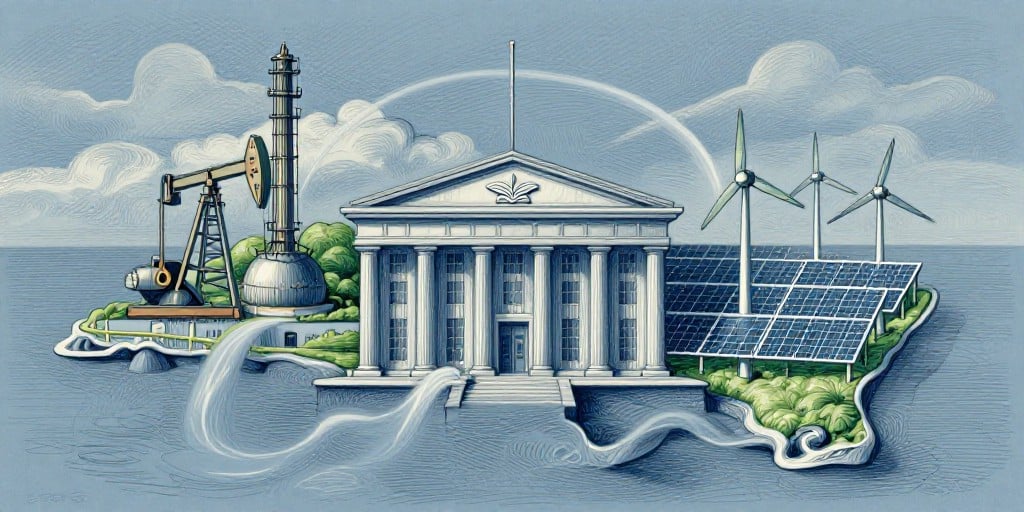
Citigroup’s potential re‑entry into the Venezuelan market is more than a banking decision; it is a catalyst that could reshape the energy landscape in Latin America. By restoring financial linkages, the bank may unlock capital for traditional oil production, spur investment in renewable infrastructure, and help navigate the complex regulatory environment that governs both fossil and clean energy sectors. While short‑term market dynamics will respond to immediate liquidity and price signals, long‑term outcomes will hinge on the sustained integration of technological innovation, regulatory evolution, and strategic investment in a region poised at the crossroads of energy transition.