
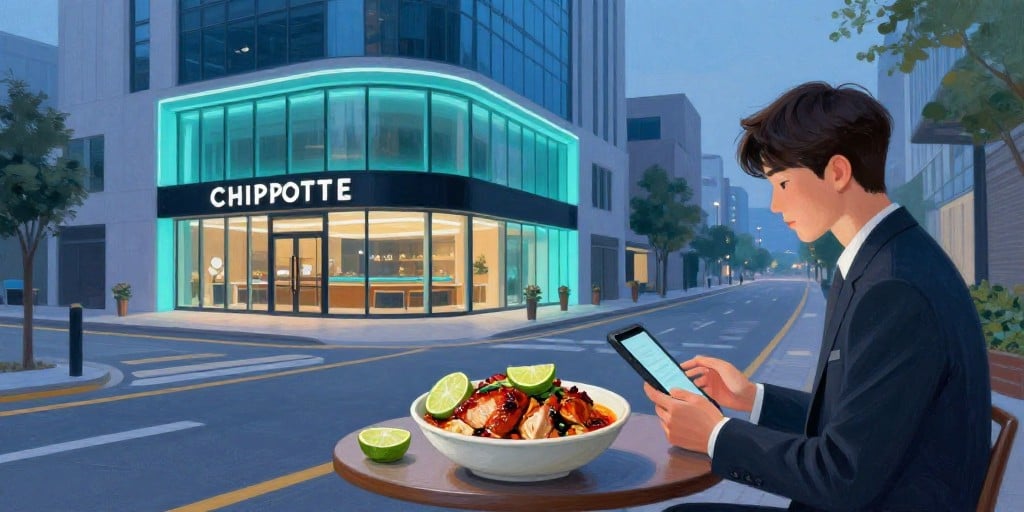
Chipotle’s Dual Product Launch and First Asian Expansion Illustrate the Digital‑Physical Retail Synergy
Chipotle Mexican Grill Inc. has announced two complementary initiatives that underscore the firm’s strategy of blending menu innovation with geographic expansion. The company will re‑introduce its Pollo Asado offering, now featuring a refreshed adobo‑seasoned chicken finished with cilantro and lime, and launch a new side, Chili Lime Chips, composed of real lime and bold chili seasoning without artificial additives. Both limited‑time items will first be available to Rewards members on 31 August, before being rolled out to the wider customer base in early September.
In a separate move, Chipotle is opening its first restaurant in Seoul, South Korea, near Gangnam Station. The 96‑seat outlet will feature an open kitchen and a counter that allows guests to customize bowls, burritos, tacos and salads. Local staff will receive training from chefs based at the company’s headquarters, a practice that reflects the brand’s commitment to ingredient‑centric quality.
A Micro‑Ecosystem of Digital and Physical Retail
Chipotle’s dual launch demonstrates how digital engagement—through its Loyalty and Rewards program—can be leveraged to test new products before a full rollout. By granting early access to its most engaged customers, the company can gather real‑time feedback, refine pricing, and generate buzz across social channels. This “digital‑first, physical‑second” approach mirrors a broader industry trend: retailers use data‑driven insights to create micro‑experiences that drive foot traffic and in‑store sales.
The company’s emphasis on real, minimally processed ingredients taps into a consumer culture that increasingly values transparency. In a marketplace where “clean labeling” and “farm‑to‑table” narratives dominate, Chipotle’s updated Pollo Asado recipe and Chili Lime Chips resonate with millennials and Generation Z, who are willing to pay a premium for perceived healthfulness and authenticity.
Demographic Shifts and Generational Spending Patterns
Millennials and Gen Z now account for more than 50 % of the fast‑food spend in the United States. They are characterized by a preference for convenience, digital ordering, and experiential dining. Chipotle’s open‑kitchen design in Seoul aligns with this demand: it offers transparency, customization, and a social dining environment that can be shared on social media. By positioning the Seoul outlet near Gangnam Station, the brand strategically targets a high‑density, affluent demographic that values both speed and quality.
The limited‑time nature of the Pollo Asado and Chili Lime Chips also plays to a generation that enjoys novelty and the urgency of “now‑only” offers. The product refreshes generate micro‑campaigns that can be amplified through targeted ads, influencer partnerships, and QR‑coded menus that link directly to the brand’s digital ordering platform. This blend of physical experience with digital touchpoints drives both immediate sales and long‑term customer loyalty.
Cultural Movements and Market Opportunities
The Korean consumer market has shown a rising appetite for Western fast‑food brands that promise high‑quality, fresh ingredients. According to recent market research, Korean millennials and Gen Z place a high value on product authenticity and are less tolerant of artificial additives. Chipotle’s emphasis on real lime and chili, and its explicit commitment to avoiding preservatives, aligns neatly with these cultural preferences.
Furthermore, South Korea’s regulatory environment increasingly favors food safety and quality transparency. By training local staff through its headquarters, Chipotle ensures consistency across markets, which is crucial for brand integrity in a region where food‑borne incidents can severely damage reputation. This approach also offers a scalable model: once the training framework is proven effective, it can be replicated in other Asian markets such as Japan, Singapore, and Vietnam, where similar consumer attitudes prevail.
Forward‑Looking Analysis
Digital‑Physical Synergy Chipotle’s use of a loyalty program for early product testing exemplifies how data‑rich customer touchpoints can accelerate innovation cycles. Retailers that successfully integrate digital engagement with in‑store experiences will see higher conversion rates and stronger brand advocacy.
Menu Refresh as a Growth Lever Limited‑time offerings create urgency and can be priced at a premium, boosting short‑term revenue. By tying these products to health‑centric narratives, brands can capture the spending power of health‑conscious millennials and Gen Z.
Strategic Geographical Entry The Seoul launch demonstrates that a carefully selected, high‑traffic location combined with rigorous training can mitigate the risks of international expansion. Replicable training modules can reduce operational variability and accelerate brand consistency.
Cultural Alignment Drives Market Penetration Brands that tailor product attributes—such as real ingredients, no artificial additives, and customizable formats—to local cultural preferences will gain a competitive edge. In markets where food quality transparency is prized, this alignment can be a decisive factor in consumer adoption.
Long‑Term Sustainability Through Ingredient‑Centricity As environmental and ethical considerations become central to consumer purchasing decisions, firms that foreground ingredient sourcing and supply‑chain transparency will likely attract a loyal, socially‑responsible customer base.
In conclusion, Chipotle’s dual initiatives—product innovation for U.S. and Canadian consumers and the strategic launch in Seoul—highlight a business model that marries digital engagement with physical retail, responds to generational spending habits, and aligns with evolving cultural movements. By doing so, the company not only secures immediate revenue streams but also positions itself for sustained growth across diverse markets.