
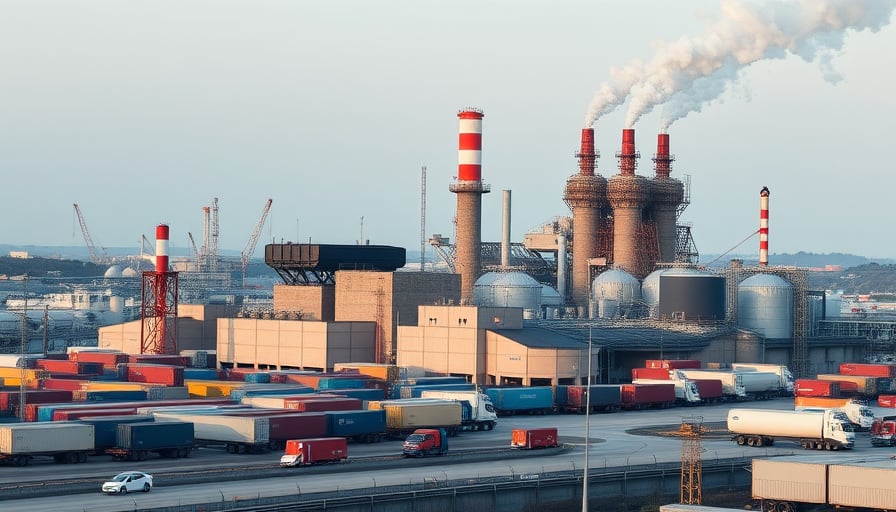
Chinese Chemical Sector: Continued Net Inflows Amid Moderated Market Volatility
On Monday, January 27, 2026, the Chinese chemical sector exhibited a blend of steady capital inflows and modest price fluctuations. The sector‑focused exchange‑traded fund (ETF) 159870 logged its nineteenth consecutive day of net inflows, indicating that investors remained willing to allocate fresh capital despite a brief pullback in the broader market. Analysts attribute this resilience to the sector’s solid fundamentals and view the recent price dip as a temporary correction within a long‑term upward trajectory.
ETF Performance Highlights
ETF 159870: The fund’s uninterrupted streak of net inflows underscores sustained confidence among market participants. New share issuances continued at a moderate pace, reflecting a belief that the chemical industry’s underlying drivers remain robust.
ETF 516570: During the same session, this chemical‑industry ETF recorded its seventh straight day of net inflows. The inflows were largely driven by the recent uptick in crude‑oil prices, which has heightened refining margins and bolstered petrochemical profitability. As a result, the fund achieved record‑high size and shareholding figures since its inception, reinforcing investor conviction in the sector’s prospects.
Market Commentary and Policy Implications
Analysts have emphasized that supply‑side policy signals—particularly those related to production quotas and environmental compliance—could tighten the industry’s upper pricing ceiling. They argue that while demand remains strong, tighter output controls may constrain price growth. Liquidity, they note, will be a decisive factor in shaping future price dynamics, as ample cash flow can sustain higher valuations even in the face of policy tightening.
The sector index, which tracks major chemical producers and includes a prominent company headquartered in Yantai, posted modest gains. This performance signals a general improvement in the sector’s outlook, aligning with the positive sentiment observed in the ETFs.
Broader Economic Context
The continued capital inflows into chemical ETFs reflect a cautious yet optimistic stance among investors. This sentiment is consistent with a broader trend of gradual market normalization following the volatility seen in early 2025. Key drivers such as rising crude‑oil prices, steady global demand for petrochemicals, and improving supply‑chain efficiency support the sector’s longer‑term resilience.
Moreover, the chemical industry’s linkage to upstream inputs (e.g., petroleum) and downstream sectors (e.g., plastics, agriculture) positions it as a barometer for broader economic activity. Strengthened profitability in refining and petrochemical segments can spill over into higher demand for related products, thereby reinforcing the sector’s role as a catalyst for industrial expansion.
Conclusion
The chemical sector’s sustained net inflows, coupled with favorable fundamentals and a supportive macroeconomic backdrop, suggest that investors are maintaining a measured optimism. While short‑term volatility may persist—driven by policy signals and liquidity considerations—there is a consensus that the sector’s upward trajectory is likely to continue over the medium to long term.