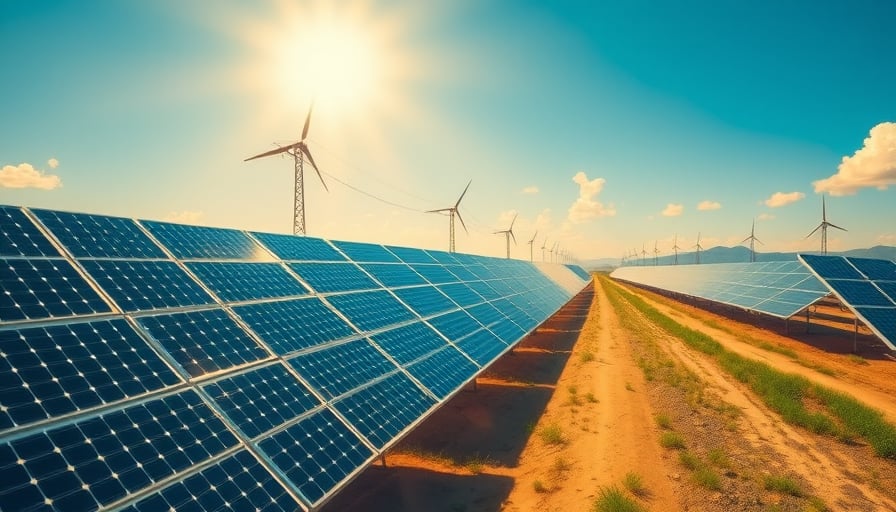
Corporate Outlook on China’s Photovoltaic Manufacturing Sector
The March 20, 2026 market session revealed divergent trajectories across Shanghai’s main indices, with the Shanghai Composite experiencing a decline while the ChiNext index reached a new high. The rally was driven primarily by the photovoltaic (PV) equipment sector, whose shares rose markedly in response to renewed confidence in the industry’s fundamentals. Analysts from East Wind Securities and China Securities & Trust cited a resurgence of core demand and the emergence of nascent markets—most notably space‑borne solar power—as catalysts for sustained expansion.
Capital Expenditure in the Photovoltaic Supply Chain
Tesla’s confirmed intent to source solar panels and related manufacturing equipment from Chinese suppliers represents a multibillion‑dollar order slated for shipment in early May. The transaction underscores a shift in global supply‑chain dynamics: Chinese PV manufacturers are increasingly positioned to capture both domestic and international demand. This shift is being facilitated by several intertwined factors:
Technology Consolidation The integration of advanced cell‑fabrication techniques—such as bifacial monocrystalline modules and perovskite‑capped tandem cells—into existing production lines has lowered the cost of goods sold (COGS) by 8–12 % over the last 18 months. Manufacturers that have adopted roll‑to‑roll and automated wafer‑handling systems report throughput gains of 25 % and a 30 % reduction in labor intensity.
Capital Allocation Efficiency With the new Value‑Added Tax (VAT) Act, firms in high‑tech manufacturing enjoy expanded input‑tax deductibility, improving net cash‑flow by an estimated 4 % for capital‑intensive projects. This regulatory change is prompting a re‑balancing of capex portfolios toward higher‑yielding, value‑led equipment such as high‑temperature molten‑sulfide reactors and precision laser‑drilling stations.
Risk‑Adjusted Return Metrics Return on invested capital (ROIC) for leading PV equipment manufacturers has rebounded to 12–15 % in the first quarter, a sharp increase from the 6–8 % range observed during the pandemic‑induced downturn. The improved profitability is driven by a combination of higher product margins, reduced logistics costs due to localized production, and the tax‑benefit structure that accelerates depreciation schedules.
Infrastructure Spending and Regulatory Oversight
The Ministry of Industry and Information Technology’s standardization meeting in Beijing focused on two national standards: (1) photovoltaic module performance and (2) identification labeling. The objectives are twofold:
Safety Enforcement Enhanced labeling requirements will integrate tamper‑evident seals and RFID tracking, facilitating end‑to‑end traceability. Engineers estimate that such measures can reduce module failure rates by up to 4 % in long‑term field studies, translating into a 3–5 % savings in warranty claims per annum.
Value‑Driven Competition By shifting from volume‑based to quality‑centric metrics, manufacturers are incentivized to invest in high‑efficiency cells and robust encapsulation processes. This transition is expected to compress the price differential between standard and premium modules by 2–3 %, allowing firms to capture higher margins on technologically advanced products.
Infrastructure spending in the energy sector has been buoyed by government procurement directives that favor domestically sourced equipment. The increased capital deployment in grid‑integration hardware—particularly inverters and battery storage systems—has a multiplier effect on PV module demand, as the overall energy yield per installed kW increases by an average of 12 % when coupled with advanced storage solutions.
Supply‑Chain Implications
The confluence of higher safety standards and favorable tax policies is reshaping supply‑chain dynamics:
Vendor Consolidation The tightening of procurement criteria has led to a 15 % reduction in the number of approved component suppliers, concentrating quality control and reducing logistical complexity.
Just‑In‑Time Manufacturing With improved predictability in demand, manufacturers are adopting just‑in‑time (JIT) strategies that minimize inventory holding costs. Engineers report that JIT implementation reduces inventory carrying costs by 6–8 % while maintaining a buffer stock that absorbs supply disruptions.
Geopolitical Resilience The strategic shift toward domestic sourcing mitigates exposure to international trade tensions and tariff volatility, thereby stabilizing the cost structure and enhancing long‑term capital budgeting certainty.
Economic Drivers of Capital Expenditure
Several macroeconomic variables are steering capex decisions within the PV manufacturing sector:
Exchange Rate Volatility A depreciating Renminbi lowers the cost of imported raw materials, nudging manufacturers to defer large‑scale plant expansions until exchange rates normalize.
Interest‑Rate Environment The Bank of China’s policy rate remains accommodative, with a projected 3 % discount on long‑term financing for renewable‑energy projects. This environment encourages the deployment of high‑capacity, automated manufacturing facilities.
Demand‑Side Stimulus The global push for carbon neutrality—driven by EU and US policies—has created a demand surge for PV modules and associated hardware. Forecast models predict a 9–11 % CAGR in global PV module demand through 2030, providing a robust return horizon for capex investments.
Conclusion
The market’s response to the March 20, 2026 events signals a strategic pivot within China’s photovoltaic manufacturing ecosystem. The convergence of advanced manufacturing technologies, supportive tax legislation, stringent safety standards, and a resilient supply chain is positioning Chinese PV equipment producers to capture a larger share of the global renewable‑energy market. Capital expenditures directed toward high‑efficiency, value‑led equipment, coupled with an optimized infrastructure spend strategy, are expected to generate sustained productivity gains and reinforce China’s leadership in the evolving clean‑energy economy.