
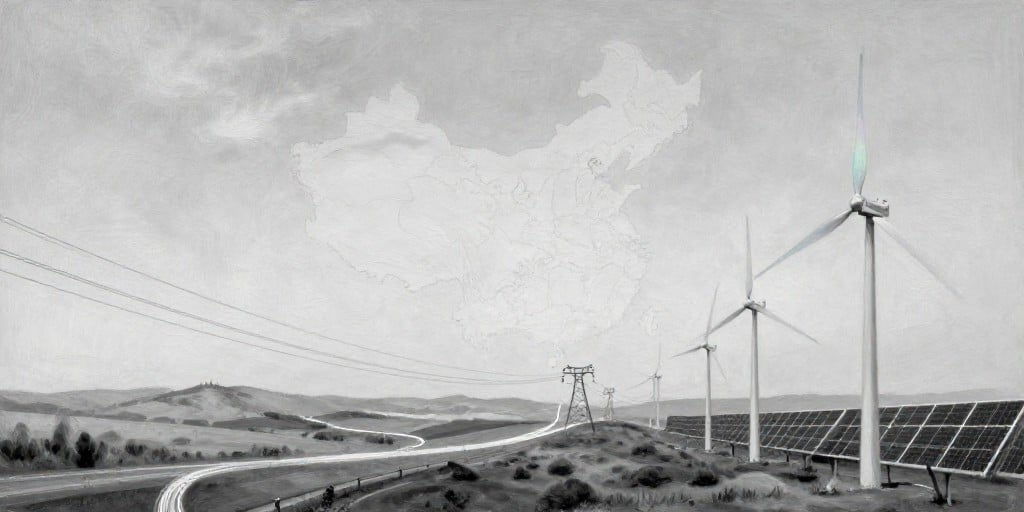
Corporate Outlook on China’s Power Infrastructure Amidst Market Volatility
The recent trading activity on Shanghai and Shenzhen stock exchanges, characterized by modest declines in the composite indices and selective gains in semiconductor and banking names, underscores a broader economic environment that directly influences the trajectory of China’s power generation, transmission, and distribution (GTD) sectors. While the market dynamics may appear peripheral, the underlying shifts in policy, investment appetite, and consumer sentiment are pivotal determinants for utilities seeking to modernize their grids, integrate renewable energy, and maintain system reliability.
1. Grid Stability in a Rapidly Decarbonizing Landscape
Modernizing China’s GTD infrastructure demands rigorous attention to grid stability. The integration of variable renewable resources—photovoltaic (PV), wind, and emerging solar–wind hybrid installations—introduces fluctuations that can compromise voltage regulation and frequency control. Advanced power electronics, such as static synchronous compensators (STATCOMs) and flexible AC transmission systems (FACTS), have become essential tools. These devices provide dynamic reactive power support, enabling utilities to absorb sudden changes in load or generation. Engineers are now deploying wide‑area monitoring systems (WAMS) based on phasor measurement units (PMUs) to detect and mitigate cascading failures before they propagate through the network.
2. Renewable Energy Integration Challenges
Despite aggressive renewable targets, China’s energy transition confronts several technical barriers:
| Challenge | Technical Implication | Mitigation Strategy |
|---|---|---|
| Intermittency | Frequency and voltage swings | High‑capacity FACTS, battery storage, demand‑side management |
| Grid Congestion | Overloading of transmission corridors | Ultra‑high‑voltage (UHV) AC/DC lines, dynamic line rating (DLR) |
| Grid‑Code Compliance | Variable power quality standards | Adaptive protection schemes, real‑time power quality monitoring |
| Asset Coordination | Synchronization of multiple renewable sources | Multi‑terminal HVDC (MT‑HVDC) interconnections, distributed energy resource (DER) orchestration |
These measures require substantial capital expenditures, sophisticated control algorithms, and interoperability between legacy systems and next‑generation assets.
3. Infrastructure Investment Requirements
A 2025–2030 investment roadmap estimates that China will need to allocate roughly US$ 1.8 trillion for GTD upgrades. This sum covers:
- Transmission: Expansion of UHV AC/DC networks to connect remote wind and solar parks, reducing line losses below 2 % over 800 km.
- Distribution: Deployment of smart grid technologies, including microgrids, to achieve 99.9 % reliability in peak load periods.
- Substations: Upgrading transformer capacities and incorporating power electronic devices to handle bi‑directional power flows.
- Storage Integration: Deployment of grid‑scale batteries (15 GW/30 GWh by 2030) to provide frequency regulation services.
Financing such a scale necessitates a mix of equity, debt, and public‑private partnership (PPP) models. Regulatory frameworks must accommodate long‑term contracts, such as Power Purchase Agreements (PPAs) that guarantee fair remuneration for renewable generation.
4. Regulatory Frameworks and Rate Structures
The Ministry of Finance and State Grid Corporation of China are revising tariff structures to reflect the true cost of supply, including transmission and distribution (T&D) charges, and renewable integration costs. Key policy shifts include:
- Dynamic Tariffs: Adjusted based on real‑time grid congestion and renewable generation levels, encouraging load shifting and reducing peak demand.
- Renewable Energy Subsidies: Transition from fixed feed‑in tariffs to performance‑based incentives that reward actual energy delivered to the grid.
- Ancillary Service Market: Commercialization of frequency and voltage regulation services, enabling utilities to monetize ancillary services from storage and flexible loads.
Regulators are also tightening asset‑quality standards for banks providing credit to utilities, ensuring that capital remains available for large‑scale infrastructure projects.
5. Economic Impacts on Utility Modernization
The interplay between market sentiment and policy developments directly influences consumer costs. While increased investment in GTD infrastructure initially raises generation and distribution costs, economies of scale and technological efficiencies gradually lower the levelized cost of energy (LCOE). Projections indicate a 3 %–5 % reduction in LCOE for PV and wind by 2030, offsetting the upfront capital outlays. Moreover, grid upgrades improve reliability, reducing the economic losses associated with outages, which are estimated at US$ 5–10 billion annually in the current grid configuration.
Utilities must balance short‑term consumer price increases against long‑term savings. Transparent communication of tariff reforms, backed by empirical data on cost drivers, is critical to maintaining public trust during the transition period.
6. Engineering Insights into Power System Dynamics
Advanced simulation tools—such as real‑time digital simulators (RTDS) and high‑fidelity finite element models—are being employed to validate grid upgrades before deployment. These tools enable engineers to:
- Model Non‑Linear Behaviors: Capture the interactions between inverter‑based resources and legacy synchronous machines.
- Assess Protection Schemes: Simulate fault scenarios to ensure coordinated tripping and isolation.
- Optimize Control Loops: Tune PI/PID controllers for STATCOMs and HVDC converters to achieve desired voltage and frequency responses.
Such engineering rigor ensures that the modernization efforts deliver on their promise of increased resilience and renewable integration capacity.
In conclusion, the recent cautious trading environment reflects broader uncertainties that can influence the pace of utility investment and regulatory alignment. However, the technical imperatives—grid stability, renewable integration, and infrastructure investment—remain unchanged. By leveraging sophisticated engineering solutions, adopting progressive tariff structures, and aligning regulatory incentives with economic realities, China’s utility sector can navigate the transition to a cleaner, more reliable, and cost‑effective power system.