
A Strategic Shock in the Semiconductor Equipment Market
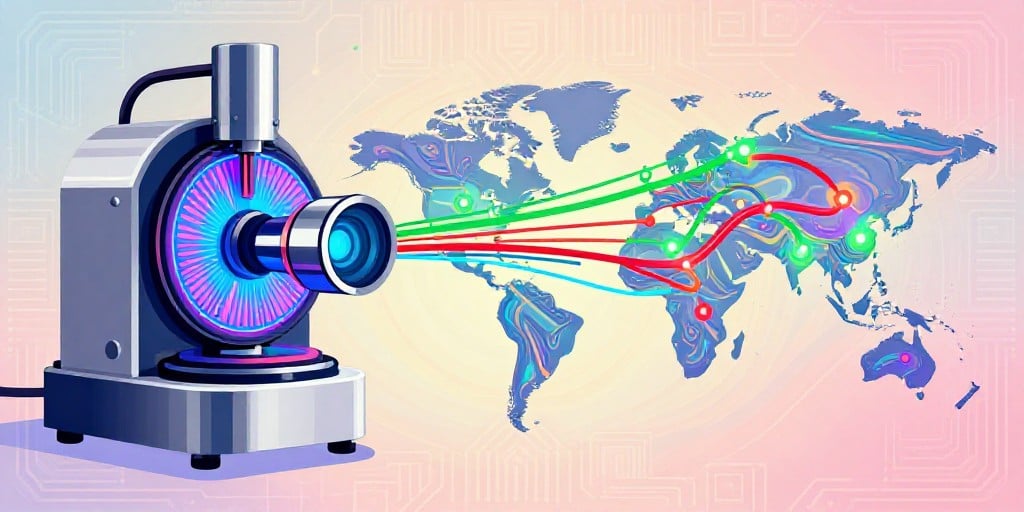
China’s recent announcement that a state‑backed firm will begin mass production of immersion deep‑ultraviolet (DUV) lithography systems has sent ripples through the global semiconductor equipment sector. The move has been interpreted by many market participants as a potential threat to the dominance of Dutch maker AS ML, which has long held a near‑monopoly on the most advanced lithography machinery. The market reaction was swift: shares of AS ML fell more than seven percent, while European peers—BE Semiconductor Industries, Soitec, and Infineon Technologies—saw declines ranging from three to ten percent.
Market Dynamics in the Wake of the Chinese Initiative
1. Investor Concerns About Domestic Alternatives
The core of the sell‑off stems from the belief that a domestic Chinese competitor could erode demand for AS ML’s equipment. If Chinese fabs were to switch to locally produced tools, the impact of U.S. export controls—which have already limited AS ML’s ability to sell to certain customers—could be mitigated. This scenario would not only reduce AS ML’s revenues but could also weaken the broader U.S. semiconductor supply chain that relies on its technology.
2. Spillover Into European and U.S. Stock Markets
The European market reacted with a broader sell‑off in chip‑related names. BE Semiconductor Industries, already a key supplier of lithography equipment, recorded the largest decline among its peers, illustrating how interconnected the sector has become. In the United States, several equipment makers also slipped, reflecting a global reassessment of the competitive landscape.
3. Countervailing Market Factors
While the semiconductor equipment sector dominated the day’s negative momentum, other macro‑economic forces provided some relief. A temporary lull in Middle Eastern tensions and a decline in crude oil prices offered a counterweight that helped keep broader equity markets from tumbling further. Nonetheless, the semiconductor equipment sub‑sector remained the primary driver of the day’s downward trend, underscoring its continued volatility.
Technical Assessment of the New Immersion DUV Systems
China’s new tools will initially be produced in quantities of several dozen immersion DUV lithography machines. Production is slated to begin this year, with a planned expansion the following year. These systems are intended for use by China’s leading domestic chip producers—including large foundries and memory‑chip manufacturers.
While the machines are not yet on par with AS ML’s most advanced models in terms of resolution and throughput, their introduction has heightened market sensitivity to potential competition. Importantly, the availability of domestic alternatives may force AS ML to accelerate innovation or reconsider pricing strategies to maintain its market share.
Patterns and Trends Across the Technology Landscape
Geopolitical Shift in Supply Chains The announcement signals a broader shift toward regional self‑sufficiency in high‑tech manufacturing. Countries are increasingly willing to invest in domestic capabilities that were previously considered too capital‑intensive or complex to develop in-house.
Accelerated Innovation Cycles As competitors enter the field, the pressure on incumbents like AS ML to innovate grows. This could accelerate the development of next‑generation lithography techniques, such as extreme ultraviolet (EUV), but may also lead to a temporary dilution of performance as firms scramble to keep pace.
Evolving Export Control Landscape The event underscores the fragility of U.S. export controls. If competitors can build capable systems domestically, the leverage that export restrictions provide to U.S. companies could diminish, prompting policymakers to rethink regulatory frameworks.
Forward‑Looking Analysis
For AS ML
- Innovation Pace: AS ML must double down on its R&D pipeline, especially in EUV and beyond, to preserve its technological edge.
- Customer Engagement: Strengthening relationships with key global customers—particularly those in the U.S. and Asia—will be essential to mitigate churn.
- Strategic Partnerships: Exploring alliances with semiconductor design firms could diversify revenue streams and embed AS ML more deeply into the chip‑making ecosystem.
For Competitors
- Technology Leapfrogging: Companies like BE Semiconductor Industries and Infineon should assess whether to invest in immersion DUV or pivot toward complementary technologies such as advanced packaging or photonic interconnects.
- Cost‑Competitive Positioning: Leveraging lower production costs in certain regions may allow emerging players to offer more attractive pricing without compromising performance.
For Investors
- Risk Assessment: While the sector remains volatile, diversification across sub‑segments (e.g., lithography versus packaging) can mitigate exposure to any single technology’s obsolescence.
- Long‑Term Horizon: The semiconductor equipment market is inherently cyclical; short‑term sell‑offs should be viewed within the context of long‑term technological progress and geopolitical realignment.
Conclusion
China’s entry into mass production of immersion DUV lithography systems has triggered a sharp reassessment of the competitive dynamics in the semiconductor equipment arena. The event highlights a broader pattern of technological self‑sufficiency, accelerated innovation cycles, and the evolving implications of export controls. While AS ML’s immediate share price has suffered, the long‑term outcome will hinge on its ability to maintain technological superiority, deepen customer ties, and navigate an increasingly fragmented global supply chain. Investors and industry stakeholders alike should monitor how these dynamics play out as the market adjusts to a new era of regional competition and heightened geopolitical scrutiny.