Corporate News: Power Grid Modernization Amid Market Flux
Overview of Recent Market Activity
On April 3 2026, the Shanghai Composite index slipped by just over one percent, while the Shenzhen Component and Chi‑Next indices also declined— the latter falling less than a third of a percent. Market breadth was largely negative, with coal, oil and gas, livestock, electricity, and agriculture sectors registering net losses. Telecommunications and electronics, however, exhibited resilience, posting gains that outpaced the broader market. Trading volume on the Shanghai and Shenzhen exchanges totaled approximately 1.66 trillion yuan, a contraction relative to the prior day. Among the most actively traded shares were those of key infrastructure players, notably the China State Grid (CSG) and China Mobile Communications Group.
The day highlighted the continued significance of grid infrastructure investments, with CSG’s substantial fixed‑asset outlay in the first quarter serving as a focal point for investors. Concurrently, AI‑compute equities captured attention, while industrial gases experienced a rally driven by rising helium prices amid supply disruptions.
The market context underscores a cautiously optimistic sentiment for infrastructure themes, tempered by sectoral weakness. This backdrop sets the stage for a deeper examination of the technical, regulatory, and economic dimensions underpinning power generation, transmission, and distribution—particularly as China accelerates its energy transition.
Grid Stability in an Era of Rapid Renewable Penetration
Technical Challenges
China’s electricity system is undergoing a profound transformation. The rapid integration of wind, solar, and other intermittent renewables introduces significant variability in both generation output and power quality. The primary technical challenges include:
Frequency Regulation – With conventional thermal plants’ spinning reserve capacity declining, maintaining grid frequency within the ± 0.01 Hz envelope requires fast-acting reserves. Battery Energy Storage Systems (BESS) and demand response programs are increasingly leveraged to provide synthetic inertia and rapid frequency support.
Voltage Stability – Solar photovoltaic (PV) farms, particularly those connected at 33 kV and 110 kV levels, can cause voltage drops during low irradiance periods. High‑voltage DC (HVDC) back‑feeding and series compensation are being deployed to mitigate this.
Transient Stability – The increased presence of power electronics in renewable inverters reduces the system’s natural damping, making it susceptible to oscillations during faults or sudden load changes. Advanced Power System Stabilizers (PSS) and wide‑area monitoring systems (WAMS) are essential to detect and counteract these dynamics.
Reliability Metrics – Key reliability indicators such as System Average Interruption Duration Index (SAIDI) and System Average Interruption Frequency Index (SAIFI) have tightened thresholds in the latest National Grid Standards. Meeting these metrics necessitates robust outage prediction algorithms and real‑time contingency analysis.
Engineering Insights
Inverter-Based Resources (IBRs): Unlike synchronous generators, IBRs can provide synthetic inertia if properly configured. However, this capability depends on firmware updates and adherence to grid codes, which have evolved rapidly in recent years. The deployment of “grid‑supporting” inverters at 500 kW–5 MW scales is expected to improve voltage and frequency support.
Dynamic Line Rating (DLR): DLR techniques adjust the permissible current capacity of transmission lines based on real‑time weather conditions. By allowing up to a 30% increase in line load during favorable wind and temperature conditions, DLR reduces the need for costly line upgrades and improves system flexibility.
Micro‑Grids and Islanding: As renewable penetration climbs, micro‑grids—self‑contained, inverter‑based networks—are being implemented in remote or industrial zones. Their ability to island during faults preserves critical loads and reduces the strain on the bulk system.
Renewable Energy Integration: Market and Infrastructure Implications
Investment Landscape
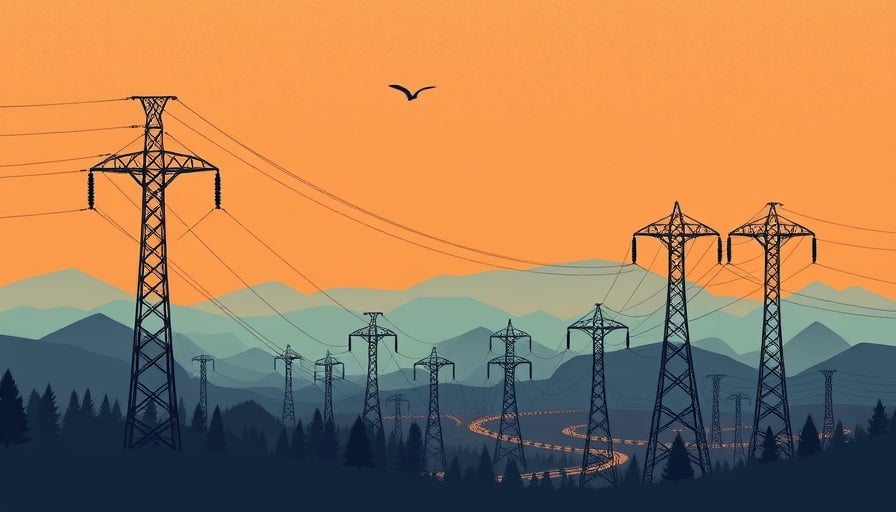
The China State Grid’s first‑quarter fixed‑asset investment—reported at nearly 200 billion yuan—reflects an aggressive expansion of high‑voltage (500 kV) and ultra‑high‑voltage (UHV) transmission corridors. These corridors are vital for transporting renewable generation from resource‑rich western provinces to densely populated eastern coastal regions.
Key investment drivers include:
- UHV Line Extensions: Construction of new 500 kV AC and 800 kV DC lines reduces transmission losses below 3 % and supports up to 300 GW of renewable capacity.
- Smart Grid Deployment: Integration of Phasor Measurement Units (PMUs) and Advanced Metering Infrastructure (AMI) increases situational awareness, enabling automated fault isolation and dynamic re‑configuration.
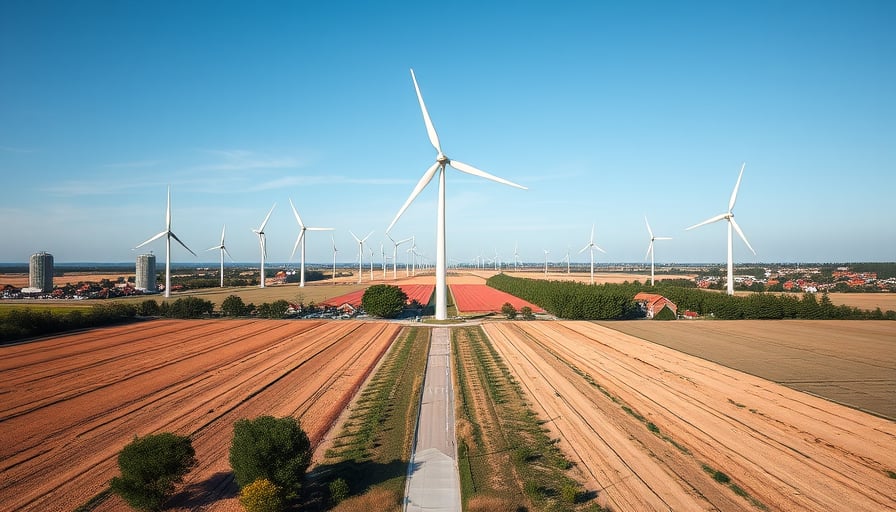
- Energy Storage Integration: BESS installations alongside wind farms (e.g., 200 MW/400 MWh) provide both energy arbitrage and ancillary services, smoothing output and enhancing grid resilience.
Economic Impact and Consumer Costs
The cost of integrating renewables is reflected in the structure of electricity tariffs. Two primary mechanisms influence consumer bills:
Capital Cost Recovery (CCR) – Utilities recover fixed investment costs over the lifespan of the transmission infrastructure, typically through a “cost‑of‑service” rate structure. As infrastructure investments rise, CCR components of tariffs increase proportionally.
Variable Operational Costs (VOC) – With decreasing fossil‑fuel generation, VOCs drop; however, the need for ancillary services such as frequency regulation and voltage support introduces new cost items.
Regulators aim to balance these costs with incentives for clean energy. For instance, the State Grid’s “Green Tariff” pilot allows reduced rates for consumers connected to renewable sources, thereby offsetting part of the infrastructure cost. This policy introduces a cross‑subsidy effect that can partially mitigate consumer cost increases.
Regulatory Frameworks and Rate Structures
National Grid Standards
The latest National Grid Standards (2024 Edition) introduce:
- Enhanced Reliability Requirements – SAIDI target reduced from 0.8 hrs to 0.5 hrs for major grids.
- Renewable Interconnection Codes – Mandate the use of “grid‑supporting” inverters by 2028, with mandatory inertia simulation.
Local Regulation Variants
Different provinces have tailored tariff mechanisms:
- Shanghai: Implements a “Dynamic Tariff” model where peak demand charges vary in real‑time, encouraging load shifting.
- Guangdong: Utilizes a “Time‑of‑Use” (TOU) scheme with four periods, incentivizing off‑peak renewable consumption.
These local variations influence investor behavior. High‑tariff regions attract more renewable projects, while low‑tariff zones may see slower deployment but lower consumer costs.
Rate Design and Consumer Implications
- Regressive vs. Progressive Tariffs – While the former places a heavier burden on low‑income households, progressive tariffs ensure that the cost of grid upgrades is shared equitably.
- Ancillary Service Fees – Fees for frequency and voltage support are passed to consumers; however, transparent billing practices are critical to maintain public trust.
Economic Impacts of Utility Modernization
Cost–Benefit Analysis
- Transmission Efficiency Gains – UHV lines reduce losses from ~5 % to ~2 %. Over a 20‑year horizon, this translates to an estimated savings of 1.5 trillion yuan, offsetting capital expenditures.
- Reduced Outage Costs – Lower SAIDI levels cut the economic cost of outages by ~30 %, improving productivity in industrial zones.
- Job Creation – Each 100 MW of renewable capacity backed by grid upgrades creates approximately 200–250 construction jobs, stimulating local economies.
Investment Return Metrics
- Internal Rate of Return (IRR) – For large grid projects, IRRs are projected between 7–9 % when factoring in revenue from ancillary services.
- Payback Period – Typically 8–12 years for transmission line upgrades, shorter when ancillary service revenues are included.
Market Dynamics and Investor Sentiment
The day’s trading activity—particularly the significant volume around CSG shares—indicates investor confidence in the projected returns from grid modernization. The market’s mixed sentiment reflects the dual nature of the industry: while infrastructure investments promise long‑term gains, the transition to renewables introduces regulatory and technical uncertainties that can affect short‑term profitability.
Conclusion
China’s pursuit of a sustainable, reliable power system hinges on a confluence of technical upgrades, regulatory alignment, and robust infrastructure investment. The Shanghai Composite’s modest decline on April 3 2026 does little to deter the strategic trajectory: the focus remains on deploying high‑voltage corridors, integrating smart grid technologies, and ensuring that the regulatory framework keeps pace with the evolving energy mix.
From an engineering perspective, the challenges of grid stability and renewable integration are surmountable with targeted investments in inverter technology, dynamic line rating, and energy storage. Economically, the benefits—reduced losses, improved reliability, and new revenue streams—justify the capital outlays, provided that tariff structures and regulatory policies maintain fairness and transparency for consumers.
In sum, the market’s reaction today underscores a cautious yet forward‑looking stance: infrastructure and technology themes are poised for continued growth, while the broader sectoral volatility reminds stakeholders of the complexities inherent in an energy transition.