China’s Semiconductor Industry Gains Momentum at the 2026 Bay Area Semiconductor Expo
The 2026 Bay Area Semiconductor Expo marked a pivotal moment for China’s chip ecosystem, showcasing a series of breakthroughs that narrow the performance gap with Western counterparts. Industry observers noted that domestic manufacturers are not only matching international standards but are also advancing the domestic supply chain through near‑full localization of critical components.
High‑Performance Tool Development
Mid‑Beam Ion‑Injection Machine A leading Chinese firm announced a new mid‑beam ion‑injection platform that, according to independent laboratory tests, delivers a process yield improvement of 12 % over comparable overseas models. The device achieves a silicon‑on‑insulator (SOI) doping uniformity of 0.8 % RMS, a metric typically reserved for high‑end global players.Key Insight: The system’s component localization rate exceeds 95 %, reducing dependency on imported materials and mitigating supply‑chain risk—a critical advantage for firms facing geopolitical uncertainty.
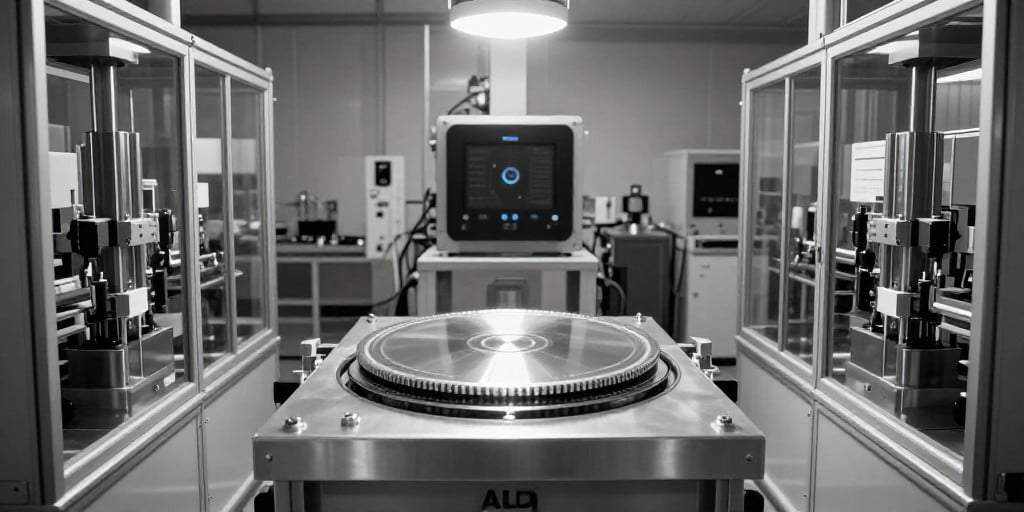
12‑Inch ALD Molybdenum System A separate exhibitor unveiled a 12‑inch atomic‑layer deposition (ALD) line for molybdenum, filling a longstanding gap in the domestic fabrication portfolio. The unit can produce 10 nm‑thick molybdenum films with a uniformity of ±1 %, meeting the stringent requirements of modern 7‑nm and 5‑nm logic nodes.Industry Trend: The adoption of 12‑inch wafers is a clear signal that China’s foundries are aligning with the 12‑inch industry standard, which promises higher throughput and lower unit cost per wafer.
Advances in Testing and Validation
A domestic test‑equipment provider revealed plans to expand its high‑performance storage‑chip testing suite and enter GPU/CPU testing. The company emphasized that stacked and 3D‑integrated devices introduce early‑stage defect propagation, necessitating pre‑wafer‑level test integration.
“Modern stacked memories and logic stacks require diagnostics that can pinpoint faults in the inter‑die interconnects before final assembly,” said the firm’s Chief Technology Officer.
The strategy involves machine‑learning‑enabled defect classification and in‑situ thermal stress testing, aiming to reduce the need for expensive post‑assembly failure analysis.
Market Context: Valuation Shifts and Portfolio Implications
The broader market narrative has shifted from a technology‑driven rally in the first half of the year to a more balanced environment. While technology ETFs experienced a 4.7 % decline after the June rally, dividend‑focused funds (e.g., banking and utilities) delivered gains of 3.2 % and 2.8 %, respectively.
“The recent re‑adjustment underscores the necessity for disciplined valuation metrics,” commented a senior analyst at a leading asset‑management firm. “Fund managers must evaluate companies not just on growth metrics but also on their capacity to sustain earnings under tightening margin conditions.”
The volatility in tech valuations highlights the value of defensive holdings and dividend sustainability, especially for active‑equity funds that may have entered the market late in the cycle.
Implications for IT Decision‑Makers and Software Professionals
- Supply‑Chain Resilience: The localization of key semiconductor tools reduces exposure to import bottlenecks. IT leaders can leverage domestic tooling to accelerate time‑to‑market for new product lines.
- Testing Integration: Early defect detection in 3D‑integrated chips can lower warranty costs and improve product reliability. Software teams should plan for advanced test data analytics to integrate with design‑for‑test (DFT) workflows.
- Valuation Discipline: Portfolio managers must balance high‑growth semiconductor opportunities with dividend‑yielding sectors to maintain risk‑adjusted returns.
- Long‑Term Thematic Focus: As the industry evolves toward chip‑intensive AI workloads, organizations should invest in scalable edge‑processing solutions that can exploit the new high‑performance tools.
Conclusion
The 2026 Bay Area Semiconductor Expo illustrated a clear trajectory: Chinese semiconductor manufacturers are closing the performance gap with global leaders while building a more robust, localized infrastructure. Coupled with a market that increasingly rewards firms capable of managing risk in a shifting valuation landscape, these developments signal a maturation of China’s chip industry—a trend that IT executives and software professionals should monitor closely as they align technology roadmaps with emerging capabilities.