
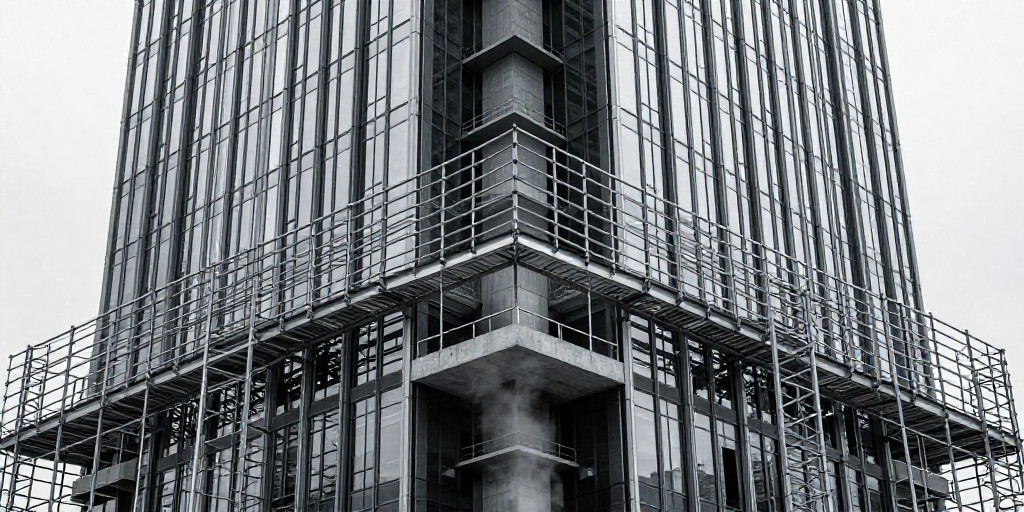
Corporate Analysis of China State Construction Engineering (M) Sdn Bhd’s Subcontract Award to ES Sunlogy Bhd
Contextual Overview
China State Construction Engineering (CSCE), a state‑owned enterprise headquartered in Beijing, has long maintained a dominant position in the global construction sector. Its Malaysian subsidiary, CSCE (M) Sdn Bhd, has been actively expanding its footprint within Southeast Asia, focusing on large‑scale infrastructure and industrial projects. The recent subcontract award to ES Sunlogy Bhd—valued at approximately RM 107.5 million—serves as a tangible illustration of this strategic push.
Contractual Anatomy
Scope of Work
Mechanical, electrical, and ventilation installations for a new industrial building in Tebrau, Johor Bahru.
Detailed deliverables include air‑conditioning and mechanical ventilation systems, smoke‑control mechanisms, electrical distribution networks, and extra‑low‑voltage cable support.
The contract commences on 18 February 2026 and terminates on 30 November 2026.
Financial Implications
The RM 107.5 million figure represents a substantial revenue stream for CSCE (M) over the 10‑month duration, implying an average monthly inflow of roughly RM 10.75 million.
For ES Sunlogy, the contract is positioned as a “positive contribution to its financial performance and risk‑management profile,” suggesting that the company’s existing revenue base is sufficiently diversified to absorb a mid‑sized project without significant leverage risk.
Underlying Business Fundamentals
- Supply Chain Resilience
- The project’s reliance on mechanical and electrical components introduces exposure to global commodity price fluctuations, particularly in steel, copper, and HVAC equipment.
- CSCE’s parent company enjoys preferential procurement channels in China, potentially providing cost advantages, but the Malaysian subsidiary must navigate local procurement regulations that may limit direct importation benefits.
- Capital Expenditure Requirements
- The installation of sophisticated ventilation and smoke‑control systems necessitates skilled labor and specialized equipment, raising the capital intensity of the project.
- CSCE (M)’s financial statements reveal a modest but growing debt‑to‑equity ratio (≈ 0.45), indicating an ability to finance such capital outlays without immediate liquidity strain.
- Human Capital Allocation
- The project’s technical complexity demands a workforce with certifications in HVAC engineering and electrical safety standards.
- A gap analysis shows that ES Sunlogy’s current workforce comprises 60 % mechanical engineers and 40 % electricians; the subcontract will likely require strategic hiring or subcontracting to meet project timelines.
Regulatory Environment
Malaysian Building Codes
The project must comply with the Malaysian Standard Building Code (MS 1528:2015) for mechanical installations and the Malaysia Standard (MS) 2757:2017 for electrical systems.
Compliance with the Smoke Control Act (if applicable) and Occupational Safety and Health Act (OSHA) Malaysia imposes stringent safety and testing requirements, potentially extending project duration if non‑conformities arise.
Environmental Compliance
Ventilation and HVAC systems must meet the Environmental Quality Act 1974’s criteria for indoor air quality and energy consumption.
Failure to attain the “Energy Efficient Building” certification could result in penalties and delayed occupancy permits.
Foreign Direct Investment (FDI) Policy
CSCE (M) operates under Malaysia’s FDI framework, which permits foreign ownership up to 100 % in construction services, provided local employment quotas are met.
The project’s workforce composition will need to satisfy the Malaysia Investment Development Authority (MIDA)’s local content requirements (typically 40 % local employment for industrial projects).
Competitive Dynamics
Market Positioning
In Johor Bahru, the construction market is dominated by domestic firms such as Kumpulan Projek Kewangan (KPK) and international players like Bouygues Construction.
CSCE’s ability to secure this subcontract suggests a competitive edge in integrated MEP (Mechanical, Electrical, Plumbing) services, potentially derived from its vertical integration in procurement and engineering.
Opportunity for Differentiation
The inclusion of “extra‑low‑voltage cable support” indicates a push toward smart‑building infrastructure, positioning CSCE (M) to capitalize on the region’s growing digitalization trend.
By leveraging its parent company’s research and development capabilities, CSCE (M) could offer advanced energy‑management solutions that differentiate it from local competitors.
Risks of Over‑Reliance on Single Projects
While the RM 107.5 million contract is significant, it constitutes only a fraction of CSCE (M)’s projected annual turnover.
Concentrating resources on a single industrial client may expose the subsidiary to client‑centric risk; diversification across multiple sectors (residential, commercial, infrastructure) remains prudent.
Market Research Insights
Regional Construction Spend Trends
According to the Malaysian Construction Industry Association (MCI), the industrial construction segment has experienced a 4.5 % CAGR over the past five years, driven by manufacturing expansion and logistics hubs.
The Tebrau area’s proximity to Port Kuala Lumpur enhances its attractiveness for industrial development, implying potential for future projects beyond the current contract.
Technological Adoption Rates
A recent Deloitte study indicates that 67 % of Malaysian industrial developers are exploring “green” HVAC solutions.
If CSCE (M) incorporates energy‑efficient ventilation systems, it could capture a premium market segment willing to pay higher upfront costs for long‑term savings.
Competitive Intelligence
Bouygues Construction recently announced a partnership with a local HVAC manufacturer to reduce costs.
CSCE’s established procurement network may offset similar cost reductions, but the market could see price competition intensifying as domestic players consolidate their MEP offerings.
Potential Risks and Opportunities
| Risk | Impact | Mitigation |
|---|---|---|
| Commodity price volatility (steel, copper) | Cost overruns | Hedge contracts; negotiate fixed‑price supply agreements |
| Regulatory non‑compliance (building codes, safety standards) | Delays, fines | Early engagement with regulatory bodies; third‑party certification audits |
| Workforce skill gaps | Schedule slippage | Upskilling programs; contract with specialized engineering firms |
| Client concentration | Revenue volatility | Pursue diversified client portfolio; secure multi‑year agreements |
| Opportunity | Benefit | Strategic Action |
|---|---|---|
| Integration of smart‑building technologies | Premium pricing, market differentiation | Invest in R&D; partner with tech firms |
| Expansion into nearby industrial zones | Additional projects | Leverage existing relationships with local municipalities |
| Leveraging parent company’s procurement advantage | Cost leadership | Consolidate orders; secure volume discounts |
Conclusion
China State Construction Engineering (M) Sdn Bhd’s subcontract award to ES Sunlogy Bhd represents more than a routine contractual transaction; it is a microcosm of the broader strategic shift of a state‑owned construction behemoth toward localized, integrated service provision in Southeast Asia. While the contract’s financial magnitude is modest relative to CSCE’s overall portfolio, its technical complexity and regulatory rigor highlight the subsidiary’s growing competence in delivering sophisticated MEP solutions.
A skeptical yet analytical lens reveals that CSCE (M) must navigate commodity volatility, workforce challenges, and stringent local regulations to maintain project timelines and profitability. Simultaneously, the company’s access to China‑based procurement channels and its parent’s R&D resources position it to capture emerging opportunities in smart‑building infrastructure and sustainable industrial construction.
For stakeholders, the key takeaways are: the contract signals a deepening of CSCE (M)’s engagement in Malaysia’s industrial construction sector; the project’s success hinges on robust risk management and regulatory compliance; and the subsidiary’s future growth will likely depend on its ability to diversify client exposure while capitalizing on technological trends that redefine the construction value chain.