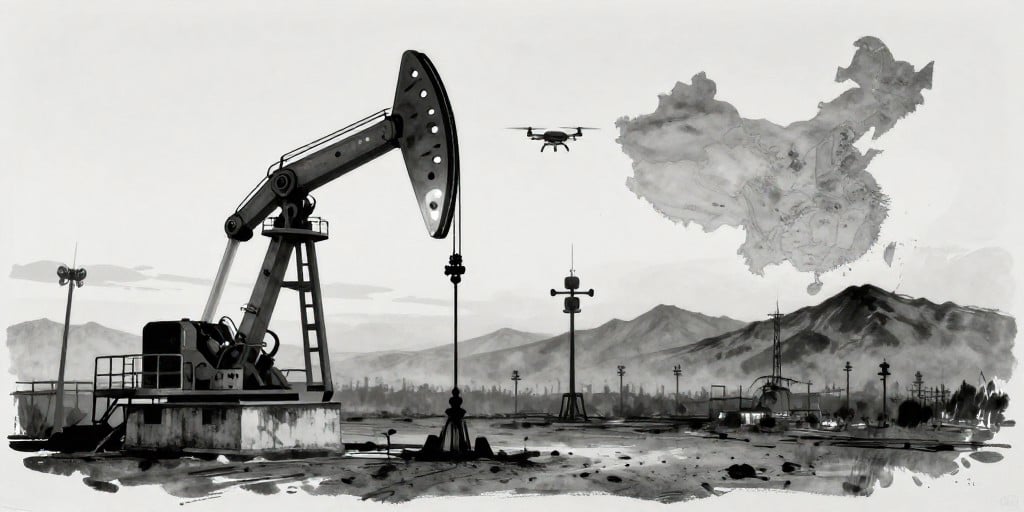
Third‑Quarter Earnings Snapshot: Energy and Technology Drive Growth While Traditional Sectors Face Headwinds
The latest third‑quarter earnings for China’s listed companies reveal a mixed performance landscape, with notable strength in energy and technology and discernible pressure in conventional manufacturing and real‑estate segments.
1. Overall Market Performance
- Total revenue for the year to date reached 56.6 trillion yuan, up from the prior year.
- Net profit climbed to 5.1 trillion yuan, also exceeding the previous year’s figure.
- The broad improvement is largely attributable to energy and technology sectors, which have delivered above‑average gains.
2. Energy Sector Dynamics
Oil and gas majors have benefited from a confluence of favorable upstream and downstream conditions:
| Company Group | Key Drivers | Earnings Outcome |
|---|---|---|
| China National Petroleum (CNPC) | Higher crude prices, expanded refining capacity | Surpassed analyst expectations |
| China Petrochemical (Sinopec) | Improved downstream margins, efficient product mix | Outperformed forecasts |
| China National Offshore Oil (CNOOC) | Robust upstream production, better product distribution | Exceeded consensus |
The combined earnings of the “three oil” group have become a core contributor to the overall rise in sector profits. Higher upstream prices have lifted margins, while downstream operations have capitalized on an increasingly sophisticated product portfolio.
3. Technology Sector Upside
Technology firms—particularly those involved in artificial intelligence (AI), electronics, and semiconductor manufacturing—have delivered significant upside:
- AI‑related subsectors (storage, optical communications, PCB production) reported large profit increases.
- The gains are linked to steady demand for high‑performance computing components and the expanding AI application market.
- Companies that have invested in AI infrastructure and chip design are reaping early rewards, reinforcing the sector’s position as a growth engine.
4. Conventional Industries Under Pressure
Traditional cyclical sectors such as steel, appliances, and real estate have experienced slower revenue growth or declining profits:
- Steel: Reduced demand and overcapacity pressures.
- Appliances: Competition and margin compression.
- Real Estate: Liquidity constraints and regulatory tightening.
These dynamics have resulted in a more concentrated profit distribution. A handful of high‑growth companies have elevated the sector average, while a sizeable portion of the market displays modest or negative performance.
5. Financial Sector Stability
Banks and financial institutions continue to act as a stable anchor:
- Earnings growth is moderate but steady, reflecting easing interest rates and ongoing liquidity support.
- Their performance supports market sentiment and provides a counterbalance to the volatility seen in other sectors.
6. Broader Economic Implications
- The dual‑track trend—energy and technology leading while conventional manufacturing and real estate lagging—mirrors global patterns of digital transformation and commodity market shifts.
- Concentration of profits indicates a widening gap between top‑tier performers and lower‑mid‑tier companies, suggesting potential consolidation pressures and a shift in investment focus toward high‑growth, tech‑enabled firms.
- Easing monetary policy may further buoy financial institutions, but the real‑estate sector’s ongoing challenges could dampen consumer confidence if not addressed.
7. Conclusion
China’s third‑quarter earnings illustrate a paradigm shift: traditional industries are contending with structural challenges, whereas the energy and technology sectors are capitalising on favourable market dynamics and technological advancements. The market’s net profit growth remains robust, yet increasingly reliant on a concentrated group of high‑performing firms. This pattern underscores the need for strategic adaptation across sectors and highlights the importance of monitoring sector‑specific drivers within a broader macroeconomic framework.