
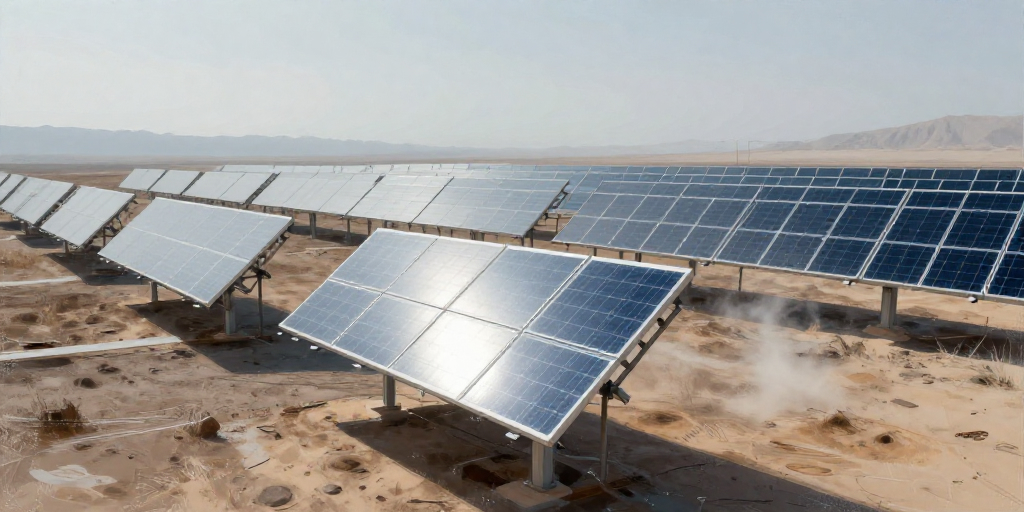
Impact of the Phasing‑Out of PV Export Rebates on China’s Renewable Power Landscape
1. Policy Shift and Its Immediate Implications
On 15 April 2026 the Chinese government discontinued the value‑added tax export rebate that had supported the photovoltaic (PV) industry for more than a decade. The 9 % rebate, previously applied across 249 product categories, was removed entirely, with a staged elimination of the rebate on PV cells scheduled for completion in 2027. Analysts interpret this move as a deliberate pivot toward a market‑driven paradigm, encouraging manufacturers to reduce dependence on fiscal incentives and to sharpen focus on cost discipline and technological progress.
The elimination of a uniform subsidy disrupts the competitive landscape. Firms with robust vertical integration—such as Long‑Ji and Jinko—are positioned to absorb the change more effectively due to diversified supply chains and greater economies of scale. Conversely, smaller, less diversified producers may encounter compressed profit margins and heightened risk of consolidation as they grapple with intensified cost pressures.
2. Market‑Level Activity and Capital Flows
Simultaneous market observations revealed a nuanced response to the policy shift:
Equity Outflows and Inflows Early‑day trading on the Shanghai and Shenzhen exchanges recorded net outflows from broad main‑market sectors, suggesting investor caution amid uncertainty. In contrast, the electric‑grid equipment segment experienced net inflows, reflecting sustained confidence in infrastructure development. Individual stocks within electric‑grid and technology groups attracted notable capital, indicating targeted confidence in sectors that underpin renewable integration.
Index Performance The CSI 300 and ChiNext indices fell modestly, mirroring the overall subdued market sentiment. The modest declines underscore the broader caution among investors, while the relative stability of technology and grid sectors suggests a selective optimism rooted in sectoral fundamentals rather than generalized enthusiasm.
3. Exports of Wind‑Farm Equipment and Global Demand
While the PV rebate withdrawal signals a tightening of domestic support, global renewable demand remains robust:
Wind‑Gear Exports Chinese wind‑gear manufacturers reported a surge in new export orders and capacity commitments. The increase aligns with international initiatives to accelerate clean‑energy adoption amid geopolitical tensions and a renewed emphasis on energy security.
Policy and Demand Drivers Domestic policy initiatives continue to push for distributed solar and battery‑storage deployment, bolstering the domestic supply chain. Concurrently, international markets—particularly those seeking green power and hydrogen technologies—drive demand for Chinese‑produced wind equipment, creating a compensatory export channel.
4. Corporate Performance: Shanghai Electric Power Co., Ltd. (600021)
Corporate disclosures from Shanghai Electric Power Co., Ltd. provide a micro‑level illustration of how firms are navigating the sector’s transition:
Operating Highlights The company reported a stable operating performance in Q1 2026, with a modest decline in coal‑electric output offset by a slight increase in solar generation. This balance illustrates a gradual shift toward cleaner generation without sacrificing overall capacity.
Portfolio Composition Shanghai Electric maintains a diversified portfolio—encompassing coal, gas, wind, and solar—and continues to invest in overseas projects and advanced energy‑storage initiatives. Management emphasized strategies to optimize costs, mitigate fuel price volatility, and enhance financing efficiency, underscoring the importance of financial resilience during policy realignments.
5. Structural Realignment and Strategic Outlook
The sector’s evolution reflects a broader structural realignment:
Consolidation of Leading Firms Large, technologically advanced manufacturers are consolidating market positions, leveraging their integrated operations to offset subsidy losses. Their focus on innovation and cost control positions them favorably in a market increasingly governed by value rather than government support.
Adaptation of Smaller Players Smaller producers face pressure to specialize or diversify into ancillary services—such as component manufacturing, project development, or maintenance—to sustain competitiveness. Such strategic pivots may foster niche expertise and create new revenue streams less sensitive to subsidy fluctuations.
Sustained Demand and Innovation The removal of subsidies, coupled with unwavering global demand for clean‑energy exports, points to a gradual shift toward value‑based competition. Firms that can deliver technologically advanced, cost‑effective solutions will likely capture market share as the industry matures.
6. Conclusion
The discontinuation of the PV export rebate marks a decisive shift in China’s renewable power policy, catalyzing a transition from subsidy‑driven growth to market‑driven competition. While the immediate impact poses challenges—particularly for smaller, less diversified manufacturers—opportunities arise for firms that prioritize cost efficiency, technological advancement, and strategic diversification. Market activity signals cautious optimism, with targeted inflows into infrastructure and technology sectors reflecting confidence in the sector’s long‑term growth trajectory. As China continues to export wind‑gear and expand distributed solar and storage capabilities, the renewable power industry is poised for a realignment that rewards innovation and operational excellence.