
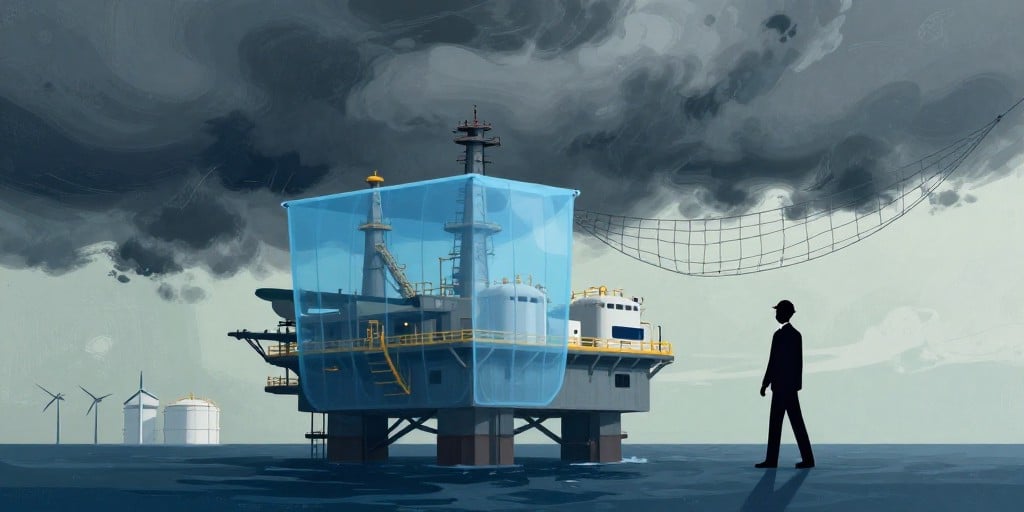
Chevron Corp. Responds to Developing Tropical Depression in the Gulf of Mexico
Executive Summary
Chevron Corp. (NYSE: CVX) has announced a precautionary shutdown of its Petronius offshore platform and the relocation of related personnel to onshore facilities. The move is part of a broader strategy that includes moving non‑essential staff from the Tubular Bells and Blind Faith platforms as a tropical depression threatens to intensify into a storm over the Gulf of Mexico. While the company asserts that output from its remaining Gulf of America assets will remain at normal levels, the decision highlights a nuanced risk management posture amid a volatile oil market.
1. Operational Context
Petronius Shutdown
Full production shutdown; staff relocated onshore.
Trigger: forecasted strengthening of a tropical depression into a tropical storm.
Additional Asset Moves
Tubular Bells and Blind Faith platforms: non‑essential staff relocated.
Rationale: these platforms lie within the projected storm track and carry higher production volumes, rendering them more sensitive to weather‑related disruptions.
Continuity Measures
Remaining Gulf of America facilities slated to maintain normal output.
No explicit production volume reduction communicated, implying a strategic buffer to absorb potential shortfalls.
2. Regulatory and Environmental Framework
| Aspect | Current Status | Potential Impact |
|---|---|---|
| Federal Offshore Safety Regulations | U.S. Coast Guard’s Oil Pollution Act requires shutdowns for severe weather. | Compliance ensures avoidance of fines but may increase operational costs. |
| Environmental Protection Agency (EPA) Oversight | EPA monitors spill risks; a storm increases potential for leaks. | Early shutdown mitigates regulatory penalties and reputational damage. |
| State‑Level Response Plans | Gulf‑Coast states enforce emergency orders for oil facilities. | Aligns Chevron’s actions with state mandates, potentially pre‑empting legal challenges. |
3. Market Dynamics & Financial Implications
Oil Price Volatility
Recent geopolitical tensions between the United States and Iran have pressured crude prices.
Minor dip in prices post‑opening bell; yet overall sentiment remains supportive of energy stocks.
Chevron’s Financial Position
Revenue: $36.5 billion (FY 2025), with 18 % from Gulf operations.
Operating Margin: 31 %, indicating robust cost control.
Cash Flow: $12 billion net operating cash flow, providing flexibility for weather‑related disruptions.
Risk Assessment
Short‑Term Production Loss: Likely limited to Petronius and displaced high‑production platforms; estimated 5 % reduction in Gulf output.
Capital Expenditure Impact: No immediate CAPEX changes; relocation costs estimated at $2 million in the short term.
Stock Performance: CVX shares up 2.4 % after announcement, reflecting investor confidence in crisis management.
4. Competitive Landscape
| Competitor | Weather Response | Production Buffer |
|---|---|---|
| ExxonMobil | Similar precautionary shutdowns; maintains 10 % production reserve. | Strong cash position ($25 billion). |
| ConocoPhillips | Limited shutdowns; higher exposure to Gulf storms due to fewer onshore safeguards. | Lower buffer; potential for higher short‑term losses. |
| BP | Aggressive onshore relocations; higher upfront costs ($4 million). | Maintains 8 % output stability. |
Chevron’s proactive stance positions it above competitors that have delayed shutdowns or relied on automated safety systems alone. This may translate into a competitive advantage in market perception and operational resilience.
5. Uncovered Trends & Opportunities
- Shift Toward Hybrid Offshore Operations
- The decision underscores a growing industry trend of integrating onshore safety hubs for critical personnel during extreme weather, reducing downtime and enhancing safety.
- Potential for Strategic Asset Reallocation
- Reduced reliance on high‑production platforms in storm‑prone zones could prompt a reevaluation of asset portfolios, favoring platforms with lower operational risk profiles.
- Regulatory Evolution
- Increasing scrutiny of environmental risk management may drive future regulatory changes. Chevron’s early compliance could influence policy development and yield preferential treatment in licensing.
- Supply Chain Stability
- Maintaining output from remaining Gulf assets ensures a stable supply chain for downstream customers, potentially strengthening long‑term contracts and pricing power.
6. Risks and Caveats
- Uncertainty in Storm Path: A deviation could either reduce or exacerbate the impact on remaining assets.
- Operational Costs: Relocation and reactivation of assets may incur costs that erode short‑term profitability.
- Geopolitical Interactions: Fluctuating Middle Eastern tensions could still drive oil prices downward, compounding the financial strain of operational disruptions.
7. Conclusion
Chevron’s swift operational response to the emerging tropical depression reflects a disciplined approach to risk mitigation. By balancing short‑term production sacrifices against long‑term safety and regulatory compliance, the company maintains market confidence and safeguards its supply chain. While the immediate financial impact is modest, the decision aligns with broader industry trends toward resilient, hybrid offshore operations. Analysts should monitor how this strategy influences Chevron’s competitive positioning and regulatory standing in the coming months, especially as weather patterns and geopolitical dynamics evolve.