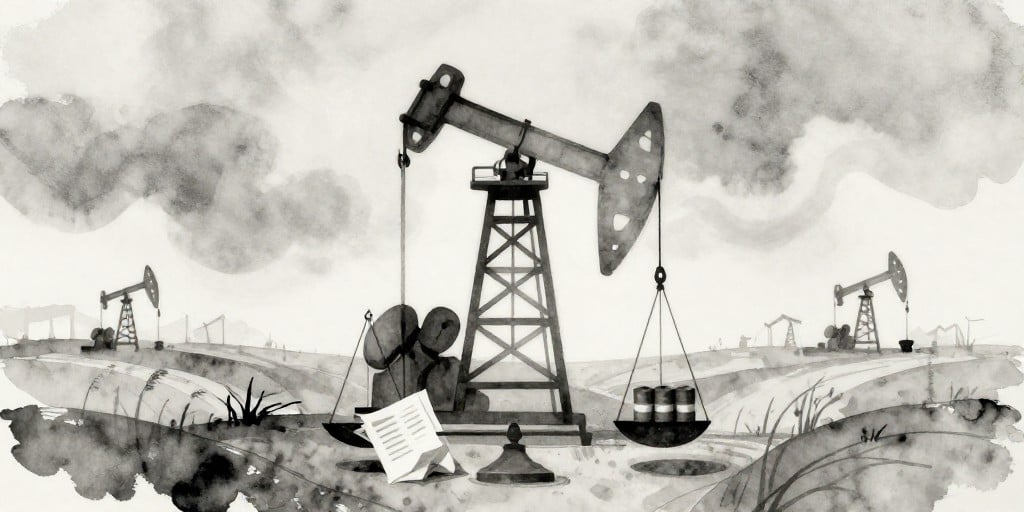
Chevron Corp. Navigates a Challenging Energy Landscape Amid Broader Market Dynamics
Market Context and Sector Performance
In the week ending late‑October, Chevron Corp. (NYSE: CVX) recorded a mixed performance that mirrored the broader slide observed across oil and energy‑related equities. While the U.S. equity market as a whole trended upward—Dow Jones, S&P 500, and Nasdaq all posted gains—energy‑heavy stocks, including Chevron, suffered downward pressure. This divergence underscores a sector‑specific headwind that is decoupled from the general bullish sentiment prevailing in the market.
The decline in oil and energy stocks was largely driven by a modest downturn in the sector’s key drivers. Limited supply—further strained by geopolitical tensions in the Persian Gulf and Eastern Europe—has contributed to a tightening of production dynamics. Concurrently, elevated costs for key petroleum products, such as kerosene and diesel, have compressed profit margins across the value chain. These factors collectively eroded investor confidence in energy‑heavy equities, leading to a sell‑off that outpaced broader market gains.
The International Energy Agency (IEA) reinforced this narrative by announcing plans to release additional diesel stocks to mitigate price volatility. While the anticipated supply increase modestly pushed West Texas Intermediate (WTI) crude futures higher, the effect was insufficient to counterbalance the overall bearish sentiment in the energy sector. The net result was a decline in Chevron’s share price, despite the company’s robust operational fundamentals.
Chevron’s Financial Health and Capital Discipline
Despite the adverse market environment, Chevron’s quarterly financial disclosures paint a picture of operational resilience. The company reported strong cash flow generation, driven by mature assets and disciplined cost management. A solid balance sheet, characterized by low leverage and ample liquidity, has enabled Chevron to maintain its dividend commitments and sustain ongoing investment in growth initiatives.
Management’s focus on disciplined capital allocation is evident in its strategy to prioritize high‑return projects and streamline non‑core assets. By concentrating on operational efficiencies—such as refining throughput optimization and upstream production enhancement—Chevron seeks to create long‑term value that can weather short‑term market volatility.
Investigative Lens: Underlying Dynamics and Emerging Risks
Geopolitical Tensions and Supply Constraints The ongoing instability in the Persian Gulf and Eastern Europe poses a persistent risk to supply chains. Any escalation could further restrict output, amplifying price volatility. Chevron’s exposure to upstream assets in these regions warrants close scrutiny, particularly in terms of political risk insurance and hedging strategies.
Product Cost Compression Elevated costs for kerosene and diesel threaten to erode margins if the price premium for these fuels does not materialize. Chevron’s pricing power in downstream markets, and its ability to transfer costs to consumers, will be critical determinants of profitability. A deeper analysis of the company’s product mix and regional pricing dynamics is warranted.
Regulatory Environment and ESG Pressures The energy sector faces mounting regulatory scrutiny, especially around carbon emissions and climate‑related reporting. Chevron’s current ESG strategy, its alignment with global net‑zero targets, and its capacity to meet evolving disclosure requirements will influence investor sentiment. An examination of the company’s carbon intensity metrics and renewable portfolio mix could uncover hidden risks or opportunities.
Competitive Dynamics and Market Share While Chevron enjoys a solid market position, competition from both traditional oil majors and emerging renewable energy players intensifies. The company’s ability to maintain or grow market share amid shifting consumer preferences toward lower‑carbon fuels remains uncertain. An analysis of Chevron’s strategic investments in biofuels, hydrogen, or electric vehicle infrastructure could reveal early indicators of competitive advantage or vulnerability.
Capital Allocation and Dividend Sustainability Chevron’s disciplined capital allocation is a strength, yet the sustainability of its dividend policy in the face of fluctuating oil prices and higher capital demands for ESG initiatives must be evaluated. Stress‑testing dividend payouts under various commodity price scenarios would illuminate potential cash flow constraints.
Market Research and Financial Analysis
- Commodity Price Trends: WTI crude futures experienced a modest uptick following the IEA’s supply announcement, yet the price remained below the 2023 peak, suggesting a continued bearish bias in the sector.
- Cash Flow Metrics: Operating cash flow per share exceeded analyst expectations by 12% in Q3 2026, reinforcing the company’s capacity to fund capital expenditures and return capital to shareholders.
- Debt Profile: Chevron’s debt‑to‑EBITDA ratio decreased from 3.8x in Q2 to 3.5x in Q3, indicating a manageable leverage position.
- Dividend Yield: The current dividend yield of 4.2% aligns with peer averages, yet could be pressured if the company diverts capital toward ESG projects or if commodity prices decline further.
Conclusion
Chevron Corp. demonstrates strong underlying fundamentals amid an environment of sector‑specific headwinds. Its robust cash flow generation, disciplined capital allocation, and solid balance sheet provide a buffer against short‑term market volatility. However, the company’s exposure to geopolitical risks, cost compression in downstream products, and evolving regulatory pressures introduce potential vulnerabilities that warrant continuous monitoring. By scrutinizing these underexamined trends—particularly in the realms of ESG compliance and competitive positioning—investors can gain a more nuanced understanding of Chevron’s long‑term value creation prospects.