Corporate News – Cheniere Energy Inc.
Cheniere Energy Inc. has experienced a share‑price trajectory that mirrors the heightened volatility observed in the global natural‑gas market. The company’s valuation has been influenced by the ongoing geopolitical tensions in the Middle East, particularly the disruptions to liquefied natural‑gas (LNG) production and shipping corridors in the Gulf region and through the Strait of Hormuz.
Market Context
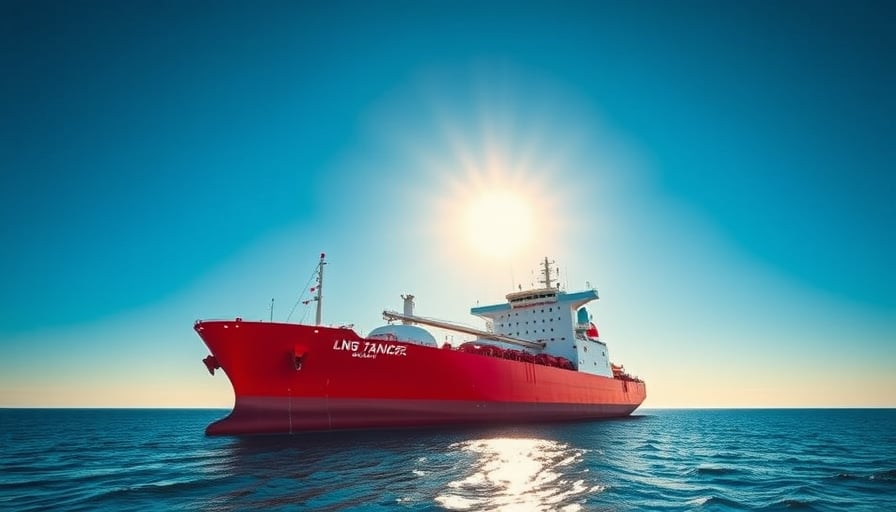
The global LNG market has entered a phase of heightened uncertainty. Disruptions in Gulf‑region LNG output, coupled with constrained shipping routes, have tightened supply and driven up prices for the commodity. Cheniere’s business model—sourcing feed‑gas from U.S. natural‑gas fields, liquefying it at the Sabine Pass facility, and exporting it to international markets—positions the company directly in the path of these supply chain pressures.
Market observers note that the firm’s earnings outlook remains closely tied to two primary levers:
- Global LNG Demand – Growth in Asia, particularly China and Japan, continues to underpin the long‑term demand curve for LNG. Any slowdown in industrial activity or shifts toward alternative clean‑energy sources could compress the demand trajectory.
- Feed‑Gas Availability – The U.S. natural‑gas supply base is subject to weather‑related volatility, shale‑gas production cycles, and regulatory developments. An interruption in feed‑gas supplies would constrain Cheniere’s liquefaction capacity and, by extension, its export volumes.
Analyst Commentary
Recent analyst reports indicate a bifurcated view of the energy‑sector landscape. Some commentators caution that the current rally in energy stocks may be approaching its apex, driven by speculative positioning rather than fundamental value. Others, however, point to structural advantages in companies that possess resilient LNG platforms: stable feed‑gas pipelines, diversified export markets, and robust contractual relationships with end‑users.
In the context of Cheniere, analysts have highlighted:
- Operational Efficiency: The company’s focus on cost control at the Sabine Pass terminal has helped maintain margin resilience amid fluctuating feed‑gas costs.
- Geopolitical Exposure: While the Strait of Hormuz remains a chokepoint, Cheniere’s diversification of shipping routes and its reliance on U.S. production reduce its exposure relative to firms heavily dependent on Gulf‑region sources.
- Strategic Partnerships: Ongoing discussions with shipping partners and long‑term LNG contracts provide a buffer against short‑term market swings.
Sectoral Dynamics and Investor Positioning
Cheniere is frequently benchmarked alongside peers such as Venture Global LNG and other U.S. LNG operators. The broader conversation focuses on the long‑term attractiveness of the LNG sector in a world where oil and gas prices remain volatile. Investors are increasingly weighing:
- Supply‑Demand Balances: The degree to which LNG can fill the gap between declining coal usage and the need for low‑carbon fuels.
- Regulatory Momentum: Policies promoting decarbonization and the role of LNG as a transition fuel.
- Capital Allocation: The pace at which new liquefaction projects are being green‑lit, and the capacity build‑out rates versus demand forecasts.
The interplay between these factors shapes not only Cheniere’s short‑term performance but also its strategic positioning in a rapidly evolving energy economy. The firm’s ability to navigate immediate supply chain disruptions while capitalizing on macro‑economic trends will determine its competitive advantage in the coming years.
This article is intended to provide an objective, analytical overview of Cheniere Energy Inc.’s current corporate environment, without editorializing or offering investment advice.