
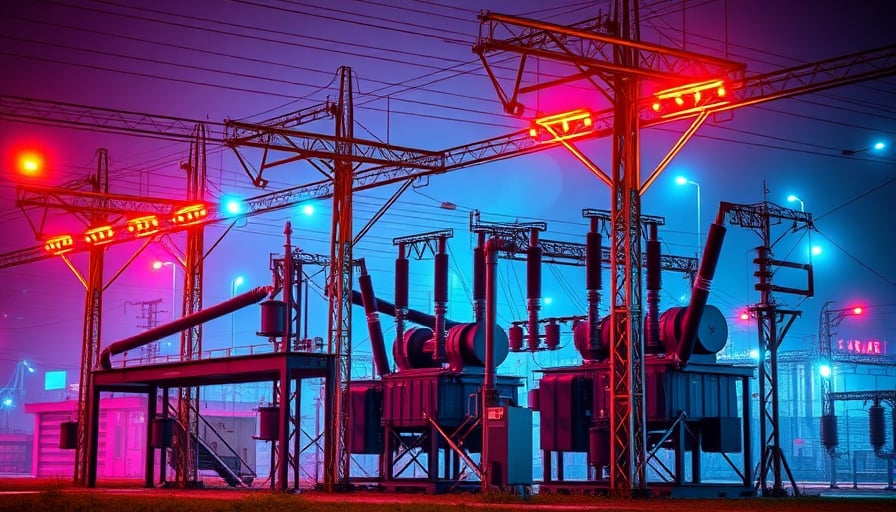
CenterPoint Energy Inc.: Analyst Assessment and Broader Implications for the Utilities Landscape
CenterPoint Energy Inc. has recently been the subject of a new analyst assessment published on a prominent financial news platform. The report underscores the Houston‑based utility holding company’s continued relevance in the multi‑utilities sector, noting that its equity remains within a trading band that signals steady investor confidence. The update focuses on the company’s recent market performance and outlook without providing specific numerical data, but it highlights a robust earnings profile and a solid position within the broader utilities market.
While the analyst commentary stops short of delving into policy or macro‑economic catalysts, the broader context of CenterPoint’s operations invites a technical examination of the challenges and opportunities that define the modern electric and gas utilities industry. In particular, the company’s portfolio—encompassing electricity transmission and distribution, natural‑gas distribution, interstate pipeline operations, and power generation—positions it at the nexus of several critical dynamics: grid stability, renewable energy integration, infrastructure investment, regulatory frameworks, and rate design. The following sections analyze these interrelated factors through an engineering lens, with implications for both the energy transition and consumer costs.
1. Grid Stability in a High‑Renewable Environment
1.1. Frequency and Voltage Control
The increasing penetration of inverter‑based resources (IBRs), such as photovoltaic (PV) and wind turbines, alters traditional voltage and frequency control mechanisms. Conventional synchronous generators provide inertia that dampens frequency deviations; IBRs lack inherent inertia, requiring advanced controls (e.g., synthetic inertia and fast frequency response) to maintain stability. CenterPoint’s transmission network must therefore incorporate grid‑forming inverters and adaptive protection schemes that can respond to rapid changes in active and reactive power flows.
1.2. Transient Stability and Fault Ride‑Through
High‑renewable penetration can reduce the system’s fault‑ride‑through capabilities, potentially leading to cascading failures. Modern transmission operators, including CenterPoint, are deploying wide‑area monitoring systems (WAMS) and synchrophasor technology (PMUs) to detect and mitigate sub‑second disturbances. Enhancing these systems with machine‑learning‑based fault classification can improve decision‑making during transient events, thereby sustaining system reliability.
1.3. Balancing Supply and Demand
Dynamic load forecasting is critical for dispatching the correct mix of conventional and renewable generation. CenterPoint’s forecasting models integrate high‑resolution meteorological data, machine learning algorithms, and real‑time market signals to optimize unit commitment and minimize imbalance costs. Accurate forecasting reduces reliance on spinning reserve and enhances the economic efficiency of the grid.
2. Renewable Energy Integration Challenges
2.1. Intermittency and Curtailment
Wind and solar output exhibit temporal variability that can conflict with baseload generation and demand peaks. Grid operators must design curtailment strategies that minimize revenue loss for renewable developers while preventing overloading of transmission assets. Implementing coordinated curtailment through a common platform—such as the PJM Energy Imbalance Market—can align incentives and reduce curtailment events.
2.2. Storage and Flexibility Resources
Energy storage systems (ESS) and demand response (DR) programs provide flexibility to absorb surplus renewable generation and shift load. CenterPoint’s investment portfolio includes battery storage at strategic nodes and DR programs targeting commercial customers. ESS can also deliver grid services such as synthetic inertia, voltage support, and black‑start capability, enhancing resilience.
2.3. Grid Code Compliance
Regulatory bodies increasingly mandate specific performance criteria for renewable generators, including ride‑through requirements and reactive power support. Utilities must ensure that interconnection agreements incorporate these grid code standards to maintain system security. Failure to comply can lead to penalties and forced outages of renewable assets.
3. Infrastructure Investment Requirements
3.1. Transmission Upgrades
To accommodate remote renewable projects (e.g., Texas wind farms), high‑voltage transmission corridors must be upgraded or expanded. CenterPoint’s planned capital expenditures include the construction of 345‑kV lines and the deployment of series capacitors to mitigate voltage rise associated with long‑haul wind generation. These upgrades require coordination with federal and state agencies to secure right‑of‑way approvals and environmental permits.
3.2. Distribution Modernization
Smart grid technologies—such as advanced metering infrastructure (AMI), grid sensors, and automated fault isolation—are essential for managing distributed energy resources (DERs). CenterPoint’s distribution network modernization plans target 30 % of the service territory, aiming to enhance outage response times and enable real‑time load management.
3.3. Pipeline Integrity and Gas Distribution
As natural‑gas demand persists alongside electricity demand, maintaining pipeline integrity becomes critical. CenterPoint’s pipeline operations utilize continuous pressure monitoring, fiber‑optic leak detection, and predictive maintenance analytics to minimize gas outages. Investment in underground storage and enhanced pressure vessels supports seasonal balancing of gas supply.
4. Regulatory Frameworks and Rate Structures
4.1. Rate Design and Cost Allocation
Utilities operate under a cost‑of‑service regulatory model, which requires equitable allocation of infrastructure costs among ratepayers. For multi‑utility operators, cross‑subsidization can obscure the true cost of renewable integration. CenterPoint’s regulatory filings emphasize transparent cost‑allocation methodologies, ensuring that renewable investment costs are reflected in the appropriate rate classes.
4.2. Incentive Programs and Subsidies
Federal incentives such as the Production Tax Credit (PTC) for wind and the Investment Tax Credit (ITC) for solar can influence capital allocation decisions. State‑level policies—such as Renewable Portfolio Standards (RPS) and Clean Energy Standards—create demand for renewable generation that utilities must satisfy through procurement or generation. These incentives shape the economics of new projects and can reduce the levelized cost of electricity (LCOE) for consumers.
4.3. Capacity Market Participation
In regions with capacity markets, utilities must bid sufficient capacity resources to meet peak demand forecasts. Renewable resources, due to their variable output, must be paired with dispatchable resources or storage to qualify for capacity payments. CenterPoint’s participation in such markets requires robust forecasting and flexibility planning to avoid penalties and secure revenue streams.
5. Economic Impacts of Utility Modernization
5.1. Capital Costs and Consumer Rates
Modernization projects entail significant upfront capital outlays, often funded through rate increases or debt issuance. However, long‑term benefits—improved reliability, lower outage costs, and reduced fuel price volatility—can translate into modest rate reductions over time. CenterPoint’s financial models project a 1–2 % rate hike over the next five years to cover transmission upgrades, offset by efficiency gains that lower overall operating expenses.
5.2. Job Creation and Local Economic Development
Infrastructure projects generate construction and engineering jobs, providing a boost to local economies. Additionally, the deployment of smart grid technology creates demand for skilled technicians and data analysts, fostering workforce development.
5.3. Resilience and Disaster Mitigation
Investments in grid resilience—such as underground cables, microgrids, and automated reclosers—reduce the frequency and duration of outages caused by extreme weather events. Lower outage costs improve consumer confidence and reduce economic losses associated with power interruptions.
6. Conclusion
The analyst assessment of CenterPoint Energy Inc. underscores the company’s steady market performance and robust earnings profile. From a technical standpoint, the firm operates at the confluence of several pivotal dynamics: ensuring grid stability amid rising renewable penetration, navigating regulatory frameworks that balance consumer protection with investment incentives, and committing to substantial infrastructure upgrades that enable a resilient, low‑carbon future. While the analyst report abstained from detailed numerical data, the underlying engineering challenges and economic considerations remain central to CenterPoint’s strategic roadmap and to the broader utilities sector’s evolution.