
CenterPoint Energy Inc. Advances Renewable Portfolio and Strengthens Financial Position
CenterPoint Energy Inc. (CEI) announced a series of operational and financial developments during its most recent reporting period that underscore the company’s commitment to expanding its renewable energy footprint while maintaining disciplined financial stewardship. The company’s latest quarterly update highlights several key initiatives—advanced construction of wind and solar projects, a steady improvement in operating margins, a strategic asset‑sale transaction, and continued focus on sustainability and community engagement.
Renewable Construction Progress
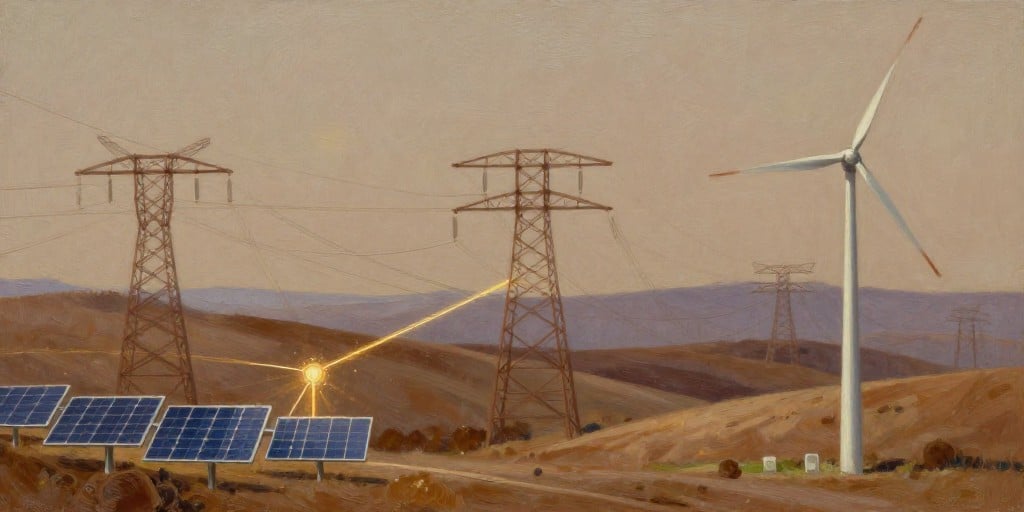
CEI has advanced multiple wind and solar projects into the advanced construction phase, thereby increasing its projected capacity and enhancing the long‑term generation mix. The new installations are designed to integrate with existing transmission corridors while leveraging modern control and forecasting technologies to improve grid stability. By deploying smart inverter capabilities and energy storage, the company aims to mitigate the intermittency inherent in renewable generation, thereby maintaining voltage quality and system inertia within acceptable bounds.
From an engineering perspective, the integration of these resources will require careful coordination of reactive power support, fault‑level control, and dynamic line rating (DLR) to ensure that the transmission network can accommodate increased peak injections without compromising reliability. The projects’ proximity to existing substation infrastructure also offers opportunities to upgrade substation automation systems, thereby reducing outage durations and improving system resilience.
Operating Margin Improvements
CEI reported a steady improvement in operating margins, attributing the trend to disciplined cost management, efficient project execution, and favorable market conditions for renewable energy sales. The company’s emphasis on lean construction practices—such as modular wind turbine assembly and pre‑fabricated solar module panels—has reduced both capital expenditure and construction timelines. Additionally, CEI has negotiated long‑term power purchase agreements (PPAs) that lock in competitive feed‑in tariffs, thereby stabilizing revenue streams and enhancing return on investment (ROI).
The improved margins are also a reflection of the company’s ability to negotiate lower procurement costs for equipment and materials, driven by strategic supplier relationships and bulk purchasing agreements. This cost discipline directly translates into higher margins, providing CEI with greater capital flexibility to pursue further renewable projects or to return value to shareholders through dividends or share repurchases.
Asset‑Sale Transaction
CEI completed an asset‑sale transaction involving non‑core power assets. The divestiture, which received all necessary regulatory approvals, is expected to generate additional capital that the company can deploy toward expanding its renewable footprint or improving existing infrastructure. By shedding legacy assets that do not align with its long‑term strategic direction, CEI can reduce its debt exposure and improve its liquidity profile.
From a regulatory standpoint, the transaction demonstrates CEI’s adherence to the Federal Energy Regulatory Commission (FERC) and state Public Service Commission (PSC) guidelines, ensuring that the sale does not adversely affect service reliability or consumer rates. The proceeds from the divestiture will likely be reflected in the upcoming financial statements, providing stakeholders with transparency regarding the company’s balance‑sheet dynamics.
Sustainability and Community Engagement
CEI remains steadfast in its focus on sustainability and community engagement. The company is actively pursuing partnerships with local stakeholders—including municipalities, landowners, and environmental groups—to support renewable initiatives and to promote environmental stewardship in the regions where it operates. These partnerships facilitate the acquisition of permitting rights, streamline community outreach, and often result in joint‑investment agreements that reduce the overall project cost.
Furthermore, CEI’s sustainability strategy aligns with the growing regulatory emphasis on decarbonization, grid decoupling, and renewable portfolio standards (RPS). By embedding renewable resources into its portfolio, the company not only meets current RPS mandates but also positions itself advantageously for future regulatory shifts toward higher renewable content requirements.
Regulatory Frameworks, Rate Structures, and Economic Impacts
The company’s strategic decisions are tightly coupled with the evolving regulatory landscape. At the federal level, FERC’s “Market Power” and “Transmission Planning” rules influence how CEI schedules renewable generation and interacts with other market participants. State-level PSCs dictate rate structures and investment approvals, directly impacting the company’s ability to finance new projects.
Rate structures have become increasingly conducive to renewable investment, with many utilities adopting “time‑of‑use” (TOU) tariffs and “renewable energy credits” (RECs). These mechanisms incentivize renewable generation during peak demand periods, thereby improving the economic viability of wind and solar projects. However, integrating intermittent resources introduces new challenges—such as maintaining grid frequency, ensuring voltage regulation, and providing adequate spinning reserves—which may necessitate investment in ancillary services and energy storage solutions.
Economic impacts of utility modernization are significant. While capital costs for renewable integration and grid upgrades are substantial, the long‑term benefits—reduced fuel costs, lower transmission losses, and improved reliability—translate into cost savings for consumers. Moreover, modernized grids can support electric vehicle (EV) charging infrastructure, demand response programs, and distributed energy resources, further enhancing the resilience and flexibility of the power system.
Engineering Insights into Power System Dynamics
From an engineering standpoint, the integration of large‑scale renewable generation demands sophisticated system modeling and control strategies. Key dynamics include:
System Frequency and Inertia: Traditional synchronous generators provide inherent inertia that stabilizes system frequency. Wind and solar resources, unless equipped with synthetic inertia or fast‑response storage, can reduce system inertia, necessitating grid‑side converters or dedicated inertial response services.
Voltage Support: Renewable resources may lack the reactive power support provided by conventional plants. Smart inverters capable of dynamic voltage control and reactive power modulation are essential to maintain voltage levels across the network.
Contingency Analysis: The loss of a large renewable farm can create contingency scenarios that must be analyzed using N‑x reliability metrics. Incorporating flexible AC transmission systems (FACTS) devices or phase‑shifting transformers can help redistribute power flows and mitigate overload risks.
Dynamic Line Rating (DLR): DLR enables real‑time adjustment of line loading limits based on ambient conditions, allowing the network to accommodate higher renewable injections without violating thermal constraints.
By addressing these dynamics through targeted investments—such as high‑voltage transmission upgrades, advanced protection schemes, and grid‑smart inverters—CEI can ensure that the integration of renewable resources does not compromise system reliability while enhancing overall grid performance.
Conclusion
CenterPoint Energy Inc. is navigating the intersection of renewable expansion, financial robustness, and regulatory compliance with a clear focus on grid stability and infrastructure modernization. The company’s strategic asset sales, disciplined cost management, and commitment to community engagement position it well to capitalize on evolving market conditions and regulatory incentives. Through continued investment in renewable resources and advanced grid technologies, CEI aims to deliver reliable power, support the energy transition, and maintain competitive consumer rates.