
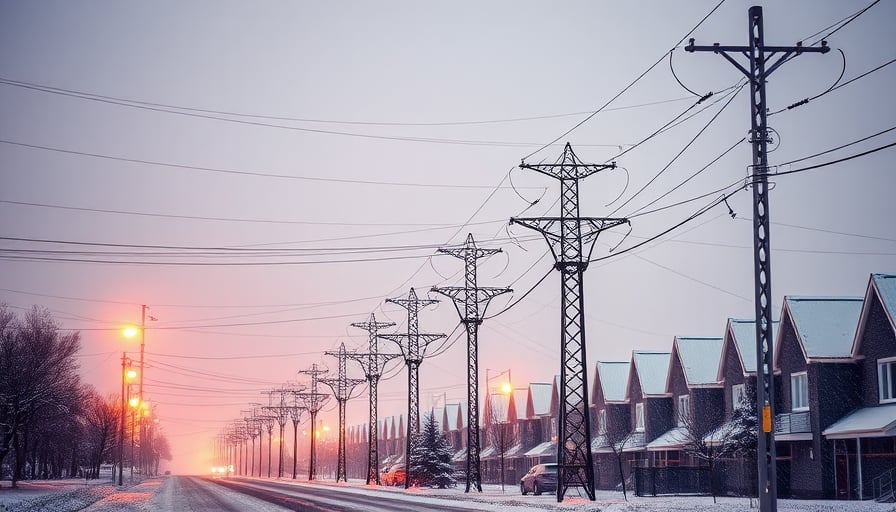
CenterPoint Energy Inc. Bolsters Winter Storm Readiness: A Critical Examination
CenterPoint Energy Inc. has announced a significant escalation in its preparedness measures for an upcoming severe winter storm in Texas. The utility’s Emergency Operations Center (EOC) has been activated, and the company has mobilized approximately 3,300 employees and contractors to bolster its response capacity. In addition to dispatching emergency crews, CenterPoint has established three staging sites and positioned natural‑gas trucks at multiple strategic locations to safeguard its power distribution network. The company has also inspected electric substations and installed emergency backup generators across the Greater Houston area. These actions are presented as part of CenterPoint’s broader effort to preserve the reliability of its electricity and natural‑gas services during extreme weather events.
1. Underlying Business Fundamentals
1.1 Revenue Exposure to Weather‑Driven Demand
CenterPoint’s revenue streams—electricity and natural‑gas distribution—are highly sensitive to climatic extremes. Winter storms increase demand for heating fuels, particularly natural gas, and strain the electric grid through heightened consumption and potential supply disruptions. Historically, the company’s earnings margin can contract during such periods due to higher operating costs and the need for additional energy purchases. The 2022 outage in Houston, which forced the utility to procure high‑cost spot gas, underscored this vulnerability.
1.2 Capital Allocation and Return on Assets
Investing in emergency infrastructure—staging sites, backup generators, and fleet expansion—requires capital outlays that may be amortized over a multi‑year horizon. However, the return on these assets is largely contingent on their utilization during rare severe‑weather events. If storms are infrequent, the cost per outage‑avoided dollar rises sharply. A cost‑benefit analysis of these investments should account for the probability of severe events, projected energy demand, and the potential regulatory penalties for service interruptions.
2. Regulatory Environment
2.1 Texas Public Utility Commission (PUC) Oversight
The Texas PUC mandates utilities to maintain adequate infrastructure and reliability standards. Recent scrutiny over the state’s emergency preparedness has intensified, especially after the 2021 “Power Outage” crisis that highlighted deficiencies in grid resilience. The PUC may impose fines or require remedial action if CenterPoint fails to meet minimum reliability indices during extreme weather. Consequently, the utility’s investment in emergency operations may also be viewed as a compliance strategy rather than purely operational.
2.2 Federal Energy Regulatory Commission (FERC) and Market Liberalization
While Texas operates under a largely deregulated wholesale market, FERC regulations still influence the procurement of natural gas. CenterPoint’s strategy of deploying natural‑gas trucks and staging sites can affect market dynamics, potentially increasing local spot prices during emergencies. A careful audit of procurement contracts and gas storage utilization will reveal whether the company’s emergency logistics align with FERC’s efficiency and transparency mandates.
3. Competitive Dynamics
3.1 Benchmarking Against Peer Utilities
Compared to peers such as Oncor Electric Delivery and TXU, CenterPoint’s deployment of 3,300 emergency responders is substantial. Yet, when evaluated per megawatt‑hour of service area, the ratio remains modest. Competitors have increasingly integrated advanced forecasting tools, AI‑driven outage prediction, and pre‑emptive infrastructure hardening—factors not explicitly mentioned in CenterPoint’s announcement. If competitors adopt more sophisticated predictive analytics, CenterPoint may lag in proactive resilience, potentially leading to higher outage frequency and associated penalties.
3.2 Market Share Implications
Reliability during severe weather is a key differentiator in the Texas market. Persistent outages can erode customer trust, leading to churn or regulatory interventions that impose revenue caps. By investing heavily in emergency readiness, CenterPoint signals its commitment to reliability, which may translate into a competitive advantage. However, the opportunity cost of these investments—particularly if the utility is unable to monetize the improved reliability through rate adjustments—remains uncertain.
4. Overlooked Trends
4.1 Climate Change and Event Frequency
Scientific projections indicate that winter storms in Texas will become more frequent and severe due to climate change. This trend suggests a higher probability of recurring high‑cost emergency operations. CenterPoint’s current strategy appears reactive rather than proactive; a shift toward long‑term infrastructure hardening (e.g., underground cabling, reinforced substations) could yield lower marginal costs over time.
4.2 Distributed Energy Resources (DERs)
The rapid deployment of rooftop solar, battery storage, and electric vehicles in the Greater Houston area can mitigate grid strain during storms. CenterPoint has yet to announce initiatives to integrate DERs into its emergency framework. Leveraging community microgrids could reduce the reliance on external gas trucks and staging sites, offering a more sustainable and cost‑effective resilience solution.
5. Potential Risks and Opportunities
| Risk | Description | Mitigation |
|---|---|---|
| Operational Over‑capacity | Mobilizing 3,300 responders may exceed actual need if a severe storm is milder than anticipated. | Implement dynamic resource allocation based on real‑time weather analytics. |
| Regulatory Penalties | Failure to maintain reliability could trigger PUC penalties. | Continuous performance monitoring and transparent reporting. |
| Cost Recovery | Capital expenses may not be fully recovered through rate adjustments. | Explore cost‑recovery mechanisms such as emergency reserve funds or rate case filings. |
| Competitive Lag | Reliance on conventional emergency tactics may disadvantage CenterPoint vis‑à‑vis tech‑savvy rivals. | Invest in AI‑driven outage prediction and grid automation. |
| Supply Chain Constraints | Natural‑gas trucks and backup generators depend on fuel availability and maintenance logistics. | Diversify fuel sources and maintain strategic reserves. |
| Opportunity | Description | Action |
|---|---|---|
| Grid Modernization | Upgrading to underground lines and reinforced substations reduces outage risk. | Capital budget allocation to hardening projects. |
| DER Integration | Harnessing distributed storage can improve resilience and reduce operational costs. | Incentive programs and partnership agreements with DER owners. |
| Market Differentiation | Demonstrating superior reliability can justify premium rates or attract new customers. | Develop a reliability‑based rate structure and marketing campaigns. |
| Data Analytics | Leveraging predictive models enhances proactive maintenance and emergency response. | Invest in data science teams and predictive software. |
6. Conclusion
CenterPoint Energy Inc.’s intensified winter storm readiness reflects a clear acknowledgment of the mounting reliability challenges posed by extreme weather in Texas. While the activation of its Emergency Operations Center and expansion of emergency personnel demonstrate operational diligence, a deeper assessment reveals potential gaps in strategic foresight. The company’s reliance on conventional emergency measures, without parallel investment in long‑term grid resilience, DER integration, and predictive analytics, may limit its ability to adapt to the escalating frequency of severe events. Regulatory scrutiny, competitive pressures, and the imperative to justify capital expenditures present both risks and avenues for strategic advantage. A balanced approach that marries immediate operational readiness with transformative infrastructure upgrades and data‑driven decision‑making will be essential for CenterPoint to sustain reliability, safeguard revenue streams, and maintain its standing in an increasingly turbulent energy landscape.