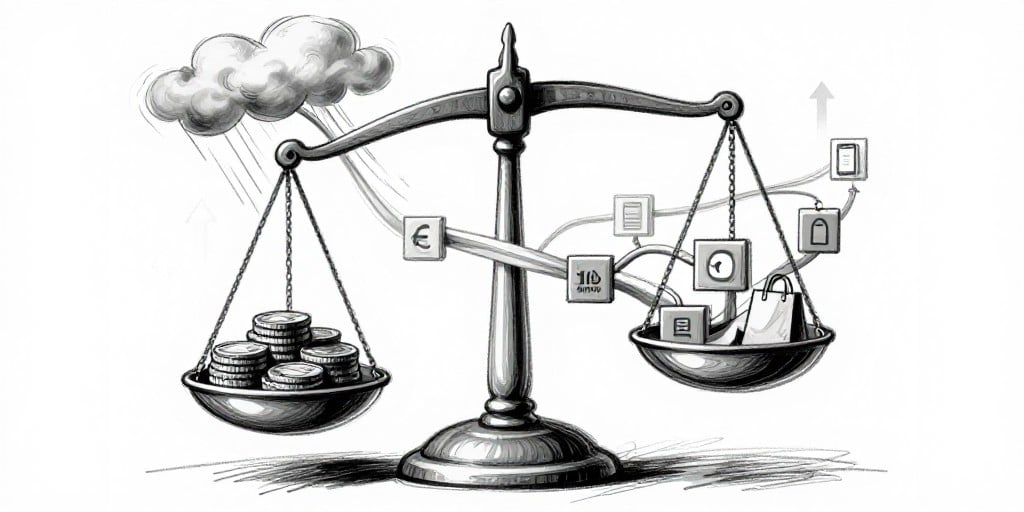
Coca‑Cola Europacific Partners’ Share‑Buyback as a Lens on Consumer‑Goods Resilience and Retail Innovation
Executive Summary
Coca‑Cola Europacific Partners plc (CCEP) announced a series of share‑repurchase transactions during the week ending 11 September 2026, completing a portion of its €1 billion buy‑back programme launched in February 2026. While the moves were priced at moderate levels across both US and London venues, they signal a broader strategic intent: to return value to shareholders without compromising capital structure. This corporate action, set against a backdrop of flat European equities and modest sector‑specific gains, offers an instructive case study on how consumer‑goods giants are balancing financial stewardship with evolving retail and supply‑chain imperatives.
Market Context and Short‑Term Dynamics
European equities opened flat to slightly negative on 14 September 2026, reflecting a cautious stance amid geopolitical and commodity‑price volatility. Oil prices rallied modestly due to a Saudi Arabian pipeline shutdown, providing a temporary lift to commodity‑related shares. In the UK, pharmaceutical and consumer‑staples sectors delivered modest gains, counterbalancing weaker mining and financial stocks. Within this environment, CCEP’s share price received a supportive push, joining a cohort of consumer‑staple firms that benefitted from the sector’s defensive appeal.
The share‑buyback programme, disclosed through a 6‑K filing and a London Stock Exchange notice, complied with market‑abuse regulations and included detailed aggregate and transaction‑level data. By repurchasing shares at a range of prices, CCEP demonstrated flexibility in a market where valuations oscillated across trading platforms, thereby reinforcing investor confidence in its capital allocation discipline.
Strategic Implications for Consumer‑Goods Firms
Capital Allocation as Brand Credibility Share repurchases signal managerial conviction in a firm’s intrinsic value. For consumer‑goods companies operating under intense brand scrutiny, disciplined capital returns can enhance perceived stewardship, fostering long‑term shareholder loyalty without diverting resources from brand‑building initiatives.
Balancing Short‑Term Market Movements with Long‑Term Transformation While short‑term market sentiment may be muted, the strategic choice to execute a buy‑back amidst broader volatility reflects a confidence that underlying business fundamentals—product innovation, distribution efficiency, and consumer loyalty—remain robust. This duality underscores the importance of aligning fiscal strategy with transformational roadmaps that anticipate future market conditions.
Omnichannel Retail Innovation The consumer‑goods sector is pivoting toward seamless omnichannel experiences, blending brick‑and‑mortar presence with digital touchpoints. Capital freed from share buybacks can be reallocated to accelerate channel integration, invest in data‑analytics platforms, and optimize inventory across online and offline touchpoints. CCEP’s stable capital base positions it to support such initiatives, reinforcing its competitive advantage in a shifting retail landscape.
Supply‑Chain Resilience and Sustainability Modern supply chains face pressure to be agile, traceable, and sustainable. Share repurchases that preserve capital structure provide the flexibility needed to invest in resilient logistics solutions, supplier diversification, and circular‑economy initiatives. By maintaining a strong balance sheet, consumer‑goods firms can absorb supply‑chain shocks—such as commodity price spikes—without compromising operational continuity.
Cross‑Sector Patterns and Brand Positioning The modest gains observed in pharmaceuticals and consumer staples highlight a broader pattern: defensive sectors that deliver essential products tend to outperform cyclical peers during periods of uncertainty. Brands that can articulate a clear value proposition—whether through health, sustainability, or convenience—are more likely to secure consumer loyalty. CCEP’s buy‑back strategy, coupled with its global brand reach, exemplifies how firms can leverage financial discipline to reinforce brand positioning in a competitive marketplace.
Outlook: From Tactical Gains to Strategic Transformation
- Short‑Term: CCEP’s buy‑back programme is likely to support share price stability as the company navigates volatile commodity markets and geopolitical uncertainty.
- Medium‑Term: The retained capital structure offers flexibility to invest in omnichannel technologies, enhancing customer engagement across digital and physical platforms.
- Long‑Term: Sustained investment in resilient supply chains and sustainable practices will position CCEP—and similarly situated consumer‑goods firms—to capitalize on emerging consumer preferences for transparency and environmental stewardship.
Conclusion
Coca‑Cola Europacific Partners’ share‑buyback activity illustrates how consumer‑goods companies can employ disciplined capital allocation to reinforce shareholder value while maintaining the agility required for long‑term industry transformation. In an environment where short‑term market movements are muted but long‑term disruptions loom, firms that marry financial prudence with strategic investments in retail innovation, supply‑chain resilience, and brand positioning are poised to thrive.