Corporate Insight on Casey’s General Stores Inc. (CASY)
1. Executive Summary
Casey’s General Stores Inc. (CASY) has recently captured renewed investor attention by joining the S&P 500 index. The retailer operates nearly 3,000 convenience‑store and fuel‑outlet locations nationwide, predominantly in rural communities where competitive pressure is modest. Over the past quarter‑century, the company has exhibited a remarkable record of consistent growth, with same‑store sales increasing for 25 consecutive years.
Following the release of its first‑quarter 2027 earnings, CASY’s share price dipped modestly in after‑hours trading, creating a discount relative to its long‑term moving average. While the valuation remains modest on a relative basis, the company’s fundamentals—steady sales, low competitive intensity, and a loyal customer base—continue to underpin expectations of long‑term resilience.
2. Consumer‑Goods Trends and Market Dynamics
| Segment | Current Trend | Implication for CASY |
|---|---|---|
| Convenience‑store retail | Shift toward higher‑margin grocery, fresh‑food, and ready‑to‑eat offerings | Opportunity to enhance product mix and increase average transaction value |
| Fuel retail | Marginal decline in gasoline sales, but growth in alternative fuels (electric, hydrogen) | Potential diversification of fuel portfolio and ancillary services (e.g., EV charging) |
| Rural retail | Demographic aging and consolidation of small towns | Stable demand but requires strategic community engagement to maintain loyalty |
Across these categories, a common pattern emerges: consumers increasingly value speed, convenience, and a personalized experience. Retailers that integrate omnichannel capabilities—combining in‑store convenience with digital ordering, curbside pickup, and loyalty programs—are better positioned to capture both the existing customer base and new, younger shoppers.
3. Omnichannel Retail Strategies
- Digital Ordering Platforms
- Implementation: Expand existing mobile app to allow pre‑order of grocery and fuel items with in‑store pickup.
- Benefit: Reduces in‑store traffic, enhances customer convenience, and captures data on purchasing patterns.
- Integrated Loyalty Programs
- Implementation: Offer a unified loyalty account that aggregates points across food, fuel, and ancillary services.
- Benefit: Increases customer retention and provides cross‑sell opportunities.
- Data‑Driven Merchandising
- Implementation: Utilize point‑of‑sale data to tailor inventory to local preferences, optimizing stock levels and reducing waste.
- Benefit: Improves margin and inventory turnover.
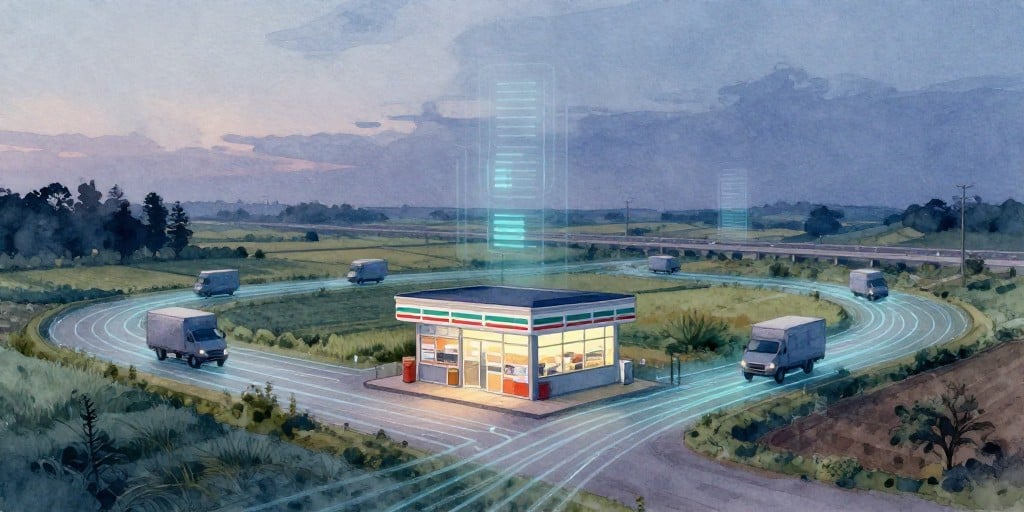
4. Supply‑Chain Innovations
| Challenge | Innovative Response | Outcome |
|---|---|---|
| Perishability | Real‑time inventory tracking with IoT sensors | Reduced spoilage, higher freshness perception |
| Fuel Logistics | Demand‑sensing algorithms for refueling schedules | Optimized fuel inventory, lower holding costs |
| Vendor Coordination | Blockchain‑based purchase orders | Improved transparency, faster reconciliation |
These innovations collectively enhance operational efficiency and reinforce CASY’s position as a reliable supplier within its rural market segments.
5. Strategic Brand Positioning
5.1 Rural Leadership
By reinforcing its presence in underserved rural markets, CASY capitalizes on a niche where larger competitors rarely operate. The brand’s historical commitment to community—through sponsorships and local hiring—strengthens consumer trust.
5.2 “Everyday Convenience” Narrative
Positioning the store as an indispensable part of daily life (fuel, quick meals, household essentials) aligns with consumer expectations of accessibility and immediacy.
5.3 Growth Through Incremental Innovation
Rather than aggressive expansion, CASY’s strategy focuses on incremental enhancements: expanding product assortment, improving digital touchpoints, and streamlining supply chains. This conservative approach mitigates risk while sustaining steady growth.
6. Linking Short‑Term Market Movements to Long‑Term Transformation
The modest after‑hours dip in CASY’s share price can be interpreted as a short‑term market correction rather than a fundamental shift. Analysts project that the inclusion in the S&P 500 will:
- Increase Liquidity: Higher trading volume will smooth price volatility over time.
- Attract Institutional Capital: Fund mandates that track the index will add capital flows, potentially supporting valuation.
- Validate Brand Strength: Index inclusion signals credibility, reinforcing consumer and partner confidence.
In the long run, CASY’s strategic initiatives—omnichannel expansion, supply‑chain modernization, and community‑focused branding—will translate into incremental earnings growth, higher profit margins, and a robust competitive moat within rural convenience retail.
7. Conclusion
Casey’s General Stores Inc. exemplifies a well‑positioned, resilient retailer that has consistently navigated market cycles while maintaining a strong foothold in rural communities. The company’s recent S&P 500 addition offers an attractive entry point for investors seeking exposure to a fundamentally sound business operating in a niche with limited competition. By continuing to invest in omnichannel capabilities and supply‑chain efficiencies, CASY is poised to convert its current market advantage into sustained long‑term value creation.