Carrefour SA Unveils Strategic Reorganisation to Strengthen Long‑Term Financial Performance
Carrefour SA, the French retail conglomerate, today announced a comprehensive strategic shift aimed at improving its long‑term financial performance. The company disclosed plans to streamline operations across its European footprint, concentrating on core markets while divesting non‑essential assets. Management emphasized that the reorganisation will support a stronger balance sheet and enhance profitability, potentially providing a more stable platform for future dividend payments.
Operational Consolidation and Asset Divestiture
Carrefour’s strategy involves a focused contraction of its geographic footprint and the sale of under‑performing or non‑core assets. By narrowing its presence to high‑potential markets, the retailer intends to reduce operational complexity, lower overhead costs, and improve supply‑chain responsiveness. The divestiture of peripheral assets is expected to unlock capital, improve liquidity, and create a leaner cost structure that supports higher margin generation.
Digital Transformation and Supply‑Chain Modernisation
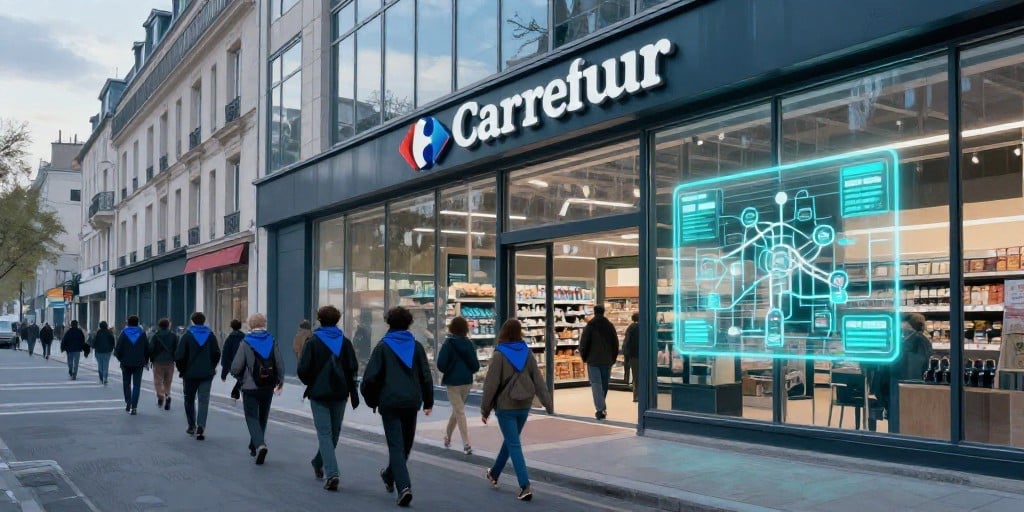
In parallel with the operational streamlining, Carrefour is investing heavily in digital transformation. The company prioritises the expansion of its e‑commerce platform, incorporating advanced data analytics, artificial intelligence, and omni‑channel integration to meet evolving consumer expectations. Additionally, Carrefour is adopting cutting‑edge supply‑chain technologies—such as blockchain for traceability, real‑time inventory monitoring, and automated logistics—to reduce waste, lower inventory carrying costs, and improve service levels.
Expected Financial Impact
Although Carrefour did not disclose specific financial metrics, management indicated that the combined effect of asset sales and operational efficiencies could translate into an elevated capacity for dividends in forthcoming fiscal periods. By fortifying the balance sheet, the company expects to reduce debt levels, improve cash‑flow generation, and enhance its ability to reward shareholders through higher dividend payouts. Investors reacted positively, interpreting the announcement as a clear commitment to optimizing capital allocation and bolstering shareholder value.
Market and Economic Context
The retail sector is undergoing rapid transformation driven by digital disruption, shifting consumer preferences, and heightened pressure on margins. Carrefour’s strategic pivot aligns with broader industry trends that favour consolidation, technology integration, and a focus on high‑margin core markets. The company’s approach mirrors similar moves by other European retailers, such as Aldi and Lidl, who have streamlined operations and invested in digital capabilities to sustain growth in a highly competitive environment.
From an economic perspective, the focus on operational efficiencies and digitalisation positions Carrefour to navigate post‑pandemic supply‑chain volatility and rising inflationary pressures. A leaner structure may also enable more agile responses to regulatory changes and sustainability mandates that increasingly influence retail operations across the continent.
Conclusion
Carrefour SA’s announcement reflects a disciplined, data‑driven approach to strategic realignment. By concentrating on core markets, divesting non‑essential assets, and accelerating digital and supply‑chain innovation, the retailer seeks to create a resilient platform capable of delivering stronger profitability and shareholder returns. Investors and market analysts will be closely monitoring the execution of this plan and its impact on the group’s financial trajectory over the coming quarters.