Corporate News – Capital‑Expenditure Landscape and Market‑Driven Supply‑Chain Dynamics
The latest filings from German market regulators, dated 27 October 2026, reveal that several institutional investors—AQR Capital Management, Marshall Wace, and Exodus Point Capital Management—hold net short positions ranging from 0.47 % to 0.58 % of Brenntag SE’s issued share capital. While the disclosures are limited to short‑selling activity and do not signal imminent corporate actions, they provide a useful lens for assessing how capital‑allocation sentiment may influence broader manufacturing and logistics sectors.
1. Capital‑Expenditure Trends in Chemical Logistics
Chemical logistics is an integral segment of the industrial supply chain, combining high‑volume material handling, stringent safety protocols, and advanced automation. In 2026, global capital expenditures in this space are projected to rise by 4–6 % YoY, driven by:
- Demand for End‑to‑End Traceability – Customers require digital tracking of hazardous materials from origin to end use. This has spurred investment in IoT‑enabled sensors and blockchain‑based documentation systems.
- Regulatory Tightening – The European Union’s Chemicals Strategy for Sustainability (CSS) has intensified compliance requirements, prompting firms to retrofit existing facilities with upgraded containment and monitoring equipment.
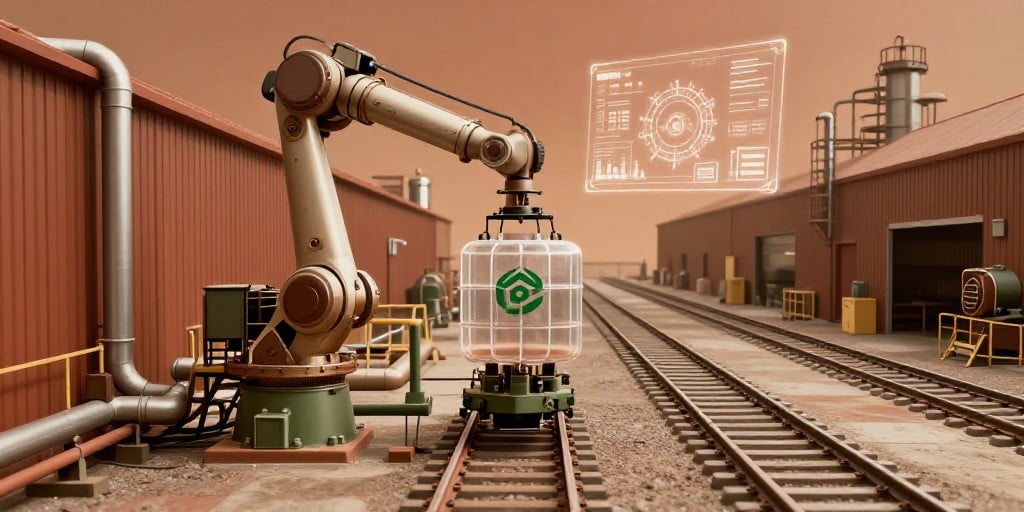
- Automation and Robotics – Robotics‑guided palletizers, automated guided vehicles (AGVs), and AI‑based predictive maintenance are becoming cost‑justified as labor costs rise and the need for 24/7 operations increases.
Brenntag’s stable quarterly results, coupled with a modest share‑price drift (–0.5 % to –1 %), suggest the company is managing its capital budget prudently, likely focusing on incremental upgrades rather than large‑scale expansion.
2. Productivity Metrics in Heavy‑Industry Manufacturing
Manufacturers of heavy equipment and industrial machinery are recalibrating productivity benchmarks to account for digital twins and real‑time analytics. Key performance indicators (KPIs) now include:
| KPI | Definition | 2025 Target | 2026 Projection |
|---|---|---|---|
| Overall Equipment Effectiveness (OEE) | Combines availability, performance, and quality | 85 % | 90 % |
| Digital Asset Utilization | Percentage of equipment with active digital monitoring | 60 % | 75 % |
| Mean Time Between Failures (MTBF) | Average operational uptime before failure | 4,000 h | 5,500 h |
The adoption of AI‑driven predictive maintenance has been a major catalyst for improving MTBF and OEE. Industrial equipment manufacturers report a 12 % increase in average sale price for units equipped with advanced analytics modules, indicating a premium for technology integration.
3. Regulatory Impact on Capital Investment Decisions
Regulatory environments significantly shape capital‑expenditure priorities:
- Environmental, Social, and Governance (ESG) Standards – New EU directives on carbon footprinting compel manufacturers to invest in low‑emission powertrains and energy‑efficient plant designs.
- Safety Standards – The 2024 European Directive on Industrial Safety (IED) mandates advanced safety interlocks for chemical handling equipment, leading firms to allocate funds for retrofitting older facilities.
- Digital Compliance – The Digital Markets Act (DMA) enforces data transparency, requiring manufacturers to invest in secure, compliant data storage solutions for supply‑chain visibility.
These regulatory pressures are prompting a shift from linear manufacturing models toward circular systems, encouraging capital flows into waste‑recovery technologies and closed‑loop processes.
4. Supply‑Chain Implications and Infrastructure Spending
The short‑selling data for Brenntag, while not indicative of an impending crisis, reflects market confidence in the resilience of chemical logistics supply chains. Key supply‑chain factors include:
- Logistics Network Optimization – Firms are deploying multi‑modal transport hubs equipped with automated sorting and real‑time inventory tracking.
- Raw Material Sourcing – Geopolitical tensions necessitate diversification of upstream suppliers, increasing capital outlays for new procurement centers.
- Infrastructure Investment – European infrastructure budgets are allocating €25 billion toward rail and port upgrades to support heavy‑industry freight, with an anticipated 8 % increase in capacity by 2028.
The interdependence between capital expenditures in equipment, compliance upgrades, and infrastructure development underlines the importance of synchronized investment strategies to maintain competitive productivity.
5. Economic Drivers of Capital Expenditure
Macroeconomic variables continue to influence capital‑budget decisions:
- Interest Rates – The Federal Reserve’s policy stance, coupled with the European Central Bank’s rates, determines the cost of capital. A sustained low‑rate environment has enabled firms to finance large equipment purchases more cheaply.
- Inflationary Pressures – Rising raw material costs have prompted manufacturers to invest in in‑house processing capabilities, reducing dependency on external suppliers.
- Currency Volatility – Exchange rate swings affect the real cost of imported components, leading to a preference for domestic manufacturing and regional supply chains.
6. Engineering Insight: Complex Industrial Systems
Modern industrial plants integrate several subsystems—process control, material handling, power distribution, and safety—into a cohesive whole. The implementation of digital twin technology allows engineers to simulate entire production lines, identifying bottlenecks and testing process improvements in a virtual environment before committing to costly hardware changes. This reduces downtime and accelerates return on investment.
Additionally, modular plant designs enable rapid reconfiguration to adapt to changing product demand or regulatory requirements. By using standardized building blocks (e.g., pre‑fitted conveyor systems, modular control panels), firms can scale operations up or down with minimal disruption, thereby improving flexibility and capital efficiency.
7. Market Implications and Outlook
The current snapshot of short‑selling activity at Brenntag and the muted market movement in Germany suggest that investors view the sector as relatively stable, but with a cautious outlook amid pending central‑bank policy decisions. For capital investors:
- Prioritize Investments in Automation & AI – These technologies yield high productivity gains and comply with ESG mandates.
- Allocate Funds for Compliance Upgrades – Regulatory compliance is non‑negotiable; early investment can pre‑empt costly retrofits.
- Consider Infrastructure Partnerships – Joint ventures in transport and logistics infrastructure can enhance supply‑chain resilience and unlock additional revenue streams.
In sum, the intersection of technological innovation, regulatory evolution, and macroeconomic dynamics is shaping a capital‑intensive yet opportunity‑rich landscape for the manufacturing and chemical logistics sectors. Firms that strategically align their investment portfolios with these trends are poised to enhance productivity, mitigate risk, and capture market share in the coming years.