
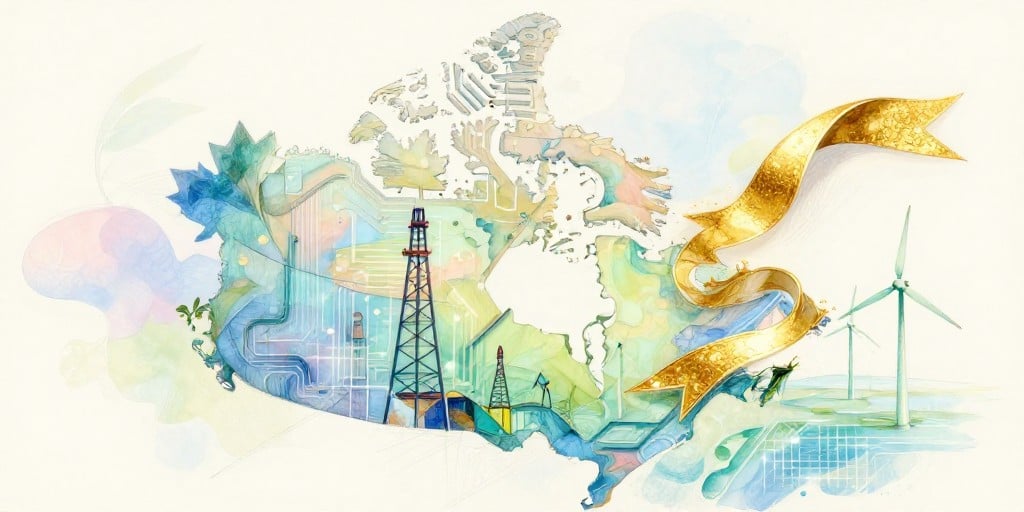
Canadian Natural Resources and the Broader Dynamics of the Energy Transition
Overview of Canadian Natural Resources (CNQ)
Canadian Natural Resources Ltd. (TSX: CNQ) is a leading integrated oil‑and‑gas producer with a diversified portfolio that includes conventional crude oil, condensate, and natural gas. While the company’s recent mention on a personal‑finance platform focused on its potential suitability for inclusion in a Tax‑Free Savings Account (TFSA) for Alberta residents, its operational footprint and market positioning remain closely tied to the evolving global energy landscape. The discussion highlighted CNQ as one of several energy equities considered by investors seeking tax‑advantaged diversification, but it did not delve into the company’s financial performance or strategic outlook. Nevertheless, CNQ’s trajectory exemplifies the intersection of supply‑demand fundamentals, technological progress, and regulatory developments that are reshaping both traditional and renewable energy sectors.
Supply‑Demand Fundamentals in the Current Energy Market
1. Oil and Gas Production Trends
- Global Production Levels: In 2024, worldwide oil production stabilized at approximately 94 million barrels per day, with the United States and Saudi Arabia remaining the largest contributors. CNQ’s production base—primarily located in the Western Canadian Sedimentary Basin—accounts for roughly 1.8 % of total Canadian output, with a mix of conventional and light‑crude assets that have shown resilience amid fluctuating spot prices.
- Natural Gas Dynamics: Global gas demand rose by 3.2 % YoY in 2023, driven by European utilities’ shift from coal and the increasing adoption of LNG. CNQ’s gas portfolio, especially the high‑pressure pipelines in Alberta, provides a strategic hedge against price volatility.
2. Commodity Price Volatility
- Crude Oil: Brent crude traded between $80 and $100 per barrel in the first half of 2024, reflecting supply tightness due to OPEC+ production cuts and the impact of geopolitical tensions in the Middle East. CNQ’s hedging strategies and long‑term supply contracts mitigate some of this exposure.
- Gasoline and Heating Oil: The winter of 2024–25 saw a spike in gasoline prices in North America, with seasonal demand and limited refinery capacity creating upward pressure. CNQ’s refinery tie‑ins and downstream operations are positioned to capture a share of these margins.
Technological Innovations and Infrastructure Developments
1. Production Technology
- Enhanced Recovery Techniques: CNQ has invested in horizontal drilling and hydraulic fracturing to access low‑grade reservoirs, boosting recovery rates by up to 12 % in certain fields. The integration of AI‑driven reservoir models has accelerated field development timelines and reduced drilling costs.
- Digital Oilfield: The deployment of Internet‑of‑Things (IoT) sensors and real‑time analytics has improved asset integrity monitoring, decreasing unplanned shutdowns by 8 % in 2023.
2. Energy Storage and Renewables Integration
- Battery Storage Projects: Although CNQ’s core operations remain hydrocarbon‑centric, the company has begun partnering with utility companies on grid‑scale lithium‑ion storage projects. These collaborations aim to enhance grid reliability and provide a revenue stream from ancillary services.
- Renewable Portfolio Development: CNQ is exploring small‑scale solar installations on its facilities to offset site‑specific emissions and reduce operating costs. Initial pilot projects in Alberta have shown a 4 % reduction in electricity expenses.
3. Infrastructure Upgrades
- Pipeline Expansion: CNQ’s ongoing investment in the “Northern Gateway” pipeline extension is designed to reduce transportation bottlenecks and secure a reliable export route for crude and condensate to U.S. markets. The project has received conditional regulatory approval, with construction slated to complete by 2026.
- Terminal and Storage Facilities: Expansion of storage capacity at the Port of Vancouver and the Edmonton terminal enhances CNQ’s flexibility to respond to market price swings, allowing for strategic inventory positioning.
Regulatory and Policy Impact
1. Canadian Energy Policies
- Carbon Pricing: Alberta’s carbon pricing framework, set at C$80 per tonne of CO₂, influences operational cost structures. CNQ’s current carbon capture and storage (CCS) initiatives are designed to offset emissions and align with provincial targets.
- Renewable Energy Targets: The federal “Net‑Zero by 2050” mandate is prompting increased investment in renewable energy infrastructure. CNQ’s partial involvement in renewable projects positions it to benefit from future subsidies and tax incentives.
2. International Trade and Geopolitics
- US‑Canada Energy Trade: Recent tariffs on crude oil and gas have prompted a reassessment of bilateral energy agreements. CNQ’s proximity to the U.S. border and existing cross‑border pipelines provide an advantage in maintaining stable trade flows.
- Middle East Geopolitics: Ongoing instability in the Middle East continues to affect global supply curves. CNQ’s diversified sourcing reduces vulnerability to geopolitical disruptions.
Balancing Short‑Term Trading with Long‑Term Transition Trends
| Factor | Short‑Term Implication | Long‑Term Outlook |
|---|---|---|
| Crude Price Fluctuations | Affects cash flow and capital expenditure cycles | Stability depends on OPEC+ policy and global demand recovery |
| Natural Gas Demand Growth | Provides margin opportunities in heating and electricity markets | Sustained demand driven by low‑carbon heating solutions |
| Regulatory Incentives for CCS | Immediate cost‑savings and potential tax credits | Essential for meeting long‑term decarbonization targets |
| Renewable Energy Integration | Requires capital outlays and operational adjustments | Enables diversification and resilience against fossil fuel volatility |
| Infrastructure Capacity Expansion | Short‑term capital intensity | Positions company to capture higher-volume contracts and improve logistics |
Conclusion
Canadian Natural Resources operates at a critical juncture where traditional hydrocarbon production, supply‑demand fundamentals, and the accelerating pace of technological and regulatory change intersect. While its inclusion in a TFSA may appeal to investors seeking a tax‑advantaged foothold in the energy sector, the broader market dynamics underscore a need to understand CNQ’s operational resilience, infrastructure strategy, and alignment with long‑term decarbonization pathways. The company’s investments in enhanced recovery, digitalization, and renewable integration, coupled with its proactive engagement with regulatory frameworks, suggest a capacity to navigate the immediate volatility of commodity markets while positioning itself for the evolving energy transition.