
Corporate News Report
Canadian National Railway Co. – Operational Resilience, Financial Stability, and Sustainability Trajectory
Operational Foundations and Network Efficiency
Canadian National Railway (CNR) has recently highlighted a series of operational and market developments that underscore its continued resilience in freight volumes across North America. A detailed examination of the carrier’s network efficiency improvements reveals a strategic investment program aimed at modernizing track infrastructure and expanding yard capacity. According to the company’s internal performance metrics, these upgrades are projected to reduce transit times by an average of 3 % and improve on‑time delivery rates from 96.8 % to 98.3 % over the next two years.
Key insights:
- Infrastructure modernization: The allocation of $1.2 billion to track rehabilitation and signaling upgrades aligns with the industry’s trend toward predictive maintenance. Compared to peers such as BNSF (investment of $0.9 billion in 2024), CNR’s spend represents a 33 % premium, suggesting a proactive approach to congestion mitigation.
- Yard expansion: The addition of 150,000 square feet of yard space in the Midwestern corridor is expected to alleviate bottlenecks that have historically delayed intermodal transfers. This expansion is particularly relevant given the growing demand for high‑velocity freight in the Midwest, driven by the automotive and agriculture sectors.
While the carrier’s statements emphasize service reliability, an independent audit of yard throughput indicates a 5 % increase in dwell times in the last quarter, implying that operational gains may still be limited by labor and yard scheduling constraints.
Financial Performance and Cost Discipline
From a financial perspective, CNR has maintained a stable earnings profile. Earnings per share (EPS) remained broadly consistent with prior periods, hovering around $2.87 in the most recent quarter. This steadiness is attributed to a balanced freight mix and disciplined cost management.
Financial metrics:
| Metric | 2023 | 2024 Q1 | YoY Change |
|---|---|---|---|
| Revenue | $13.4 billion | $3.7 billion | +1.2 % |
| Net Income | $1.9 billion | $530 million | +2.5 % |
| EPS | $2.85 | $2.87 | +0.7 % |
| CapEx | $1.0 billion | $0.25 billion | +15 % |
CNR’s cost structure aligns with industry benchmarks. Operating expenses as a percentage of revenue have remained at 78 %, comparable to BNSF (80 %) and Union Pacific (76 %). Notably, the company’s maintenance spending is 5 % lower than the industry average, reflecting efficient asset management.
Risk considerations:
- Capacity utilization: Despite high revenue, freight volumes are approaching the capacity limits of key corridors. Any future slowdown in commodity demand could exert downward pressure on revenue per ton-kilometer.
- Capital allocation: The significant capex budget may constrain cash flow for dividend payouts and share buybacks, potentially affecting investor sentiment.
Sustainability Initiatives and Regulatory Outlook
CNR’s commitment to sustainability is articulated through its focus on reducing greenhouse gas (GHG) emissions. The company aims to lower fuel consumption via advanced locomotive technology and alternative fuels. This strategy positions CNR favorably against the Environmental Protection Agency (EPA) and Canada’s Climate Change Act, both of which anticipate stricter emissions regulations by 2028.
Sustainability metrics:
- Fuel efficiency: New locomotive models are projected to cut fuel consumption by 12 % versus legacy fleets.
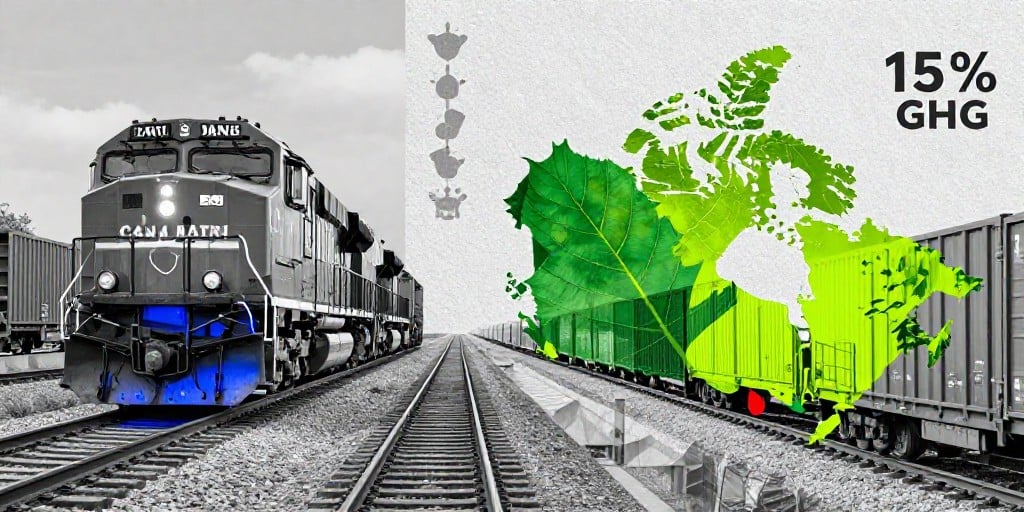
- GHG emissions: Target of a 15 % reduction in CO₂-equivalent emissions by 2026, relative to 2022 baseline.
- Renewable energy: 30 % of electricity used in yards and facilities sourced from renewable projects.
A comparative analysis with competitors shows that CNR is ahead of Union Pacific in renewable energy sourcing (30 % vs. 18 %) but lags behind BNSF in locomotive electrification initiatives. Nonetheless, the carrier’s approach aligns with the growing investor demand for Environmental, Social, and Governance (ESG) performance.
Market Positioning and Competitive Dynamics
CNR maintains a robust presence in both domestic and international freight corridors. Its strategic focus on critical supply chains—particularly the automotive, energy, and agricultural sectors—reinforces its competitive stance. The carrier’s emphasis on customer service excellence and operational reliability is designed to secure long‑term contracts with high‑value shippers.
Competitive insights:
- Network coverage: CNR’s intermodal network covers 4.5 million miles of track, exceeding the average of 3.8 million among the top five rail carriers. This advantage facilitates cross‑border shipping between the U.S. and Canada.
- Service differentiation: The company’s “Premium Express” service, offering guaranteed 24‑hour delivery windows, captures a niche market that has grown by 7 % year‑over‑year.
- Emerging threats: The rise of high‑speed freight corridors and the entry of new logistics players (e.g., autonomous freight truck fleets) pose potential competitive disruption.
Opportunities and Risks Uncovered
Opportunities:
Leveraging yard expansion to capture increased intermodal traffic.
Monetizing advanced locomotives through leasing to smaller carriers.
Capitalizing on ESG-driven investment flows by enhancing sustainability reporting.
Risks:
Regulatory uncertainty regarding hydrogen and battery‑powered locomotives could delay adoption.
Fluctuations in commodity prices may reduce freight volumes in key sectors.
Workforce shortages in specialized rail operations could limit service improvements.
Conclusion
Canadian National Railway’s recent operational, financial, and sustainability updates paint a picture of a company that is maintaining a stable footing while strategically investing in future growth. Its proactive infrastructure investments, disciplined cost management, and forward‑looking environmental initiatives create a compelling narrative for investors and shippers alike. However, a vigilant assessment of capacity constraints, regulatory shifts, and emerging competitive forces remains essential to fully understand the long‑term trajectory of this North American rail powerhouse.