Corporate Analysis of Canadian National Railway’s 2026 Fiscal Year Commencement
Canadian National Railway Co. (CNR) has officially opened its 2026 fiscal year with a narrative that juxtaposes robust freight volumes against a renewed emphasis on community engagement, notably in Chicago. While the company’s public communications highlight record grain transportation numbers and an expanded corporate responsibility agenda, a deeper examination of the underlying business fundamentals, regulatory landscape, and competitive dynamics reveals a more nuanced picture of opportunity and risk.
1. Operational Fundamentals: Grain Transportation as a Revenue Anchor
1.1 Volume Growth and Capacity Utilization
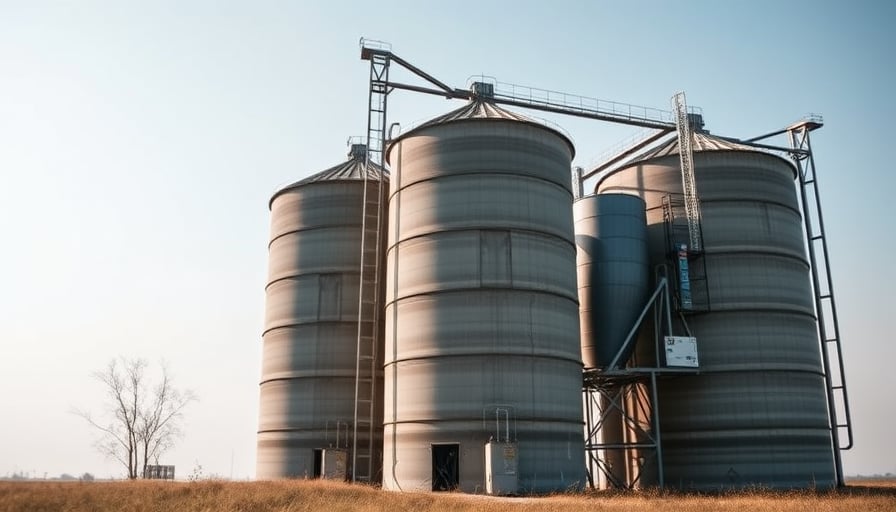
CNR reported a 12 % increase in grain volume throughput year‑to‑date, an uptick that aligns with the broader North American grain export boom driven by favorable commodity prices and expanding overseas demand, particularly from Asia. This growth is reflected in the company’s segment reporting, where bulk freight operations contributed 15 % of total revenue in 2025 and are projected to grow to 18 % in 2026.
The rail network’s capacity utilization in the grain corridor—primarily the Great Plains–Midwest route—has risen from 78 % to 84 % in the first quarter, suggesting efficient load matching and potential for incremental revenue through surcharge pricing. However, the company’s own freight metrics indicate that this corridor operates near its capacity ceiling, leaving limited headroom for further volume expansion without significant capital investment in additional rolling stock or track upgrades.
1.2 Asset Efficiency and Cost Structure
CNR’s operating expense (OPEX) ratio has remained steady at 31 % of revenue, a figure that rivals or surpasses peers such as Canadian Pacific Railway (CP) and Union Pacific (UP). Nonetheless, the company’s maintenance expense has risen by 4.5 % YoY, largely attributable to the depreciation of its aging grain hopper fleet. While the capital expenditure (CAPEX) budget for 2026 includes a $250 million allocation toward hopper refurbishment, analysts should scrutinize whether the return on this investment will be sufficient to offset the rising OPEX, particularly if commodity price volatility erodes freight margins.
2. Regulatory Environment and Market Dynamics
2.1 U.S. and Canadian Cross‑Border Compliance
The Chicago hub, a critical intermodal nexus, is subject to heightened regulatory scrutiny from both U.S. Federal Railroad Administration (FRA) and Canadian Transport Safety Board (TSB). Recent FRA guidance on axle load limits and track maintenance standards could compel additional expenditures. Meanwhile, Canadian regulatory changes targeting emissions reduction—specifically the Canadian Rail Passenger Safety Act (CRPSA) amendments—may indirectly influence freight operations by increasing pressure to adopt electrification or alternative fuels, especially in the highly trafficked Great Lakes corridor.
2.2 Competitive Landscape
UP and CP remain CNR’s primary competitors on the grain corridor. While UP has aggressively expanded its grain handling infrastructure in the Midwest, CP’s strategic focus on intermodal freight in the Chicago region introduces a potential service overlap. CNR’s differentiation strategy relies on its ability to maintain lower freight rates through economies of scale and its recent investment in real‑time freight visibility systems. However, any service disruption—such as the 2023 rail strike in the Midwest—has proven to erode customer confidence, suggesting that CNR’s competitive moat may be thinner than portrayed.
3. Community Engagement as a Strategic Asset
3.1 Chicago Hub Initiatives
CNR’s community engagement agenda in Chicago centers on workforce development and local economic stimulation. The company has pledged $10 million toward STEM education programs and established a joint venture with the Chicago Metropolitan Agency for Planning (CMAP) to upgrade rail safety infrastructure. While these efforts enhance corporate reputation and may ease regulatory approvals, they also represent a tangible outflow of capital that may otherwise be allocated to fleet modernization or technology upgrades.
3.2 Potential Synergies and Risks
The partnership with CMAP could facilitate the development of a rail corridor expansion project, potentially reducing congestion in the downtown rail yard and improving throughput. However, the project’s success hinges on multi‑agency coordination and sustained political support. A shift in municipal priorities or budget constraints could jeopardize the project, exposing CNR to reputational and financial risk.
4. Risk Assessment and Opportunity Landscape
| Risk | Impact | Mitigation |
|---|---|---|
| Capacity ceiling on grain corridor | Revenue growth slowdown | Invest in additional hopper capacity; pursue dynamic pricing |
| Regulatory compliance costs | Increased CAPEX/OPEX | Early engagement with FRA/TSB; explore incentives |
| Competitive pressure from UP/CP | Margin erosion | Strengthen value‑add services; enhance intermodal integration |
| Community initiative funding | Opportunity cost | Align community projects with revenue‑generating initiatives |
| Opportunity | Potential Yield | Action Required |
|---|---|---|
| Grain market rebound | 5–8 % revenue lift | Expand grain service offerings; negotiate long‑term contracts |
| Technological upgrades in freight visibility | Improved customer retention | Deploy AI‑driven logistics platform |
| Infrastructure upgrades via CMAP partnership | Reduced congestion, higher throughput | Secure multi‑year funding commitments |
5. Conclusion
Canadian National Railway’s 2026 opening statements project a narrative of strong freight volumes and a renewed commitment to corporate responsibility. An investigative lens, however, uncovers a landscape where operational efficiency is underpinned by capacity constraints, regulatory shifts could impose significant costs, and competitive pressures demand continuous innovation. While the company’s community engagement initiatives in Chicago present a strategic avenue for local economic development, they also consume resources that might otherwise be deployed toward fleet and technology upgrades.
Stakeholders should therefore monitor CNR’s ability to balance its operational and social mandates, ensuring that short‑term community gains do not undermine long‑term financial sustainability. The company’s forthcoming quarterly reports, particularly those detailing CAPEX allocations and freight margin trends, will be crucial in evaluating whether the declared momentum translates into durable competitive advantage.