
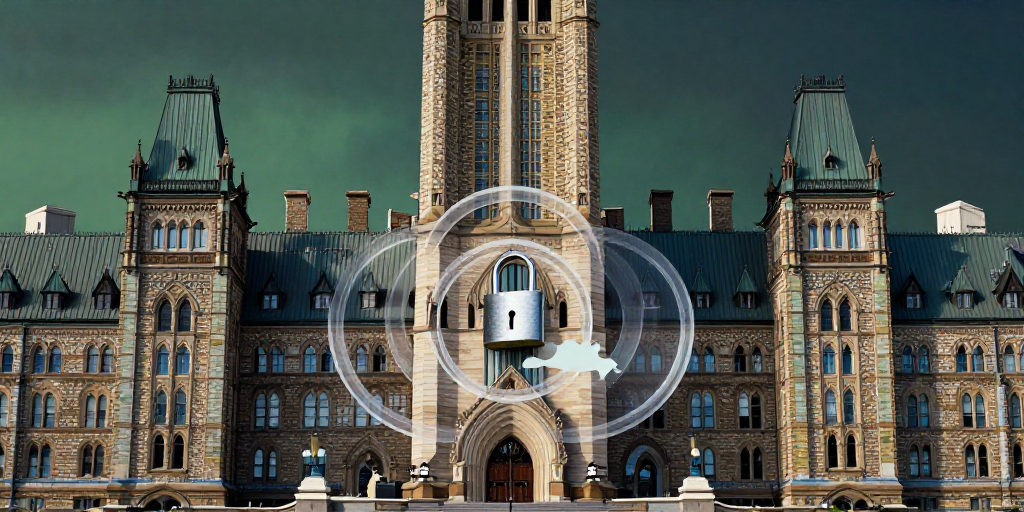
Overview of Proposed Amendments to Canada’s Conflict of Interest Act
A parliamentary committee in Ottawa has released a comprehensive report containing twenty recommendations that aim to strengthen the Conflict of Interest Act governing public office holders in Canada. The core of the proposals focuses on the prime minister’s position, suggesting that the office holder must divest all personally controlled assets within a specified timeframe after assuming office. This recommendation represents a marked shift from the current statutory requirement, which permits public officials to either liquidate assets or place them in a blind trust. The committee argues that blind‑trust arrangements do not amount to genuine divestment and could therefore perpetuate conflicts between public duties and private financial interests.
Background: The Brookfield Connection
The impetus for the report is largely tied to the former prime minister’s long‑standing business relationships with Brookfield Asset Management. Brookfield is a globally influential asset‑management firm that oversees a wide array of investment vehicles and infrastructure assets. The former prime minister formerly chaired the company and maintains personal holdings of options and deferred shares that are linked to Brookfield’s portfolio. Critics assert that these ongoing financial ties could create a continuous risk of conflict, especially given the firm’s extensive influence in sectors ranging from real estate and utilities to infrastructure and private equity.
Committee Recommendations in Detail
- Mandatory Divestment – The committee proposes that upon taking office, a prime minister must divest all personally controlled assets within a prescribed period, effectively eliminating the option to rely on a blind trust.
- Extended Disclosure Requirements – Enhanced disclosure of all financial interests, including derivatives and deferred compensation, for a minimum of five years post‑appointment.
- Enhanced Blind‑Trust Oversight – If blind trusts remain permitted, the committee recommends stricter oversight, mandatory annual audits, and mandatory disclosures of trust holdings to the ethics commissioner.
- Clear Conflict‑of‑Interest Screens – The report calls for a standardized, sector‑specific conflict‑of‑interest screening process that applies to all public office holders, regardless of tenure or title.
- Tax Haven Prohibition – The committee proposes a ban on investments in entities that use recognized tax havens, arguing that such arrangements obscure true ownership and expose officials to undue influence.
Opposition and Dissent
Opposition parties largely embraced the recommendations, citing a need to preserve public trust and reinforce ethical governance. In contrast, the governing party submitted a dissenting report, arguing that the proposals were overly tailored to a single individual and that existing blind‑trust mechanisms—when properly managed—already mitigate conflicts effectively. The dissenting report also questioned the practicality of banning investment in firms that employ tax‑haven structures, noting that such restrictions could impede the mobility of seasoned private‑sector professionals to public service roles.
Key Points of the Dissent:
- Effectiveness of Blind Trusts: The dissent argues that blind trusts, coupled with rigorous compliance measures, are a proven tool for minimizing conflicts.
- Risk of Deterring Talent: The governing party contends that overly restrictive rules might discourage experienced private‑sector leaders from accepting public office.
- Feasibility Concerns: The proposal to ban all investments in tax‑haven entities is deemed impractical, citing challenges in defining and enforcing such bans across the global investment landscape.
Legislative Process and Political Context
The committee’s findings have been presented to the House of Commons, where they will undergo a formal vote. Although the document is non‑binding, it carries significant political weight and will likely influence future amendments to the Conflict of Interest Act. Recent by‑elections have solidified the governing party’s majority, positioning them to likely oppose the report’s implementation. The committee chair highlighted that a majority of opposition members have previously overseen investigations into other government matters, implying that any shift in committee composition could potentially dilute oversight of ethical issues.
Broader Economic and Sectoral Implications
The proposed amendments carry ramifications beyond the political sphere, intersecting with several key economic sectors:
- Asset Management: A stricter divestment rule for public officials could influence how asset‑management firms structure their leadership and advisory roles, potentially tightening the alignment between fiduciary duties and public accountability.
- Real Estate & Infrastructure: Brookfield’s significant holdings in real estate and infrastructure may serve as a case study for the interplay between public office and large‑scale investment portfolios.
- Tax Policy & International Finance: The discussion around banning investments in tax‑haven entities underscores the ongoing global debate over tax avoidance, transparency, and the role of public office holders in shaping fiscal policy.
These developments reflect a broader trend toward heightened scrutiny of public‑private linkages, a theme that echoes in other jurisdictions seeking to reinforce ethical standards for public officials. While the specific recommendations are tailored to the Canadian context, they resonate with global movements aimed at tightening governance frameworks across industries, reinforcing the principle that public trust must be safeguarded through transparent, enforceable measures.