Kroger’s Share Activity Signals Strategic Confidence Amid Market Volatility
Kroger’s shares experienced a pronounced uptick in trading volume on Friday, with a marked surge in call‑option purchases that exceeded recent averages by a substantial margin. While the company’s stock remains within the upper half of its 52‑week range, the modest price appreciation contrasts with the broader market’s modest losses, underscoring Kroger’s resilience in a period of heightened uncertainty.
Call‑Option Activity as a Market Signal
The pronounced increase in call options suggests that traders are betting on further upside for Kroger. Analysts interpret this behavior as a signal of confidence in the retailer’s strategic initiatives—particularly its commitment to omnichannel integration, supply‑chain optimization, and differentiated brand positioning across its grocery, household, and specialty segments. In a broader sense, heightened derivative activity often precedes sustained momentum in underlying equities, indicating that market participants anticipate a positive trajectory for Kroger’s earnings and cash‑flow generation.
Omnichannel Momentum in the Consumer‑Staples Space
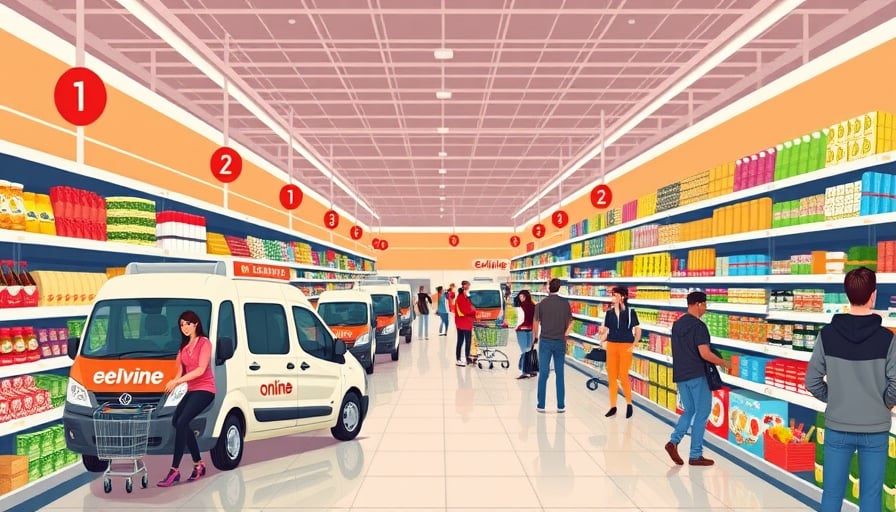
Kroger’s diversified retail portfolio positions it well to capitalize on omnichannel consumer behaviors. The retailer’s recent rollout of curbside pickup, same‑day delivery, and a robust e‑commerce platform has led to a measurable shift in purchase patterns. Data from the last quarter reveal that online sales contributed 18% of total revenue, up from 12% a year earlier. This growth is consistent with broader consumer trends that favor convenience and seamless integration between physical and digital touchpoints.
The strategic alignment of Kroger’s brick‑and‑mortar stores with its digital initiatives has created a feedback loop: in‑store traffic feeds online inventory data, which informs personalized marketing and inventory allocation. By leveraging its extensive store network as fulfillment hubs, Kroger can reduce last‑mile logistics costs—an innovation that translates into competitive pricing and higher customer loyalty.
Supply‑Chain Resilience and Cross‑Sector Impacts
Kroger’s supply‑chain innovations—particularly the adoption of blockchain for traceability and AI‑driven demand forecasting—have mitigated the risk of disruptions that have plagued the grocery sector. The retailer’s partnerships with regional suppliers have also shortened lead times, enhancing inventory turnover. These capabilities resonate beyond groceries; other consumer‑goods firms are now exploring similar technologies to reduce waste and improve responsiveness.
In the broader consumer‑goods arena, supply‑chain resilience has emerged as a critical differentiator. Companies that invest in digital twins and predictive analytics can anticipate demand fluctuations, thereby optimizing production schedules and reducing overstock scenarios. Kroger’s success in this domain provides a benchmark for sector‑wide best practices.
Brand Positioning in a Competitive Landscape
Kroger’s multi‑brand strategy—encompassing flagship grocery banners, specialty outlets, and private‑label lines—strengthens its market presence across price and quality segments. By positioning its private‑label products as value alternatives and its specialty brands as premium offerings, the retailer taps into diverse consumer cohorts. This nuanced brand architecture also facilitates cross‑promotional campaigns that drive loyalty and increase basket size.
Short‑Term Gains, Long‑Term Transformation
The current market dynamics, reflected in the call‑option surge, likely capture the short‑term sentiment that Kroger is poised for continued earnings growth. However, the underlying drivers—omnichannel expansion, supply‑chain technology, and differentiated brand positioning—signal a broader industry transformation. As consumer expectations evolve toward instant gratification and ethical sourcing, retailers that embed these capabilities into their operational DNA will not only weather market turbulence but also shape the future of commerce.
In summary, Kroger’s recent trading activity underscores a strategic alignment between market confidence and the retailer’s operational innovations. While the immediate price movement offers a modest upside, the long‑term trajectory is anchored in omnichannel excellence, supply‑chain resilience, and adaptive brand positioning—elements that collectively position Kroger as a bellwether for the evolving consumer‑staples sector.