
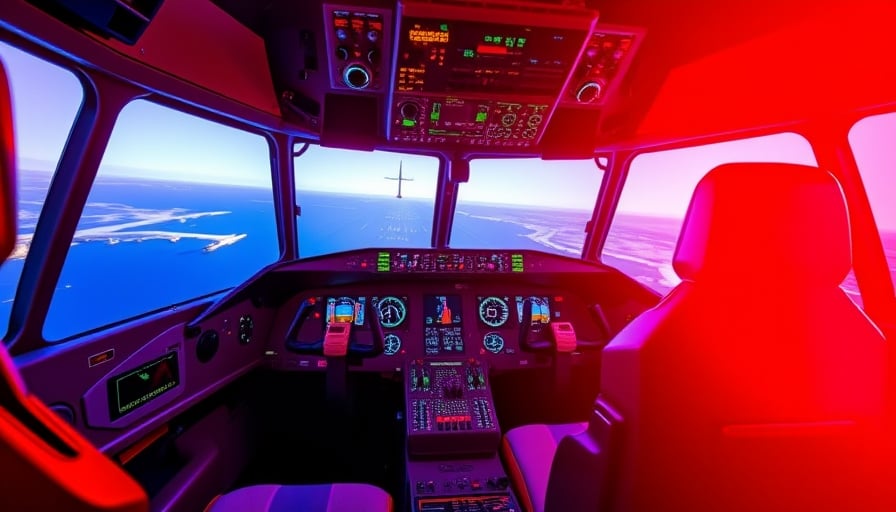
Corporate News – Analysis on CAE Inc. and Related Developments in Defense and Aviation Training
The Toronto‑listed aerospace and defense training specialist CAE Inc. remains a focal point for investors monitoring the sector’s recent policy shifts. A policy review by Canadian finance officials highlighted the possibility that companies operating in defense technology could benefit from the government’s renewed industrial strategy. Although the article did not single out CAE, the firm’s position as a major provider of integrated simulation services places it within the broader ecosystem that the policy aims to support.
Policy Implications for CAE and the Defense Technology Ecosystem
The Canadian government’s renewed industrial strategy signals a strategic emphasis on domestic capabilities in critical technology sectors, including defense and aviation training. By creating an environment that favors local suppliers of advanced simulation and training solutions, the policy is likely to:
- Enhance demand for simulation services – Defense and security agencies may seek to modernize training programs, thereby increasing procurement of high‑fidelity simulators.
- Improve supply chain resilience – Emphasis on domestic production reduces reliance on foreign suppliers, potentially benefiting Canadian companies like CAE that manufacture and maintain training equipment.
- Support workforce development – Training initiatives often accompany industrial policy, which could translate into increased investment in skilled labor and technology R&D.
CAE’s diversified portfolio—spanning civil aviation, defense and security, and healthcare—positions it well to absorb shifts in government spending. The firm’s experience in delivering integrated simulation systems aligns with the objectives of the policy, and its established relationships with key defense agencies may provide a competitive advantage in a more favorable regulatory climate.
Regulatory Approvals for Advanced Simulators
Boeing’s recent approval of its 777‑9 training devices by U.S. and European regulators underscores a broader industry movement toward advanced, immersive simulators. This regulatory success demonstrates that sophisticated training solutions can achieve cross‑jurisdictional certification, encouraging further investment in similar technologies. For CAE, this development:
- Validates market demand for high‑fidelity training systems, reinforcing the relevance of its existing civil aviation simulators.
- Creates a benchmark for simulation performance that CAE can use to differentiate its products in defense and security markets.
- Highlights regulatory pathways that may expedite certification processes for CAE’s own upcoming products.
The approval also illustrates the importance of collaboration between OEMs and simulation providers. CAE’s history of partnership with aircraft manufacturers for integrated training modules positions it to capitalize on this trend.
Technological Advancements in Computing Infrastructure
A major cloud services provider has announced new high‑performance computing instances optimized for tightly coupled workloads. While the announcement relates to cloud computing rather than direct defense training, the enhanced computational capabilities support the development and operation of sophisticated simulation environments that firms such as CAE rely on. Key implications include:
- Scalable Simulation Platforms – Cloud‑based high‑performance instances can facilitate large‑scale, real‑time simulations, reducing hardware costs for defense agencies.
- Accelerated Development Cycles – Faster computational resources enable quicker testing and iteration of simulation models, shortening time‑to‑market for new training modules.
- Cost Efficiency – Pay‑per‑use models allow smaller agencies to access high‑end simulation capabilities without heavy capital expenditure.
This technological shift supports a broader trend of digitization in defense training, where simulations increasingly run on distributed, cloud‑native infrastructures. CAE’s existing software and hardware portfolio can be integrated with these cloud services to deliver hybrid on‑premises and cloud‑based training solutions.
New Entrant in Canada’s Defense Technology Landscape
A notable new entrant in Canada’s defense technology arena has launched a subsidiary focused on autonomous systems and sensor technologies. The company’s leadership includes former executives from CAE, highlighting the firm’s continued influence within the national defense technology ecosystem. The new venture signals:
- Potential for Collaboration – Shared expertise between CAE and the new subsidiary could lead to joint development of integrated training and autonomous system solutions.
- Market Expansion – The focus on autonomous systems expands the scope of defense training to include unmanned vehicle operation, sensor fusion, and AI‑driven mission planning.
- Talent Mobility – The migration of CAE talent to new companies underscores the depth of experience available within Canada’s defense technology talent pool.
Given CAE’s historical role in training for unmanned aircraft and autonomous systems, the presence of former executives in this new venture may foster synergies that benefit both entities.
Synthesis and Strategic Outlook
The convergence of policy review, regulatory approvals, computing infrastructure upgrades, and new industry entrants collectively reinforces sustained interest in high‑quality training solutions for defense and aviation. From a strategic perspective:
- Market Positioning – CAE’s diversified customer base and integrated simulation capabilities position it as a leading provider capable of responding to evolving defense training needs.
- Competitive Advantage – The firm’s established relationships with government agencies and OEMs, coupled with its expertise in both civil and defense training, create a robust competitive moat.
- Growth Opportunities – Regulatory approvals for advanced simulators and the expanding autonomous systems market present opportunities for CAE to broaden its product portfolio and enter new segments.
- Risk Mitigation – The policy’s emphasis on domestic production can offset supply‑chain risks, while cloud‑based computing solutions provide scalability and resilience against infrastructure constraints.
In conclusion, the recent policy discussions, cross‑border simulator approvals, and advances in high‑performance computing collectively signal a reinforcing cycle of demand for sophisticated training solutions in both defense and aviation. CAE’s entrenched position within this ecosystem suggests that the company is well‑equipped to capitalize on these emerging opportunities, while also navigating the regulatory and technological complexities inherent to the sector.