Corporate News
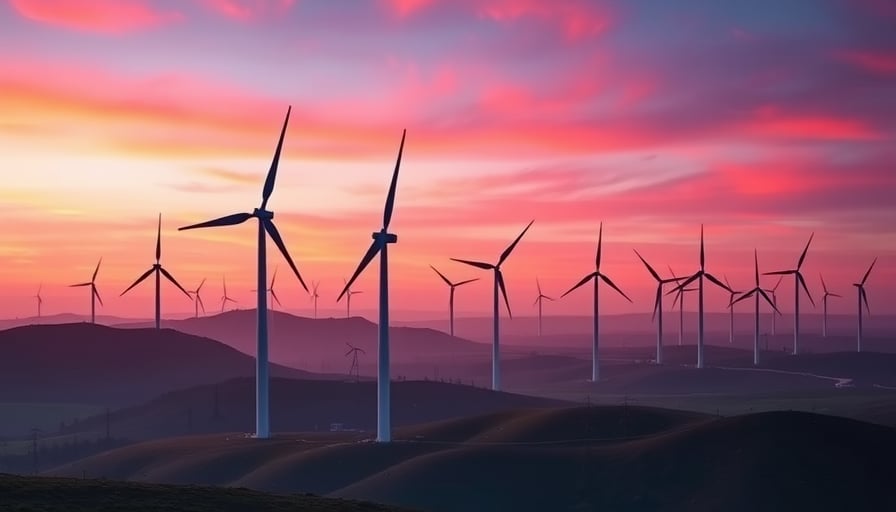
Brookfield Renewable Corp has attracted renewed attention from investors and analysts amid broader growth in the green‑energy sector. Recent commentary highlights the company’s substantial renewable operating capacity, which stood at 47 GW at the close of 2025, and its expansive pipeline that includes more than 200 GW of projects under development. This scale positions Brookfield Renewable to benefit from the rising demand for clean power, driven in part by the expansion of cloud and artificial‑intelligence markets that require increasingly reliable and decarbonised electricity supplies.
Analysts note that Brookfield Renewable’s long‑term power agreements with major hyperscalers such as Microsoft and Alphabet’s Google provide a stable revenue base while also incorporating inflation‑linked escalation clauses. These contracts are expected to support continued growth in the company’s revenue and adjusted earnings, with projections indicating modest earnings expansion over the next three years. The company’s forward dividend yield remains attractive, offering a return that is competitive within the renewable utility space.
Comparisons are often drawn between Brookfield Renewable’s corporate entity and its older master limited partnership, which trades at a slightly higher dividend yield but presents more complex tax considerations for investors. Market observers have also pointed to the company’s recent strategic move to acquire a majority stake in Westinghouse, a leading nuclear energy firm. This partnership is viewed as a diversification strategy that could broaden Brookfield Renewable’s portfolio beyond wind, solar, and hydro sources.
In the broader context of the utility sector, Brookfield Renewable is positioned alongside other firms that are benefiting from grid‑upgrade demands. While its peers, such as GE Vernova, are gaining traction in gas‑fired and electrification segments, Brookfield Renewable’s focus on renewable generation and its strong contractual relationships with technology leaders keep it well‑placed to capture a share of the long‑term transition to cleaner energy.