
Corporate News: Mitsubishi HC Capital and Brookfield Asset Management Forge Renewable‑Energy Joint Venture
The strategic partnership between Mitsubishi HC Capital Inc. (MHC) and Brookfield Asset Management Ltd. (Brookfield) represents a noteworthy development in the European renewable‑energy market. By creating a privately held entity to acquire and operate a diversified portfolio of contracted, operating renewable assets, the two firms are positioning themselves to exploit the growing demand for clean power and the regulatory momentum backing decarbonisation.
1. Structure and Asset Composition
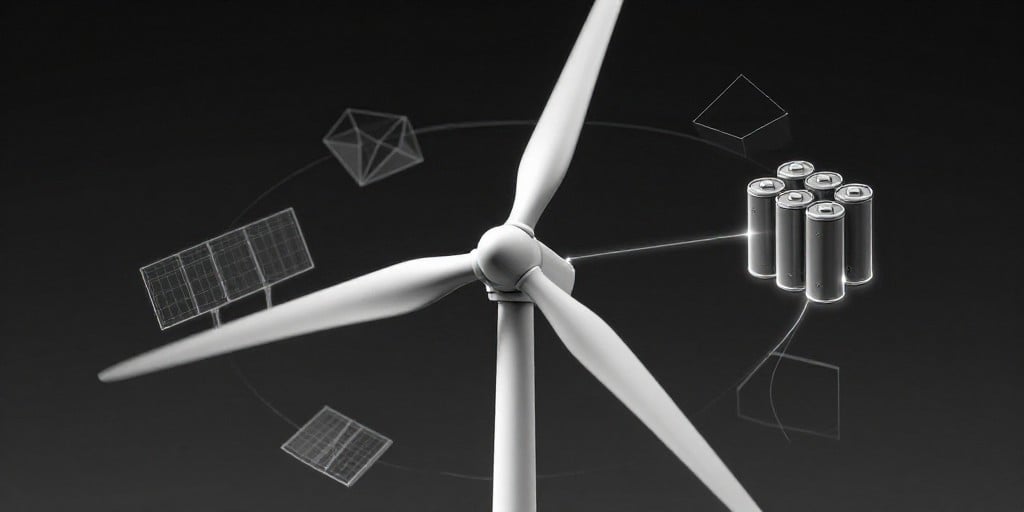
The venture’s initial seed portfolio will consist of onshore wind farms, utility‑scale solar photovoltaic (PV) plants, and battery storage installations spread across six European jurisdictions: the United Kingdom, Spain, Sweden, Finland, France, and Ireland. The assets are secured by long‑term Power Purchase Agreements (PPAs), each with an average remaining term of roughly ten years. This contractual certainty translates into a predictable cash‑flow profile, which is especially valuable in the current climate of market volatility and interest‑rate uncertainty.
| Asset Type | Geographic Spread | Average PPA Term | Implication for Cash Flow |
|---|---|---|---|
| Onshore Wind | UK, Spain, Sweden, Finland, France | 10–12 years | Stable, low‑volatility returns |
| Solar PV | UK, Spain, Sweden | 12–15 years | High capacity factor, low operating costs |
| Battery Storage | UK, Spain, Sweden | 10–12 years | Upside potential via ancillary services |
From a financial perspective, the weighted‑average PPA duration suggests that the portfolio will deliver a cash‑flow yield in the range of 5–6 % after accounting for operating expenses and capital depreciation. Given the sector’s current discount rates (mid‑20 % range for renewable infrastructure), this yield appears attractive to institutional investors seeking lower‑risk, long‑term assets.
2. Operational Governance
Brookfield will assume day‑to‑day operations, leveraging its deep expertise in asset management and operational optimization. Mitsubishi HC Capital will maintain joint control and contribute capital on a pro‑rata basis for future acquisitions of additional renewable projects that align with the seed portfolio’s commercial characteristics. This governance model balances operational efficiency with strategic oversight, mitigating the risk of misaligned incentives that can plague joint ventures.
3. Regulatory Environment
The venture’s launch is contingent upon approvals from European and local authorities. The sector’s regulatory landscape is undergoing significant transformation:
- EU Renewable Energy Directive (RED II) mandates a 32 % renewable share of energy consumption by 2030, which underpins the demand for new renewable projects.
- National Grid Interconnection Standards in the UK and Spain have accelerated the approval process for offshore and onshore wind projects, though battery storage faces more complex permitting regimes.
- Tax Incentives: Several participating countries offer tax credits, accelerated depreciation, or feed‑in tariffs that enhance project economics.
In parallel, the Financial Conduct Authority’s (FCA) recent addition of Mitsubishi HC Capital UK PLC’s 3.3 % and 4.31 % notes to the Official List enhances liquidity and market confidence. The notes, maturing in 2027, will now be tradable on recognised investment exchanges, offering investors an additional entry point into the firm’s renewable‑energy strategy.
4. Competitive Dynamics
The European renewable‑energy market is crowded with large institutional investors—such as the Blackstone Group, KKR, and Enel Green Power—who have substantial pipelines of wind and solar assets. Mitsubishi HC Capital and Brookfield’s joint venture must differentiate itself through:
- Geographic Diversification: The portfolio spans both mature (UK, France) and high‑growth (Spain, Sweden) markets.
- Asset Mix: Inclusion of battery storage addresses the grid‑balancing challenge and offers ancillary service revenue streams.
- Operational Expertise: Brookfield’s proven operational track record in scaling renewable assets can reduce O&M costs and improve asset performance.
However, the entry of new players, especially from the Asian market, could intensify bidding pressure on PPA terms and reduce profit margins. Moreover, regulatory changes—such as stricter emissions caps or modifications to grid access rules—could alter the economics of existing assets.
5. Risks and Opportunities
Risks
- PPA Re‑negotiation: Ten‑year contracts are long, but market dynamics (e.g., electricity price swings) could prompt renegotiations, potentially diluting revenue.
- Currency Exposure: Operating across multiple European currencies introduces FX risk, particularly if the euro weakens against the pound or the Swedish krona.
- Grid Stability: Integration of battery storage depends on evolving grid codes; delays in permitting could postpone revenue capture.
- Regulatory Shifts: Changes in feed‑in tariff structures or carbon pricing could impact asset profitability.
Opportunities
- Ancillary Services: Batteries can participate in frequency regulation, reserve markets, and demand response, providing additional revenue streams beyond PPAs.
- Policy Momentum: Continued EU commitments to decarbonisation will likely sustain demand for renewable PPAs, especially in countries with high fossil fuel subsidies.
- Cross‑Sector Synergies: Mitsubishi HC Capital’s broader renewable‑energy strategy could facilitate cross‑border asset acquisitions, enhancing portfolio scale.
- Capital Efficiency: Private ownership allows for tailored capital structures, potentially leveraging lower-cost debt and equity to maximize returns.
6. Financial Outlook
Assuming an average asset‑level cost of capital (WACC) of 6.5 % and a projected internal rate of return (IRR) of 12–14 % for the seed portfolio, the venture aligns with institutional investors’ return expectations. The inclusion of battery storage—capable of generating up to 3 % additional annual revenue through ancillary services—could further enhance the IRR.
Projected cash‑flows for the first five years indicate:
- Year 1–3: Gradual ramp‑up of assets, with initial O&M costs outweighing revenue.
- Year 4–5: Stabilisation of revenue streams as PPAs mature, and ancillary service contracts commence.
A sensitivity analysis demonstrates that a 10 % drop in electricity prices would reduce the IRR by only 1.5 %, underscoring the downside protection afforded by long‑term PPAs.
7. Conclusion
Mitsubishi HC Capital and Brookfield’s joint venture represents a calculated entry into Europe’s renewable‑energy market, combining robust contractual foundations with operational expertise and strategic diversification. While competitive pressures and regulatory uncertainties persist, the venture’s focus on long‑term PPAs, diversified asset mix, and battery storage positions it to capitalize on the sector’s upward trajectory. Investors and market observers should monitor the venture’s ability to navigate the evolving regulatory landscape and to secure additional projects that reinforce its risk‑adjusted performance profile.