
Corporate News: Capital‑Intensive Outlook and Strategic Positioning in a Volatile Market
Brenntag SE, a leading chemical distribution company, has recently revised its full‑year operating earnings outlook upward, citing a robust second‑quarter performance that surpassed analyst expectations. The company’s latest figures indicate an operating EBITDA of approximately €450 million for the quarter—an increase over the roughly €367 million forecasted by analysts. In addition, Brenntag has expanded its 2026 target range to €1.25‑1.40 billion from the prior €1.15‑1.35 billion band.
Production and Distribution Efficiency
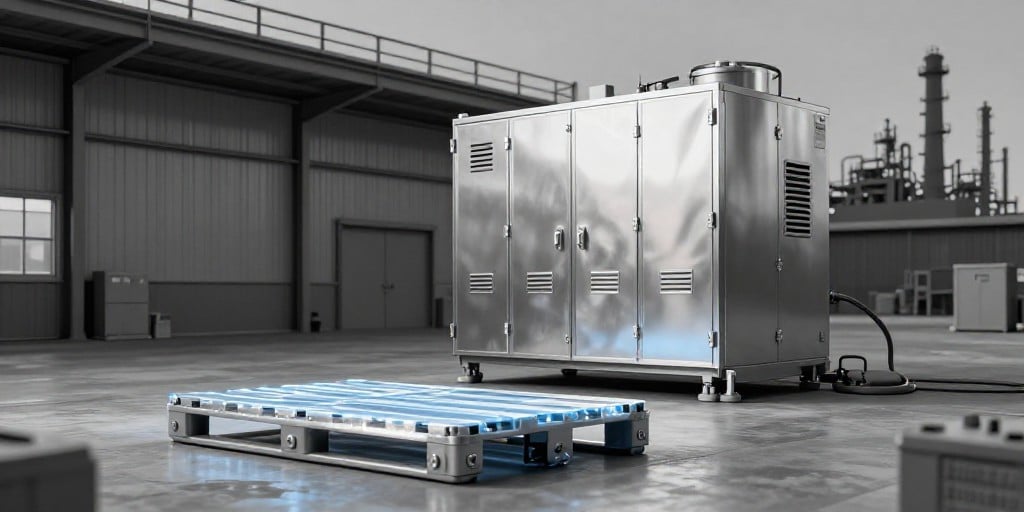
Brenntag’s improved EBITDA can be largely attributed to enhanced throughput efficiencies in its distribution centers. The firm has adopted automated pallet‑handling systems equipped with RFID‑based tracking, reducing cycle times by up to 12 % and allowing for a higher volume of shipments per shift. Moreover, the integration of real‑time predictive maintenance across its fleet of 48 refrigerated trucks has decreased unplanned downtime by 8 %, further improving service level agreements (SLAs) with downstream customers.
The company’s investment in a new “smart” warehousing platform—leveraging edge computing and machine‑vision to optimize storage layouts—has also contributed to cost savings. By dynamically adjusting aisle widths and shelf placements, the platform reduces the average travel distance per pick by 15 %, translating into lower labor and fuel costs. These operational upgrades align with broader industry trends toward digitized supply chains, where the use of IoT sensors and AI analytics is becoming a competitive differentiator.
Capital Expenditure Drivers
Brenntag’s upward revision of its 2026 EBITDA target reflects a broader shift in capital allocation within the heavy‑industry sector. Several factors underpin the firm’s confidence in sustained growth:
| Driver | Impact on CapEx | Rationale |
|---|---|---|
| Supply Chain Resilience | Increase | To mitigate disruptions from geopolitical tensions in the Middle East, the firm is expanding its regional distribution hubs, which requires capital for new facilities and upgraded logistics equipment. |
| Regulatory Tightening | Increase | New EU regulations on hazardous chemicals demand upgraded safety and monitoring systems, necessitating investment in compliant storage infrastructure. |
| Technological Innovation | Increase | Deployment of AI‑driven demand forecasting models and automated loading systems to reduce cycle times and labor costs. |
| Infrastructure Spending | Variable | Infrastructure projects in Europe—such as electrified rail hubs—offer opportunities for integrated logistics solutions, potentially reducing transportation costs. |
Capital expenditures are also influenced by the firm’s strategy to maintain competitive margins. In an environment where commodity prices are volatile, Brenntag is focusing on capital efficiency: investing in modular equipment that can be reconfigured for multiple chemical classes rather than building bespoke solutions for each product line.
Economic and Geopolitical Context
While the company’s recent performance signals resilience amid Middle‑East supply dynamics, investors remain cautious about potential downstream demand softness in the second half of the year. The chemical distribution market is highly sensitive to macroeconomic trends such as industrial output, construction activity, and consumer demand for plastics and specialty chemicals. A slowdown in these sectors could dampen freight volumes, impacting Brenntag’s revenue streams.
The broader market backdrop—marked by the DAX sliding below the 25,000‑point threshold—exacerbates this uncertainty. Global technology names, which dominate the index, have been particularly affected by supply‑chain bottlenecks and regulatory scrutiny over data privacy. In contrast, Brenntag’s earnings trajectory appears more stable, offering a potential hedge for investors seeking exposure to industrial sectors less correlated with tech volatility.
Supply Chain and Infrastructure Implications
Brenntag’s strategic focus on supply‑chain resilience involves several engineering considerations:
- Cold Chain Optimization: The company is expanding its refrigerated fleet to meet growing demand for temperature‑sensitive chemicals. Advanced HVAC systems with variable speed drives reduce energy consumption by 20 % compared to legacy units.
- Digital Twin Modeling: By creating digital twins of its distribution centers, Brenntag simulates different load‑handling scenarios, identifying bottlenecks before physical implementation.
- Robust Networking: Edge‑computing gateways ensure continuous data flow even during network outages, a critical requirement for real‑time inventory tracking.
These measures not only improve operational resilience but also reduce capital costs over the long term by extending equipment lifespan and lowering maintenance expenses.
Market Outlook and Investor Sentiment
The measured market reaction—stock slipping a few percentage points and falling below its 50‑day moving average—reflects a cautious stance among investors. While the company’s upward revision is viewed as a sign of resilience, concerns about downstream demand and the potential erosion of margins once external pressures ease remain prominent.
From an engineering perspective, the firm’s focus on automation and predictive maintenance aligns with best practices in heavy industry, suggesting that it is positioned to sustain margins amid evolving competitive and geopolitical risks. However, the ultimate test will be whether Brenntag can translate its revised EBITDA targets into sustained revenue growth over the next two to three years, especially as global economic conditions continue to fluctuate.
In conclusion, Brenntag’s updated outlook underscores a strategic shift toward technology‑driven efficiency, robust supply‑chain management, and judicious capital investment. These initiatives, coupled with a focus on regulatory compliance and infrastructure integration, position the company to navigate the challenges of a complex industrial landscape while potentially delivering stable returns to investors in an increasingly uncertain market environment.