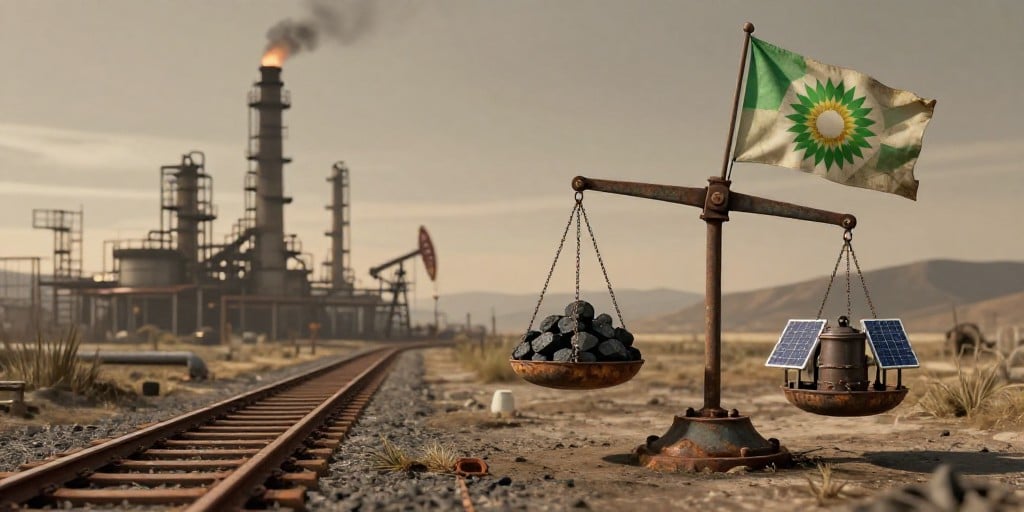
BP PLC Share Decline Amid Weak Commodity Markets and Inflationary Pressures
BP PLC’s shares fell by approximately 3 % on 18 November, a decline that echoed the broader retreat in European equities. The dip came on a backdrop of softer commodity prices and inflation data from the eurozone and the United Kingdom that exceeded market expectations, dampening investor sentiment across the region.
The downturn in BP’s valuation was closely aligned with the performance of its peer, Royal Dutch Shell, which slid roughly 2 % on the same day. At a systemic level, the Stoxx 600 index slipped 1 %, and the FTSE 100 fell 1.3 %. Within the UK market, mining stocks suffered particularly hard, with several leading producers reporting losses ranging from 4 % to 8 %. BP’s fall can be understood as part of this wider sell‑off, reflecting concerns over commodity price volatility and the persistent impact of inflation on energy demand.
Supply‑Demand Fundamentals in the Energy Sector
Commodity price weakness is largely a consequence of evolving supply‑demand fundamentals. Global oil inventories have expanded, driven by a rebound in production from the Organization of the Petroleum Exporting Countries (OPEC+) and an easing of supply disruptions that had characterized the previous year. Demand growth in key emerging economies has moderated, as high inflation has constrained consumer spending and industrial activity. The confluence of higher inventories and softer demand has placed downward pressure on crude prices, which in turn has narrowed margins for major integrated energy companies such as BP.
In contrast, renewable energy demand has remained resilient. Electricity demand in Europe, particularly in Germany and France, continues to rise as the continent accelerates its decarbonisation agenda. However, the transition from fossil fuels to renewables is still mediated by the intermittency of wind and solar resources, necessitating continued investment in storage solutions and grid infrastructure.
Technological Innovations Driving Market Dynamics
Technological innovation remains a key driver of value creation in the energy sector. BP has been investing heavily in advanced offshore wind projects, hydrogen production, and battery storage. The company’s participation in the UK’s offshore wind corridor—comprising projects such as Dogger Bank and the upcoming Seagull Phase 3—positions it to benefit from the increasing share of renewables in the national energy mix.
Simultaneously, BP’s research and development efforts in electro‑chemical storage are aimed at addressing the storage gap that limits renewable penetration. The firm’s strategic partnerships with battery technology firms and utilities are expected to accelerate the deployment of large‑scale storage facilities, thereby stabilising grid output and improving the economics of renewable generation.
Regulatory Impact on Traditional and Renewable Sectors
Regulatory developments continue to shape the competitive landscape. In the eurozone, the European Green Deal and the proposed Net‑Zero Emissions Target 2050 are imposing stricter emission limits on traditional fossil‑fuel producers. This regulatory pressure is compelling companies like BP to reduce reliance on high‑carbon assets and to redeploy capital toward lower‑emission projects.
Meanwhile, the United Kingdom’s Carbon Border Adjustment Mechanism (CBAM) and the forthcoming Net‑Zero Emissions Bill are expected to increase compliance costs for oil and gas companies. The anticipated policy shift may accelerate BP’s asset divestiture strategy and support the company’s long‑term transition roadmap.
Commodity Price Analysis and Production Data
Oil price movements are influenced by a variety of factors, including geopolitical developments, OPEC+ production quotas, and macro‑economic data releases. The latest price data for Brent crude has shown a moderate decline, reflecting an oversupply scenario and weaker demand signals from China. In contrast, natural gas prices have remained comparatively stable, buoyed by robust demand from the European heat‑pump market and the continued use of gas in power generation as a bridge fuel.
BP’s production data indicates a gradual reduction in upstream output, aligning with the company’s strategy to reduce leverage and improve balance‑sheet strength. The company’s recent financial updates highlight an ongoing emphasis on debt reduction and a pause in share‑buyback activity to preserve financial flexibility. While institutional analysts maintain a bullish outlook on the firm’s long‑term prospects—citing its debt‑reduction trajectory and the potential for future buy‑backs—some analysts remain cautious, underscoring the need for sustained progress before a return to buy‑back policy can be considered.
Balancing Short‑Term Trading and Long‑Term Transition
Investor sentiment in the short term has been heavily influenced by commodity price volatility and inflationary data, which have weighed on trading activity across the energy sector. Nevertheless, long‑term market dynamics are increasingly driven by the energy transition. The shift toward renewables, coupled with regulatory mandates and technological advancements, is creating new revenue streams and risk profiles for integrated energy companies.
BP’s strategic focus on reducing leverage, enhancing balance‑sheet resilience, and investing in renewable infrastructure positions the company to navigate the evolving landscape. The firm’s ability to balance short‑term financial discipline with long‑term growth initiatives will be critical in maintaining investor confidence and delivering sustainable value.
In summary, BP PLC’s share performance on 18 November was shaped by a combination of weaker commodity markets, inflationary pressures in the eurozone and the United Kingdom, and the company’s ongoing efforts to strengthen its financial position. The broader market context, regulatory shifts, and technological innovations collectively underscore the complexity of navigating the present energy environment while preparing for a low‑carbon future.